“Sonezaki Shinju” – A Classic Tale of Love and Tragedy
Sonezaki Shinju is a timeless kabuki masterpiece by Chikamatsu Monzaemon, based on a real double-suicide incident in Osaka in 1703. It tells the tragic story of O-hatsu, a courtesan, and Tokubei, a merchant’s clerk, who deeply love each other but face insurmountable obstacles.
Tokubei lacks the money to free O-hatsu from her obligations and is betrayed by his friend, falsely accused of a crime, and disgraced. Despite these hardships, O-hatsu trusts him and challenges him to prove his devotion. In response, Tokubei accepts death as a testament to their love.
Unable to be together in this life, the two lovers walk into Sonezaki Forest under the cover of night, choosing to die together and reunite in the next life.
This story portrays intense human emotions and the fragility and strength of love. Modern kabuki productions, such as the version adapted by Nobuo Uno, highlight O-hatsu’s courage and determination, making this centuries-old tale resonate with audiences even today.
“Sonezaki Shinju” – Story Summary
Reunion at Ikutama Shrine and Tokubei’s Despair
Ohatsu, a courtesan of the Dōjima Shinchi pleasure quarter, and Tokubei, a clerk at a soy-sauce merchant, are deeply in love. Their relationship, however, is threatened by forces beyond their control. Tokubei’s uncle and employer, Kuemon, arranges a profitable marriage for him and provides a substantial engagement gift—without Tokubei’s knowledge. Tokubei’s stepmother accepts the money on his behalf. Determined to remain faithful to Ohatsu, Tokubei refuses the marriage, which enrages Kuemon. Blaming Ohatsu for Tokubei’s defiance, Kuemon demands repayment of the money and effectively drives Tokubei out of Osaka.
In this desperate situation, Ohatsu and Tokubei meet by chance at Ikutama Shrine. Overwhelmed, Tokubei laments that they may never see each other again. Ohatsu, however, remains calm and resolute. She reassures him that even if they are separated in this world, their bond cannot be broken—a moment that powerfully affirms the depth of their love.
Tokubei’s despair deepens further. After managing to recover the engagement money from his stepmother, he lends it temporarily to his close friend, the oil merchant Kuhei, who claims to be in financial trouble. When the repayment date passes, Kuhei refuses to return the money. Confronted at the shrine, Tokubei presents a written agreement, but Kuhei brazenly denies its validity, accuses Tokubei of forgery, and publicly humiliates him. In front of a crowd, Tokubei is disgraced and beaten, losing not only his money but also his reputation as an honest merchant.
Betrayed by the friend he trusted most and stripped of his social standing, Tokubei is driven to utter despair. This scene intertwines three central themes of Sonezaki Shinjū: crushing hopelessness, betrayal of trust, and the unwavering bond between Ohatsu and Tokubei. Together, they propel the lovers toward their tragic decision and give the story its enduring emotional power.
The Tenmaya Scene: Inner Conflict and the Resolve to Die Together
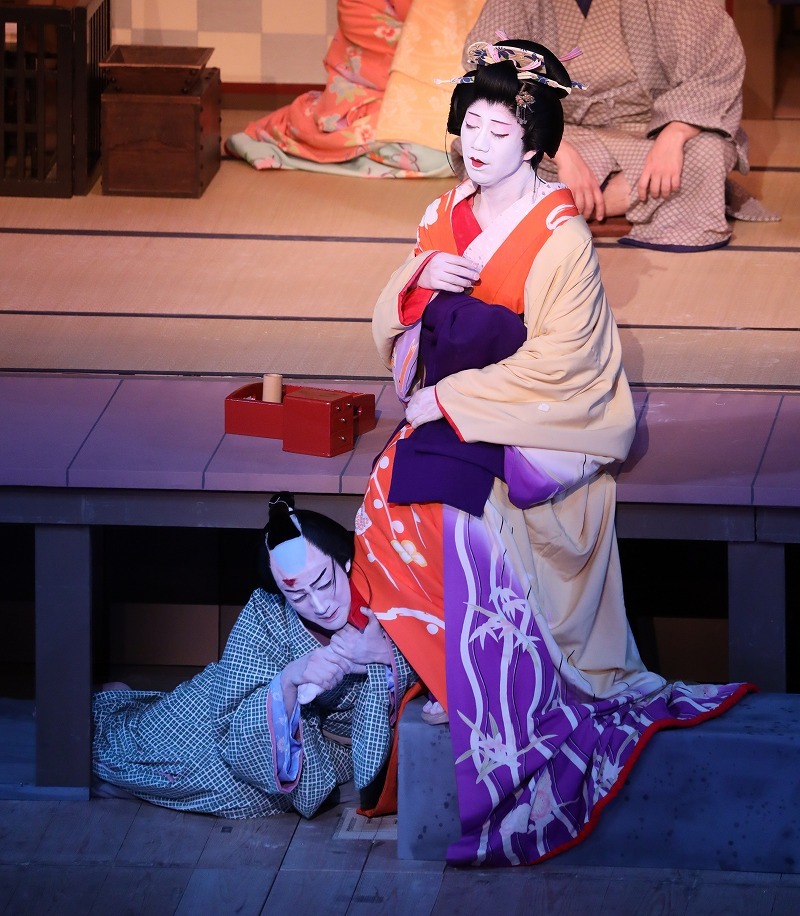
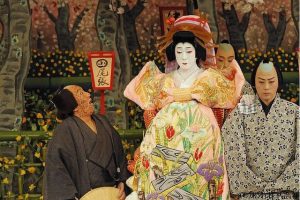
After their reunion at Ikutama Shrine, Tokubei remains trapped in despair. Beaten and humiliated, he appears at the entrance of Tenmaya, the brothel where Ohatsu works. Sensing the danger, Ohatsu discreetly hides Tokubei beneath the floor of the house, protecting him from discovery. In this tense moment, the depth of trust between the two lovers becomes palpable.
Soon after, Kuhei—drunk and boastful—enters Tenmaya and begins loudly slandering Tokubei. Hearing this, Tokubei trembles with anger and attempts to rush out, but Ohatsu restrains him with her arms and legs, risking her own safety to prevent him from revealing himself. This famous scene visually expresses both restraint and devotion, and it heightens the dramatic tension on stage.
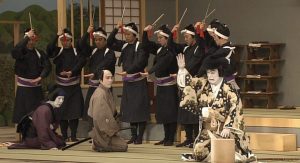
At this point, Ohatsu quietly asks Tokubei whether he is prepared to die. Her question is not a call for despair, but a test of resolve: is he willing to prove his innocence and their love with his life? Tokubei answers without words. He places his neck against Ohatsu’s foot, treating it as if it were a blade, signaling his acceptance of death. In this silent exchange, the lovers seal their decision to commit suicide together.
Later that night, once the household has fallen asleep, Ohatsu and Tokubei slip away from Tenmaya. Their journey toward death—the michiyuki (travel scene)—unfolds with careful deliberation, as they repeatedly confirm their feelings for one another. The audience witnesses a powerful blend of tension, tenderness, and sorrow, revealing the profound depth of their love and despair.
Ironically, it is later discovered that Kuhei’s fraud is exposed by his own servant, and Tokubei’s innocence is finally proven. Even Tokubei’s uncle is revealed to have intended to allow the lovers to marry. Yet this truth comes too late. By then, Ohatsu and Tokubei’s resolve is absolute and cannot be undone.
This scene is not merely a portrayal of personal conflict. It is a dramatic turning point that embodies unwavering love and a decisive acceptance of fate. Ohatsu’s calm strength and Tokubei’s transformation from despair to determination lead inexorably to the final tragedy in the forest of Sonezaki.
Tenjin-no-Mori Scene: The Final Act of Double Suicide
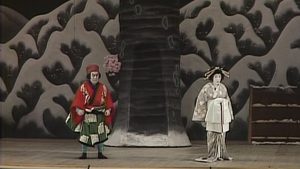
Leaving Tenmaya behind, Ohatsu and Tokubei walk away from the lights of the city and into the darkness of Sonezaki (Tenjin) Forest. As they move deeper into the night, memories and emotions rise within them—regret for the lives they are abandoning, lingering attachments, sorrow at parting from the world, and above all, their profound love for one another. When they hear the temple bell marking the approach of dawn, they reaffirm their resolve to die together.
Holding hands, Ohatsu closes her eyes. Tokubei raises a short sword toward her chest, but at the final moment he hesitates, unable to strike the woman he loves. Ohatsu gently urges him on—“Hurry, hurry”—strengthening his resolve. At last, Tokubei takes her life and then follows her in death. In that instant, their lives and deaths become inseparably entwined, bringing their tragic love in this world to an end.
This scene embodies the paradox at the heart of Sonezaki Shinjū: a love that is absolute and pure, yet unbearably fragile. Though Ohatsu and Tokubei are denied happiness in this life, their deaths affirm a vow to reunite in the next. The weight of their choice and the sincerity of their devotion leave an unforgettable impression on the audience.
In kabuki, the forest scene is carefully staged through michiyuki (the journey toward death) and intimate exchanges between the lovers, allowing the audience to experience both their determination and their sorrow. Epilogues revealing Tokubei’s innocence and the uncle’s true intentions further heighten the tragedy, emphasizing that justice and understanding arrive only after it is too late.
The Meaning of “Shinuru Kakugo ga…” (“The Resolve to Die”)
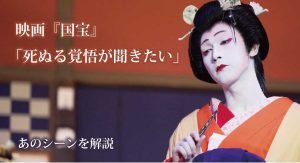
The phrase “shinu-ru kakugo ga…”—often translated as “Are you prepared to die?”—is one of the most important expressions in Sonezaki Shinjū. It does not simply ask whether Tokubei is willing to end his life.
Rather, it asks whether he is prepared to stake everything—his honor, his identity, and his very existence—to prove his innocence and the truth of their love. In the social world of early 18th-century Osaka, where reputation defined a person’s worth, death could become the only means of asserting moral truth.
Thus, this “resolve to die” is not born of despair alone. It is an act of final affirmation:
a declaration that their love is more real than social rules, more enduring than life itself.
Main Characters (Sonezaki Shinjū)
Ohatsu (Tenmaya Ohatsu)
Ohatsu is a courtesan working at the Tenmaya house in the Dojima Shinchi pleasure district of Osaka. She is sincere, intelligent, and deeply devoted to Tokubei, with whom she has promised to marry. When Tokubei is driven into despair by social pressure and financial betrayal, Ohatsu refuses to abandon him. She secretly hides him beneath the Tenmaya building and calmly but firmly asks whether he truly has the resolve to die with her. Ohatsu is not a passive victim; she is emotionally strong and clear-minded, guiding Tokubei toward a shared decision. Her character represents unwavering love and moral resolve in the face of an unforgiving society.
Tokubei (Hiranoya Tokubei)
Tokubei is a clerk at the Hiranoya soy sauce shop, run by his uncle Kuemon. Honest and hardworking, he earns trust and is even offered a chance to marry into the family business. However, he refuses because of his love for Ohatsu. His situation worsens when his stepmother secretly accepts an engagement payment, and he is later betrayed by his close friend Kuheiji, who falsely accuses him of fraud in public. Stripped of his honor as a merchant, Tokubei believes death is the only way to prove his innocence. His tragic purity and despair form the emotional core of the story.
Kuheiji (Aburaya Kuheiji)
Kuheiji is the owner of an oil shop and someone Tokubei trusts as a close friend. Pretending to be in financial trouble, he borrows money from Tokubei with no intention of repaying it. When confronted, Kuheiji claims the debt certificate is forged and publicly humiliates Tokubei, branding him a criminal. He later continues to slander Tokubei even in Ohatsu’s presence. Kuheiji embodies betrayal, greed, and the cruelty of social systems that favor the cunning over the honest.
Kuemon (Hiranoya Kuemon)
Kuemon is Tokubei’s uncle and the master of the Hiranoya shop. On the surface, he appears harsh, pushing Tokubei toward an arranged marriage and expelling him from the household. However, his true intention is to eventually allow Tokubei to marry Ohatsu and become independent. His calculated plan collapses due to Kuheiji’s deception, and he fails to save Tokubei in time. Kuemon represents misguided authority—good intentions distorted by rigid social norms.
Sohei (Tenmaya Sohei)
Sohei is the master of the Tenmaya house. Calm and gentle, he looks after Ohatsu but must maintain order within the pleasure quarter. Though he plays a minor role in the plot, he symbolizes the social environment that confines Ohatsu and limits her choices, quietly reinforcing the tragic framework of the story.
The Meaning and Weight of“I want to know your resolve to die.”
(Shinuru kakugo ga kikitai)
The Meaning and Weight of
“I want to know your resolve to die.”
(Shinuru kakugo ga kikitai)
This line appears in the Tenmaya (Kitashinchi) scene, when Ohatsu speaks to Tokubei, who is hiding beneath the floor of the house:
“At this point, Tokubei, death is unavoidable…
I want to know whether you truly have the resolve to die.”
At first glance, this may sound as though Ohatsu is urging Tokubei toward suicide.
In fact, the opposite is true.
Not Emotional Pressure, but Clear-Sighted Understanding
Ohatsu is not acting out of despair or passion.
She understands Tokubei’s situation with painful clarity:
- He has been betrayed by the friend he trusted most
- He has been falsely accused of fraud in public
- His reputation as a merchant has been completely destroyed
- In Edo-period society, an honorable merchant who lost his name had almost no way to recover
Ohatsu knows that Tokubei has already been pushed to the edge by society itself.
A Question of Love — and Responsibility
When Ohatsu asks about his “resolve to die,” she is not demanding death.
She is asking whether Tokubei:
- Has fully accepted the reality he faces
- Is choosing his path by his own will, not out of panic
- Will take responsibility for his decision, rather than blaming fate, society, or even love
In other words, this line is:
- ❌ Not coercion in the name of love
- ✅ A confirmation of conscious choice
- ❌ Not emotional manipulation
- ✅ A test of will and dignity
It is love expressed through respect for Tokubei’s agency.
The Silent Answer: The Famous Foot Scene
Tokubei does not answer with words.
Instead, he presses Ohatsu’s foot to his own throat, as if it were a blade.
With this gesture, he declares:
“I am prepared.”
This silent exchange is one of the most famous moments in Sonezaki Shinjū.
It powerfully conveys:
- Communication beyond language
- Equality between the lovers
- Suicide not as escape, but as a deliberate choice
The audience understands that this decision is mutual, conscious, and irreversible.
Why This Line Matters
“Shinuru kakugo ga kikitai” transforms Sonezaki Shinjū from a tragic love story into something deeper.
It becomes a drama about:
- Human dignity under social oppression
- Love that refuses to exploit weakness
- Responsibility for one’s own choices
That is why this single line carries such weight—and why it continues to move audiences more than three centuries later.
コメント