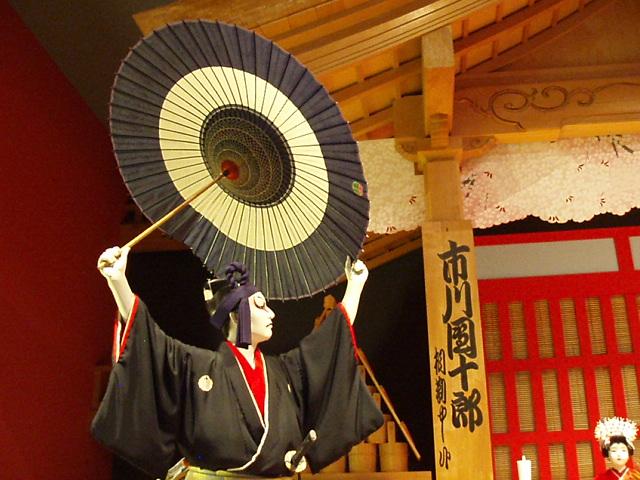
Sukeroku: A Stylish Kabuki Hero of Edo Japan
An Easy-to-Understand Guide for International Audiences
“Sukeroku Yukari no Edo Zakura” is one of the most iconic Kabuki plays, famous for its color, humor, and bold hero.
At first glance, it looks like a lively comedy set in the pleasure quarters of Edo, but beneath the surface lies a serious story of loyalty, identity, and revenge.
The Setting: Yoshiwara, Edo’s Pleasure District
The story takes place in Yoshiwara, the licensed red-light district of Edo (old Tokyo).
This was a world of courtesans, wealthy clients, gossip, fashion, and entertainment — a perfect stage for drama.
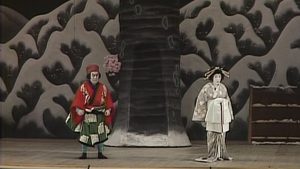
Into this glamorous yet dangerous world appears a man named Hanakawado Sukeroku, a loud, confident troublemaker who constantly picks fights.
Who Is Sukeroku Really?
Although Sukeroku looks like a reckless street hero, he is actually Soga Gorō, one of the famous Soga Brothers, legendary figures in Japanese revenge tales.
He is searching for a lost sacred sword called Tomokirimaru, which belongs to the Minamoto clan.
Because the sword has disappeared, his foster father has been blamed. Sukeroku’s mission is to find it at any cost.
To do so, he deliberately insults men carrying swords, hoping to make them draw their blades so he can check the sword’s name.
The Love Story: Sukeroku and Agemaki
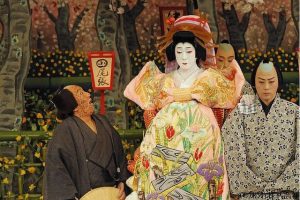
Agemaki, a high-ranking courtesan of the Miuraya house, is Sukeroku’s lover.
She is not a passive beauty — she is sharp-tongued, proud, and fearless.
A wealthy man named Ikyū desires Agemaki, but she openly rejects him and mocks him in one of Kabuki’s most famous verbal duels.
Her loyalty to Sukeroku highlights the emotional core of the play.
Comedy, Style, and Verbal Battles
Much of the play is filled with witty insults, exaggerated gestures, and visual jokes:
- Sukeroku receives smoking pipes from many courtesans at once, symbolizing his popularity
- He humiliates Ikyū by placing a wooden sandal on his head
- A noodle vendor scene turns into slapstick comedy
These scenes show Edo-style humor, where clever words and attitude are more important than physical fighting.
Family and Duty
Sukeroku’s older brother Soga Jūrō, disguised as a sake seller, appears and learns the truth behind Sukeroku’s behavior.
Their reunion adds warmth and humor, especially when the refined brother awkwardly tries to imitate street fighting.
Later, their mother, Soga Mangō, arrives disguised as a samurai.
She scolds her sons fiercely but understands their duty. To restrain Sukeroku’s violence, she makes him wear fragile paper clothing — a symbolic warning.
The Truth Revealed
Ikyū finally reveals his true nature.
He already knows Sukeroku’s real identity and attempts to persuade him to betray his lord.
At that moment, Sukeroku sees Ikyū’s sword — it is Tomokirimaru, the blade he has been searching for.
Ikyū is revealed to be an enemy of the Minamoto clan.
The Conclusion
In some versions, the play ends here.
In others, Sukeroku later confronts and defeats Ikyū, recovers the sacred sword, and escapes with Agemaki’s help.
What began as a flashy comedy is revealed to be a story of honor, loyalty, and destiny.
Why Sukeroku Is So Popular
- Combines comedy, romance, and tragedy
- Features one of Kabuki’s most charismatic heroes
- Showcases exaggerated acting, bold costumes, and famous speeches
- Offers a vivid look into Edo-period urban culture
In One Sentence
“Sukeroku” is a Kabuki masterpiece where stylish humor and romance hide a powerful story of revenge and honor.
コメント