
Sannin Kichisa Tomoe no Shiranami – Story Summary
Sannin Kichisa Tomoe no Shiranami is one of the most famous kabuki plays, known for its beautiful language, dramatic coincidences, and the strong theme of fate and karma.
The story revolves around three thieves who all share the same name, “Kichisa,” and are bound together by money, a stolen sword, and hidden family ties.
A Lost Sword and One Hundred Ryo
The story begins in Edo (old Tokyo).
Jūsaburō, a young shop assistant, sells a stolen dagger called Kōshinmaru, a sword once entrusted to a samurai family, for one hundred ryo, a huge sum of money. That night, he spends time with Otose, a poor street woman.
During a quarrel, Jūsaburō loses the money. Feeling responsible, Otose walks alone at night trying to return what she believes is the shop’s money. On the dark riverbank of the Sumida River, she encounters a beautiful young woman—but this woman is actually Ojo Kichisa, a famous thief disguised as a woman. Ojo steals the money and pushes Otose into the river.
The Fateful Meeting at the Riverbank
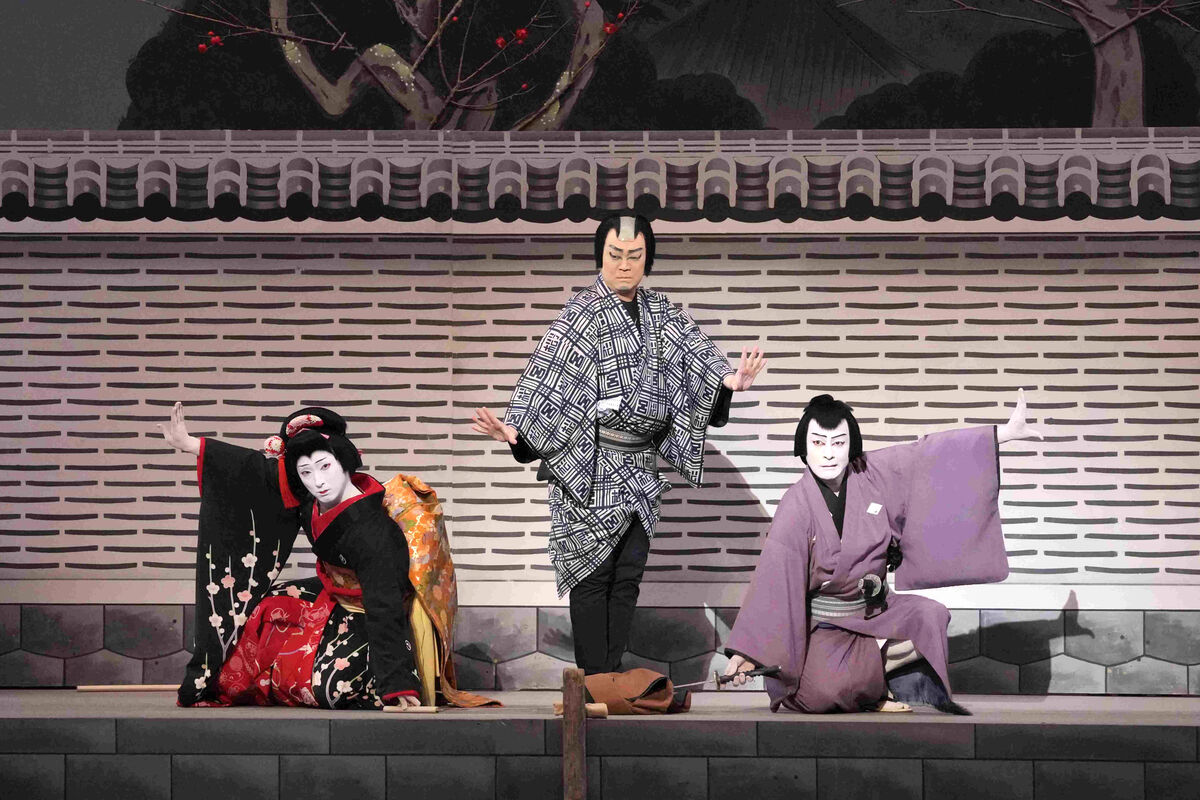
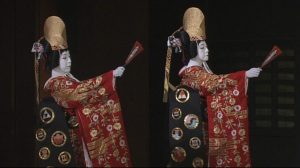
Soon after, another thief appears: Obo Kichisa, a former samurai. He tries to take the money from Ojo, and the two draw their swords. Before the fight can end, a third thief arrives—Osho Kichisa, a calm and authoritative leader.
When the three introduce themselves, they realize they all share the same name: Kichisa. Moved by this strange coincidence, they stop fighting and swear an oath of brotherhood. This famous scene, known as the Ōkawabata scene, includes the celebrated line:
“The moon is hazy, white fish gleam…”
From this moment on, their destinies become inseparably linked.
Hidden Family Ties and Forbidden Love
Otose survives thanks to Kyūbei, a vegetable seller, and is returned to her father Denkichi, a kind old man. There, she is reunited with Jūsaburō, who has been taken in by Denkichi after losing everything. The two fall in love.
However, Kyūbei reveals a painful truth:
Jūsaburō is actually an adopted child, and Otose and Jūsaburō are brother and sister by birth. Their love is forbidden by fate.
The web of karma tightens further. Obo Kichisa’s father once lost the dagger Kōshinmaru, which had been entrusted to him by the shogunate. Shamed by the loss, he committed ritual suicide, and his family was destroyed. The man who stole the sword was none other than Denkichi—Otose’s father.
Without knowing the truth, Obo Kichisa kills Denkichi in a dispute over the money.
A Tragic Choice
Now hunted by the authorities, the three Kichisa hide in a ruined temple. Osho Kichisa is ordered to betray his sworn brothers. Instead, he makes a horrifying decision:
Believing Otose and Jūsaburō can never live together in this world, he kills them mercifully and uses their heads as substitutes, pretending they are the captured thieves.
The deception is soon discovered, and Osho is arrested.
The Final Scene: Snow and the Fire Watchtower
In the final act, set at a fire watchtower in Hongo, snow falls heavily as Ojo and Obo attempt to rescue Osho. Using a loophole in an official notice, they briefly succeed, but escape is impossible.
Accepting their fate, the three thieves entrust the sword and money to Kyūbei and die together in a dramatic mutual stabbing, fulfilling the theme of karma and retribution.
Why This Play Matters
Sannin Kichisa Tomoe no Shiranami is not just a crime story. It is a tragic tale of:
- Fate beyond human control
- Family bonds and hidden blood ties
- The idea that past actions inevitably return
These themes, combined with poetic language and visually striking scenes, make the play a cornerstone of classical kabuki and a powerful experience even for first-time viewers.





コメント