Shunkyō Kagamijishi(春興鏡獅子)Overview
Shunkyō Kagamijishi (Spring Mirror Lion) is one of the New Kabuki Eighteen Plays and a representative masterpiece of lion dance (shishi-mono) in kabuki. Often referred to simply as Kagamijishi, the dance is set in the Ōoku (women’s quarters) of Edo Castle on the seventh day of the New Year, during the ceremonial Okagami-mochi hiki.
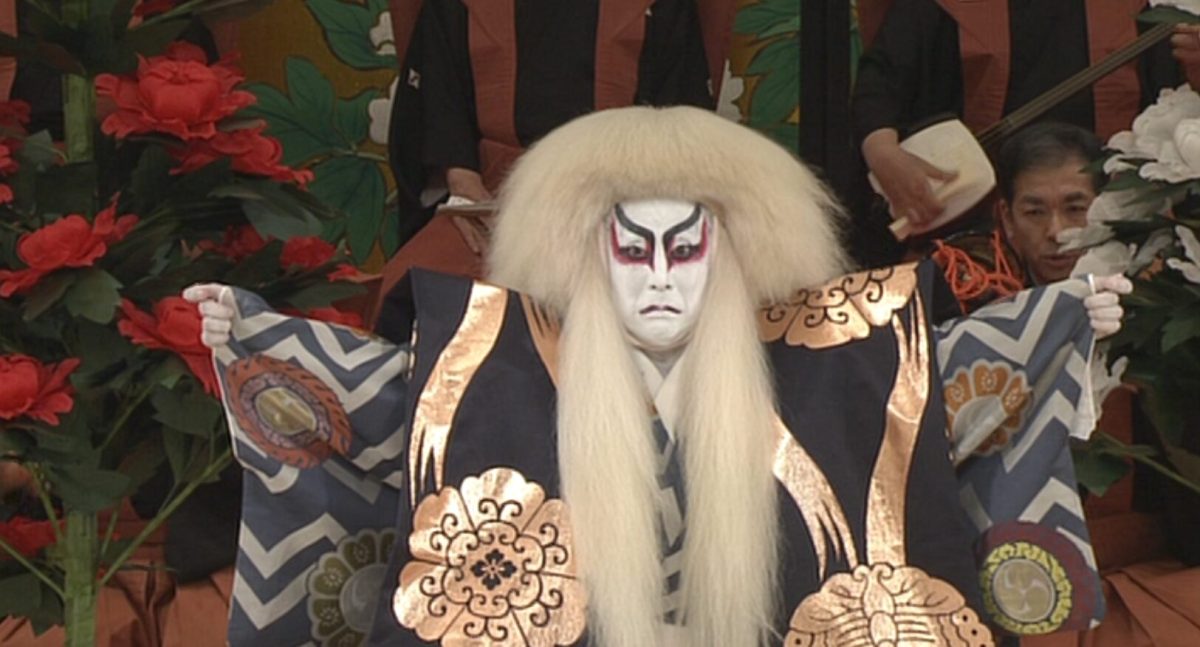
The story begins with Yayoi, a young and graceful female page, who is persuaded to perform a dance as court entertainment. As she dances, a lion head she picks up becomes possessed by a spirit; Yayoi disappears, and the Spirit of the Lion appears, frolicking among peony blossoms together with butterfly spirits.
A defining feature of the work is that a single performer dances both the elegant, modest young girl in the first half and the powerful, otherworldly lion spirit in the second, requiring exceptional versatility. The climactic hair-whipping dance (keburi) at the end is the highlight of the performance. Conceived by the great Meiji-period actor Ichikawa Danjūrō IX and later refined and perfected by Onoe Kikugorō VI, Shunkyō Kagamijishi remains a kabuki dance masterpiece that combines refined beauty with overwhelming dynamism.
Scene-by-Scene Synopsis of Shunkyō Kagamijishi (Spring Mirror Lion)
Prologue: The New Year Ceremony in the Ōoku
The setting is the Ōoku, the women’s quarters of Edo Castle, on the seventh day of the New Year, during a festive court event called the Mirror Rice Cake Procession.
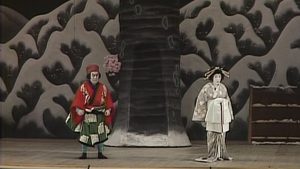
Court ladies bring out Yayoi, a young female page, and urge her to perform a dance for the shogun’s entertainment. Shy and embarrassed, she tries to run away, but an elderly lady-in-waiting and a senior attendant gently insist. With no escape, Yayoi finally gathers her courage and prepares to dance. The silk cloth tucked into her sash shows that she has been taken straight from her tea-serving duties.
The Dance of a Young Court Girl
Yayoi begins with a soft, graceful dance, using the long sleeves of her kimono to express youthful innocence.
Her movements shift from simple hand gestures to refined actions using the silk cloth, while the song lyrics evoke Japanese creation myths and the quiet hardships of life serving in the castle. The mood is modest and elegant, perfectly reflecting the restrained beauty of a young girl in the Ōoku.
From Spring to Summer: Gentle Seasonal Scenes
Holding a formal court fan, Yayoi portrays the changing seasons—cherry blossom viewing, flowing rivers, pine winds, and summer groves.
Through kabuki’s technique of symbolic representation, she depicts breezes, flowers, rice-planting maidens, and birds using only a fan. The dance becomes increasingly light and joyful, capturing the peaceful rhythm of nature.
Peonies and Butterflies
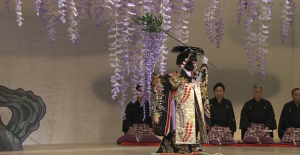
Now using two dance fans, Yayoi expresses a scene of peonies in full bloom and butterflies drawn to their fragrance.
Brilliant visual highlights appear: fans spinning like windmills, tossed into the air and caught with precision. This section reaches the height of elegance and technical brilliance.
The Presence of the Stone Bridge and the Lion Head
The mood grows solemn as the dance begins to suggest the legendary Stone Bridge of Mount Seiryō from Chinese lore, known as the dwelling place of sacred lions.
When Yayoi takes up a lion head, it suddenly seems to move on its own, drawn by a butterfly. The lion’s power pulls at her body—one side dragged forward, the other resisting. This dramatic physical struggle marks the turning point of the story.
The Dance of the Butterfly Spirits
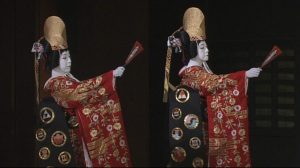
After Yayoi disappears down the hanamichi runway, two butterfly spirits appear.
They personify butterflies playing among peonies and dance with small drums and rhythmic steps. Light, playful, and charming, this scene provides a gentle contrast before the powerful finale.
The Spirit of the Lion and the Grand Finale
At last, the Lion Spirit enters dramatically along the hanamichi. Awakened by the butterflies, the lion erupts into a fierce and dynamic dance.
The climax is the famous hair-whipping dance (keburi), in which the lion shakes its long mane with overwhelming force and vitality. Accompanied by music based on the Noh play Shakkyo (Stone Bridge), blended with kabuki’s rich musical style, the performance concludes in a breathtaking display of energy and beauty.
Why This Dance Is So Special
Shunkyō Kagamijishi is celebrated for its striking contrast:
from a shy, graceful court girl to a supernatural lion of immense power.
The balance of stillness and motion, refinement and ferocity, makes this dance one of the greatest masterpieces of kabuki dance and a must-see for audiences around the world.
Highlights of Shunkyō Kagamijishi (Spring Mirror Lion)
A Dramatic Transformation: From Court Girl to Sacred Lion
The greatest appeal of Shunkyō Kagamijishi lies in its striking transformation.
In the first half, the performer appears as Yayoi, a shy and refined young attendant of the Ōoku, dancing with grace and restraint. In the second half, the same performer reappears as the Spirit of the Lion, a supernatural being of immense power. The ability of a single actor to embody both delicate femininity and overwhelming strength is the essence of this masterpiece.
A Showcase of Classical Japanese Dance Techniques
The dance incorporates a rich variety of movements and props—long kimono sleeves, a silk cloth (fukusa), formal court fans, and dance fans. These elements guide the audience from gentle hand gestures to vivid scenic depictions and even acrobatic flourishes. Through symbolic movement, the dancer evokes seasonal landscapes from spring to summer, as well as the fantastical world of peonies and butterflies.
The Tension of the Possessed Lion Head
A crucial turning point occurs when the lion head becomes possessed and begins to move on its own.
The dancer’s body is pulled in opposite directions—one side drawn irresistibly toward the lion, the other struggling to remain human. This physical conflict powerfully visualizes the boundary between the human and supernatural worlds.
The Lightness of the Butterfly Spirits
After Yayoi disappears, two Butterfly Spirits enter the stage.
Their lively, charming dance—performed with small drums and playful rhythms—adds warmth and contrast, preparing the audience emotionally for the dramatic finale. Their presence softens the transition from elegance to raw power.
The Spectacular Hair-Whipping Finale (Keburi)
The climax of the performance is the lion’s famous hair-whipping dance.
With long hair flying violently through the air, the lion displays its divine vitality and strength. Accompanied by music derived from the Noh play Shakkyo (Stone Bridge) and enriched by kabuki instruments, this moment delivers overwhelming energy and theatrical brilliance.
The Beauty of Contrast: Stillness and Power
Throughout the performance, refined elegance is set against wild dynamism.
This balance of stillness and motion, beauty and ferocity, is what makes Shunkyō Kagamijishi one of the greatest achievements in kabuki dance and an unforgettable experience for audiences encountering kabuki for the first time.
コメント