Aragoto in Kabuki: An Easy Explanation for Beginners
What Is Aragoto?
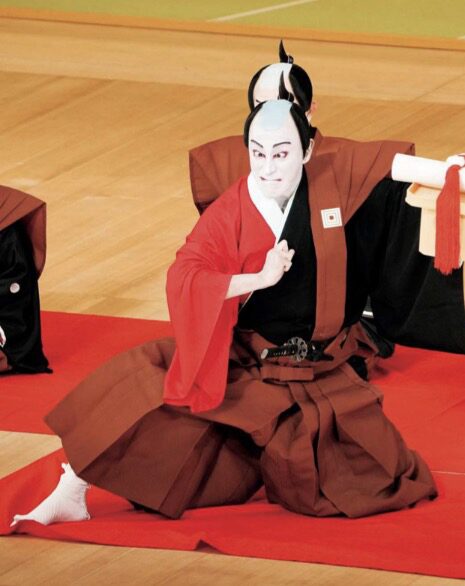
Aragoto in Kabuki is a bold and powerful performance style created in the Genroku period by the first Ichikawa Danjūrō. It portrays a heroic figure with superhuman strength who dramatically defeats evil.
Its aim is to depict larger-than-life heroes who go beyond ordinary human limits. Appearing on stage as symbols of justice within clear-cut tales of good and evil, these characters captivate the audience with their overwhelming presence and straightforward, dramatic storytelling. This style won the hearts of the people of Edo and has been passed down as the artistic foundation of the Ichikawa acting lineage to this day.
Performance and Expressive Features of Aragoto
The greatest appeal of aragoto lies in its fully exaggerated and highly stylized, dynamic expression.
Kumadori Makeup and Costume
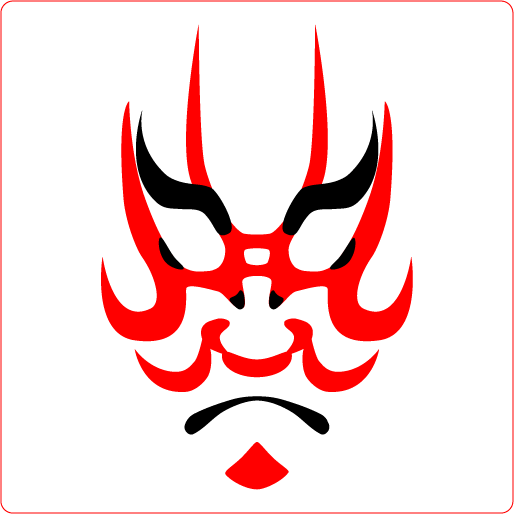
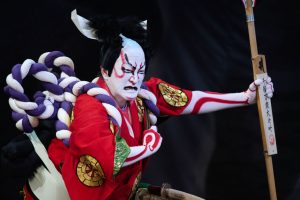
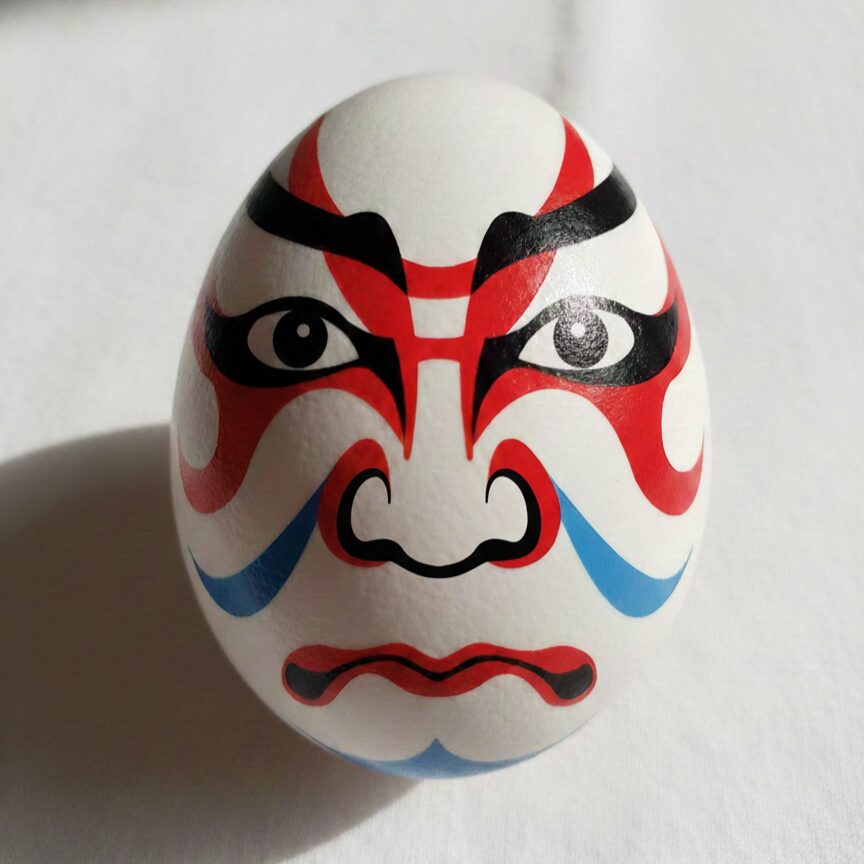
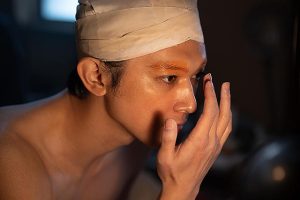
The actor’s face is painted with bold kumadori makeup.
A white base with red lines suggests the bulging veins filled with surging blood, symbolizing the fiery energy and vitality of a hero who stands for justice. The costumes are large and heavy, making the actor appear physically bigger than life and emphasizing a superhuman presence.
Note: Red kumadori represents heroes and champions of justice, while blue kumadori is used for cold-hearted villains, vengeful spirits, and powerful antagonists.
Movement and Formalized Poses
Aragoto features a strong sense of stylized beauty in its movements.
Signature actions include the mie, in which the actor freezes in a powerful pose at a dramatic moment to imprint the image on the audience, and the roppō, a bold, stomping exit along the hanamichi runway that visually conveys strength and momentum.
Voice and Delivery
The voice is delivered in a piercing, resonant kan tone that cuts through the theater.
Combined with grand, emphatic lines, it creates an overwhelming sense of presence that dominates the stage. Oversized props, such as the massive three-sword set, also play an important role in highlighting the character’s heroic nature.
Representative Plays and Roles
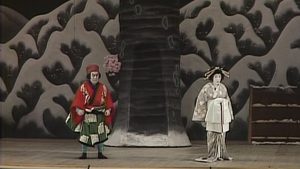
The most classic example of aragoto is Shibaraku.
In this famous scene, the hero appears along the hanamichi runway in an enormous costume and dramatically calls out to halt the villains. This powerful entrance is considered one of the most iconic moments that symbolize the essence of aragoto.
Another well-known aragoto-style role is Umeōmaru in the “Kuruma-biki” scene from Sugawara Denju Tenarai Kagami, a character celebrated for his boldness and physical strength.
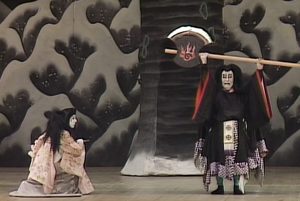
Although not a full play, there are also characters who appear only in the special stage effect known as Oshimodoshi. These larger-than-life figures exist solely for this dramatic moment, where they drive away evil spirits and enemies through overwhelming force and presence.
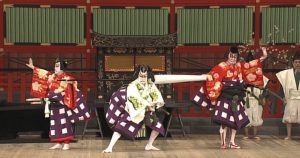
Aragoto in Contrast with Wagoto
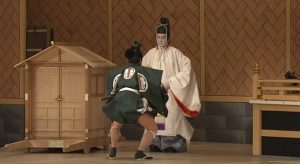
In Kabuki, there is another major performance style known as wagoto, a delicate and deeply human approach established by the first Sakata Tōjūrō, who was active in Kyoto and the Osaka region.
In contrast, aragoto is a bold, flamboyant, and heroic style that was born in Edo.
This contrast reflects the differing temperaments of Kamigata (the Kyoto–Osaka area) culture and Edo culture, and together they shape the rich diversity and depth of Kabuki’s artistic expression.
The Essence of Aragoto
Aragoto is not simply “flashy acting.”
It is a performance style designed to bring power beyond ordinary human limits onto the stage.
Its exaggerated movements, resonant voice, bold makeup, and dramatic storytelling all come together as one, creating an overwhelming sense of catharsis for the audience.
Therein lies the unique and enduring appeal of aragoto.
When you hear “aragoto,” you probably picture some of the most iconic characters in Kabuki right away.
コメント