
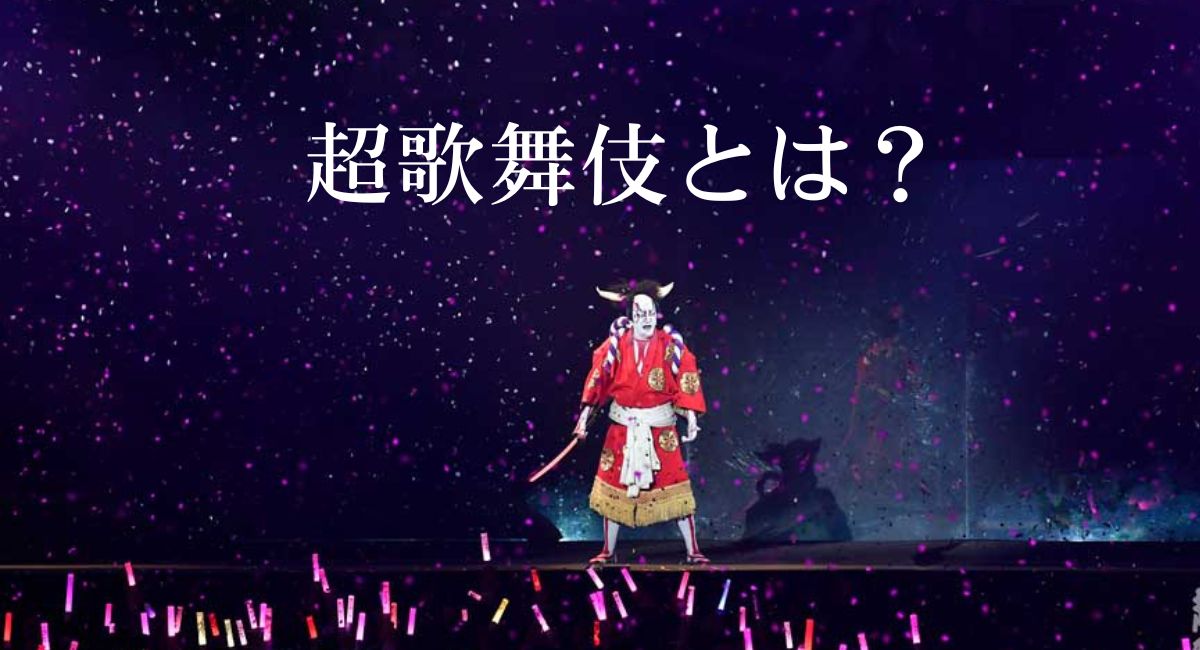
What Is Cho-Kabuki?
If you think kabuki looks difficult or intimidating, Cho-Kabuki may completely change that impression.
Cho-Kabuki is a modern form of kabuki that blends traditional Japanese theater, cutting-edge digital technology, and virtual characters into one stage experience.
Its biggest breakthrough came when Hatsune Miku appeared onstage alongside real kabuki actors—an idea that attracted not only kabuki fans, but also anime, Vocaloid, and gaming audiences around the world.
For many people, it became a gateway into kabuki.
In this guide, you’ll learn:
- What Cho-Kabuki is
- What makes it different from traditional kabuki
- Its major performances
- Where to watch it
- Why even complete beginners can enjoy it
What Is Cho-Kabuki?
Cho-Kabuki (literally “Super Kabuki,” though distinct from Super Kabuki as a separate genre) is a new theatrical form that combines classical kabuki with modern digital performance technology.
It premiered in 2016 at Niconico Chokaigi and immediately drew major attention.
The project began as a collaboration between kabuki actor Nakamura Shido and the tech company Dwango.
Its goal was simple but ambitious:
Preserve kabuki tradition while expanding it for younger generations and global audiences.
And it worked.
What Makes Cho-Kabuki Unique?
1. Digital Characters Perform with Live Actors
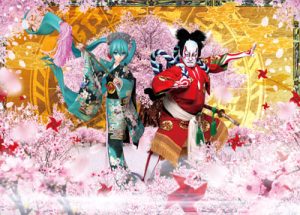
The most famous feature of Cho-Kabuki is the coexistence of real performers and digital characters on the same stage.
CG characters like Hatsune Miku are projected using advanced stage technology, making them appear to share physical space with kabuki actors.
Depending on the venue, productions may use:
- Transparent screens
- White fabric projection screens
- Layered visual effects for depth and realism
The result feels less like a concert screen—and more like a live co-star onstage.
2. The Audience Participates
Unlike traditional theater, the audience is part of the performance.
Penlights
Fans wave color-coded penlights to support specific characters or performers, much like at Japanese idol concerts.
Sometimes the script even invites the audience to light them at dramatic moments.
This transforms the whole theater into part of the staging.
3. Even Traditional Kabuki Calls Evolve
In kabuki, audience members sometimes shout kakegoe (timed calls of encouragement), traditionally performed by specialists known as ōmukō.
Cho-Kabuki makes this more open and inclusive.
Anyone can join.
Women can participate.
And some productions even develop original calls unique to that performance.
It keeps tradition alive—but loosens the rules.
4. Live Comment Culture Becomes Part of Theater
Because Cho-Kabuki emerged through Niconico Chokaigi, it absorbed something very unusual:
Online comments became part of the stage experience.
Viewer comments can be projected during performances and function as:
- Real-time cheering
- Live reactions
- Informal explanations for newcomers
It creates a rare connection between performers, in-person audiences, and online viewers.
5. Even the Pandemic Changed the Art Form
During the COVID era, when audiences could not shout encouragement, some productions introduced voice-enabled penlights that played recorded kabuki calls.
It was a clever way to preserve audience energy when live vocal participation was restricted.
Even the limitations became part of the innovation.
Major Cho-Kabuki Performances
1. Hanakurabe Senbonzakura (今昔饗宴千本桜)
The most famous Cho-Kabuki work.
It combines:
- the Vocaloid song Senbonzakura
- the classic kabuki masterpiece Yoshitsune Senbon Zakura
This is often considered the best entry point for beginners.
2. Kuruwakotoba Awase Kagami (花街詞合鏡)
Inspired partly by Gosho no Gorozō and featuring the song Yoshiwara Lament.
Set in the pleasure quarters, it combines romance, fate, and visual elegance.
3. Tsumoru Omoi Hana no Kaomise (積思花顔競)
Inspired by Sekikoi Yukino Sekido and featuring Tengaku.
One of the most popular works among fans.
4. Natsumatsuri-ban Hanakurabe Senbonzakura
A festival-style variation of Hanakurabe Senbonzakura with even stronger entertainment elements.
5. Otogizōshi Koi no Sugatae (御伽草紙戀姿絵)
A more fantastical and dramatic work drawing on:
- Tsuchigumo legends
- Taira no Masakado legends
- Classical kabuki aesthetics
It uses the song Romeo and Cinderella.
6. Towa no Hana Homare no Isaoshi (永遠花誉功)
A more serious historical drama inspired by Imoseyama Onna Teikin.
Features the iconic song The Disappearance of Hatsune Miku.
7. Sekai no Hana Musubu Kotonoha (世界花結詞)
The 10th anniversary Cho-Kabuki production.
A grand “greatest hits” work that combines elements from many previous productions.
Includes music such as Tell Your World.
A celebratory culmination of the genre.
Where Can You Watch Cho-Kabuki?
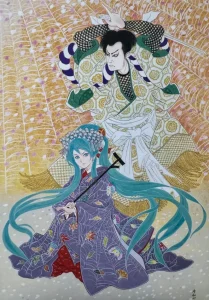
Cho-Kabuki is mainly performed at:
- Niconico Chokaigi
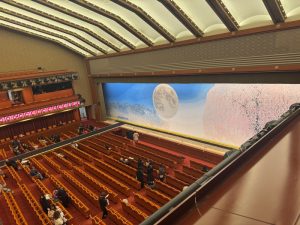
- Special theater productions, including Minamiza Theatre
There is no permanent Cho-Kabuki theater, so checking current performance schedules is important.
Can You Watch Cho-Kabuki on Video?
Yes—but availability is limited.
Released on Blu-ray or video:
- Hanakurabe Senbonzakura
- Kuruwakotoba Awase Kagami
Many other productions remain unavailable on home video.
For now, the most realistic options are:
- See a live performance
- Start with available Blu-rays
Ticket Prices
Ticket prices are generally similar to regular kabuki.
Expect roughly:
- Several thousand yen for budget seats
- Up to around ¥10,000+ for premium seating
Some performances offer surprisingly beginner-friendly pricing.
Is Cho-Kabuki Good for Beginners?
Absolutely.
In many ways, it may be easier to enter than traditional kabuki.
Why?
Visual storytelling
Even if you don’t understand Japanese, the staging often communicates clearly.
Accessible stories
Many plots are easier to follow than classical kabuki.
Audience immersion
The interactive elements make it feel less formal and more immediate.
Familiar pop culture connections
If you know Hatsune Miku, you already have a way in.
Why Cho-Kabuki Matters
Cho-Kabuki is not simply “kabuki with projection effects.”
It asks a larger question:
How can a 400-year-old art form evolve without losing itself?
Its answer is fascinating:
By keeping kabuki’s core—music, movement, dramatic form, stylization—while allowing new technology to expand what the stage can do.
That makes Cho-Kabuki not just a novelty, but one of the most interesting developments in contemporary Japanese performance.
Final Thoughts
Cho-Kabuki is where classical theater, digital art, Vocaloid culture, and live audience participation meet.
It has introduced countless newcomers to kabuki—especially those who thought traditional theater was inaccessible.
If traditional kabuki feels daunting, Cho-Kabuki may be the perfect first step.
And if you already love kabuki, it offers a glimpse of where the art form may go next.
🎭 Want to See Kabuki Live?
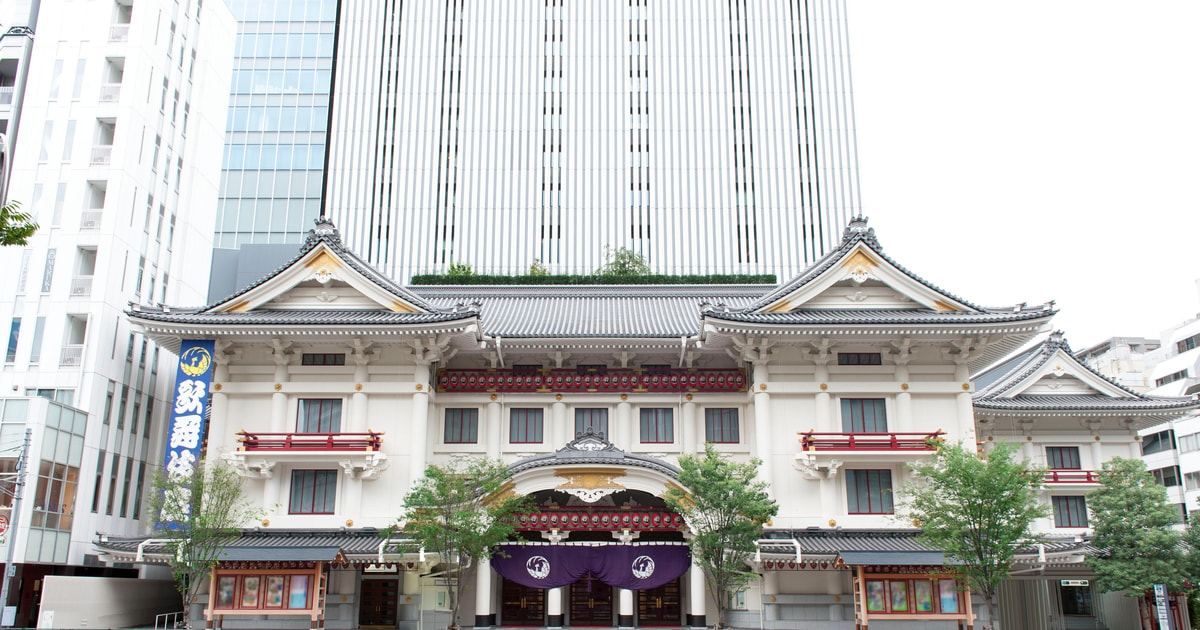
If you’re planning a trip to Tokyo, Kabuki-za is one of the most memorable ways to experience Japanese culture firsthand. GetYourGuide offers English-friendly Kabuki-za tickets and guided experiences, including options with headset translation and pre-show introductions for first-time viewers.
👉 Check Kabuki-za Tickets on GetYourGuide
This section may contain affiliate links. Booking through them costs you nothing extra and helps support this site.






コメント