Why Did KOKUHO Change Its Kabuki Play From Sumidagawa to Sonezaki Shinju?
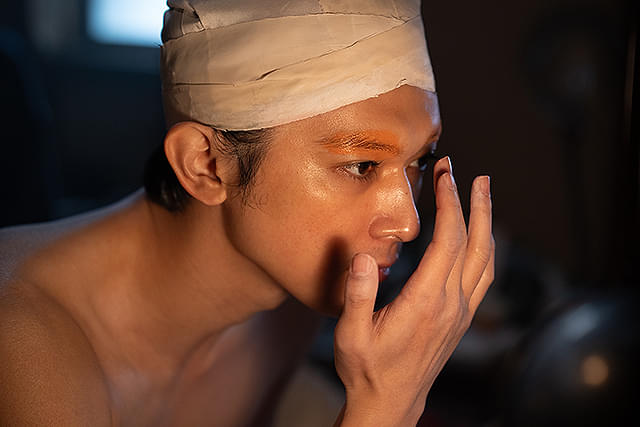
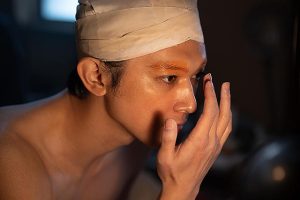
If you’ve watched the film KOKUHO (National Treasure), based on Shuichi Yoshida’s acclaimed novel, you may have noticed something if you’ve also read the book: the kabuki play at the emotional center of the story is different on screen.
In the original novel, the play that defines the fate of the protagonist Kikuo (played by Ryo Yoshizawa) is Sumidagawa. In the film, it was changed to Sonezaki Shinju — a completely different kabuki classic, with a very different mood and story.
This wasn’t a small detail. It’s a deliberate creative choice by the director and production team, and once you understand why, it reveals a lot about how the filmmakers thought about adapting a story about kabuki actors into cinema. Here are the three key reasons behind the change.
1. From “Static Madness” to “Dynamic Catharsis”
The original play, Sumidagawa, is a “static” and introspective piece depicting a mother who goes mad after losing her child. While it perfectly illustrates Kikuo’s deepening solitude and mastery of his craft on the page, a film on the big screen often demands more visual dynamism than a solo, interior performance can offer.
- Dramatic Nature of Double Suicide: The beauty of the michiyuki (the journey to death), where Tokubei and Ohatsu walk hand-in-hand toward their demise, has a brilliance and tragic weight that fits a cinematic climax far better than a solitary mad scene.
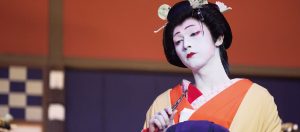
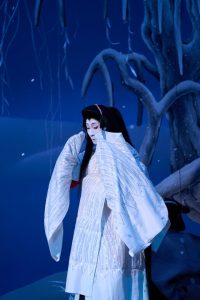
- Visual Storytelling: The white-painted faces emerging from the darkness and the lovers’ intertwining hands create an overwhelming visual beauty that is best appreciated through high-quality cinematography — exactly the kind of image a film camera, rather than a stage alone, can linger on.
2. The Codependency and Physical Limits of Kikuo and Shunsuke
The primary reason was likely to emphasize the intense relationship with Shunsuke (played by Ryusei Yokohama), who is both Kikuo’s rival and his “other half” throughout the story.
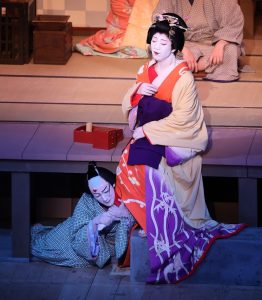
In contrast to Sumidagawa, which is a solo performance by a madwoman, the movie’s version of Sonezaki Shinju is depicted as a story where two men literally consume each other’s lives.
- Shunsuke’s Ravaged Body: In the film, Shunsuke’s legs have reached their limit. With one prosthetic leg and the other suffering from gangrene, the stakes of the performance are transformed by the desperate knowledge that he may never walk again.
- The Haunting “Michiyuki”: As they stumble along the hanamichi (the runway through the audience), Shunsuke — barely able to walk — clings to Kikuo’s Ohatsu. This scene transcends mere performance; it captures the flickering flame of an actor’s life.
- The Final Blow: The final moment when Kikuo raises his sword is not just an act of love for a partner, but a ritualistic “mercy killing” by a best friend to an actor whose body is broken.
3. The Necessity of a Duel Between Two Young Stars
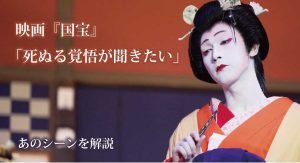
With Ryo Yoshizawa and Ryusei Yokohama — two of the leading actors of their generation — carrying this heavy story, the scenes where they clash become the heart of the film.
- The Dialogue Between Tokubei and Ohatsu: Sonezaki Shinju allows for a profound exchange of glances, touch, and raw emotion between the two leads, in a way a solo mad scene never could.
- Mastery of Movement: Under the guidance of kabuki master Nakamura Ganjiro, the actors meticulously crafted the complex physical distance between their characters, making every gesture and glance a focal point of the drama.
What Is Sonezaki Shinju, for Viewers Who Don’t Know Kabuki?
If you’re coming to this purely as a film fan with no kabuki background: Sonezaki Shinju (The Love Suicides at Sonezaki) is one of the most famous plays in the entire kabuki and bunraku repertoire, written over 300 years ago. It tells the story of two lovers, Tokubei and Ohatsu, who choose to die together rather than live apart under the weight of debt and social pressure. Its double-suicide climax is one of the most iconic scenes in classical Japanese theater — which is exactly why it works so well as the emotional peak of a film about kabuki actors.
Conclusion: The “Correctness” of the Change
While the deep solitude of Sumidagawa in the original novel is irreplaceable on the page, the choice of Sonezaki Shinju for the film KOKUHO provided a perfect conclusion for “the story of two men who live and die for their art.”
Through this change, the film captures details that might be missed in a single viewing — the changing color of Shunsuke’s legs, the determination in Kikuo’s eyes, and the precise use of a single folding fan. These elements prove that the change in the play was indeed the right decision for this cinematic adaptation.
Frequently Asked Questions
- Q. Is Sonezaki Shinju a real kabuki play, or was it created for the movie?
-
It’s a real, centuries-old kabuki and bunraku classic written by Chikamatsu Monzaemon, still performed on stage today — the film uses an existing, celebrated play rather than inventing one.
- Q. Do I need to have read the novel to understand this change?
-
No. You only need to know that the novel used a different play (Sumidagawa) for the same pivotal scene — everything else in this article explains the change on its own.
- Q. Can I watch Sonezaki Shinju performed as real kabuki, not just in the movie?
-
Yes — it remains one of the most frequently staged classical plays in the kabuki repertoire and appears in programs at Kabukiza and other major theaters throughout the year.
Curious about the real Kokuho release, or the play itself in more depth? Start here:
Read the original Japanese version: 映画『国宝』で歌舞伎の演目が「隅田川」から「曽根崎心中」に変更された理由
🎭 Want to See Kabuki Live?
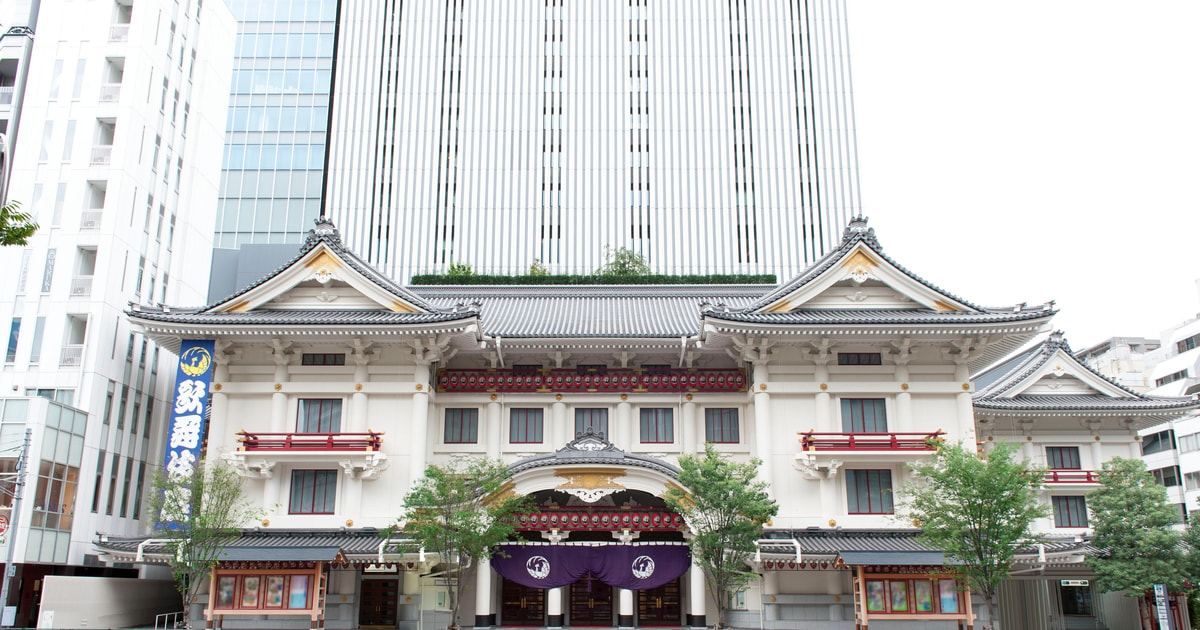
If you’re planning a trip to Tokyo, Kabuki-za is one of the most memorable ways to experience Japanese culture firsthand. GetYourGuide offers English-friendly Kabuki-za tickets and guided experiences, including options with headset translation and pre-show introductions for first-time viewers.
👉 Check Kabuki-za Tickets on GetYourGuide
This section may contain affiliate links. Booking through them costs you nothing extra and helps support this site.
コメント
コメント一覧 (1件)
[…] love story through the image of a white heron spirit. The… あわせて読みたい Why Did KOKUHO Change Its Kabuki Play From Sumidagawa to Sonezaki Shinju? (2026 Explainer) Why Did KOKUHO Change Its Kabuki Play From Sumidagawa to Sonezaki Shinju? If you’ve watched […]