Moritsuna Jinya (盛綱陣屋) is the eighth act of Ōmi Genji Senjin Yakata, a nine-act jōruri puppet play written by Chikamatsu Hanji and others, later adapted into kabuki. Although part of a longer work, this act is so highly regarded that it’s now most often performed as a standalone piece.
What Is Moritsuna Jinya?
The story unfolds amid the turmoil following the death of Minamoto no Yoritomo, when the brothers Sasaki Moritsuna and Sasaki Takatsuna find themselves fighting on opposite sides of the conflict. At the center of the play is a “head inspection” (kubi-jikken) scene, verifying whether a severed head presented as Takatsuna’s is genuine — a moment that lays bare the tension between samurai duty and family love.
Synopsis
Amid the conflict following Yoritomo’s death, brothers Sasaki Moritsuna and Sasaki Takatsuna end up fighting on opposing sides. Moritsuna, serving the Kamakura side, captures Kojirō — Takatsuna’s own son, and thus his nephew — and finds himself forced into an agonizing decision as fate pulls him in two directions at once.
Word soon arrives that Takatsuna has died in battle, and a formal head inspection is held to confirm it — but the head presented turns out to be a fake. Kojirō, understanding his father’s plan, takes his own life rather than let the deception unravel. Witnessing his nephew’s resolve, Moritsuna comes to understand his brother’s true intentions and the sacrifice behind them.
A family torn apart by war, each member forced into impossible positions, yet each holding firm to their resolve — this is a weighty, substantial human drama built on tragedy.
Characters
Sasaki Moritsuna
A warrior serving the Kamakura side, and Takatsuna’s elder brother. Torn between his duty as a samurai and his love for his brother and nephew, he’s forced into the play’s central decision during the head inspection scene.
Sasaki Takatsuna
Moritsuna’s younger brother, aligned with the rival Kyoto faction. Though he never appears on stage directly, his presence and his hidden strategy are the key that drives the entire plot.
Kojirō
Takatsuna’s young son, captured by his uncle Moritsuna. He shows a fierce devotion to his father and a genuine samurai’s resolve, and stands as the emotional symbol of the play’s tragedy.
Mimyō
Mother to both Moritsuna and Takatsuna. Caught between sons fighting on opposite sides, she’s also forced to watch her grandson Kojirō confront an impossible choice — embodying the grief of a mother powerless to protect her family.
Hōjō Tokimasa
A senior retainer of the Kamakura side, who orders the head inspection and brings real tension to the story.
Highlights
The Tension of the Head Inspection
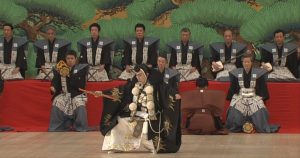
The play’s biggest turning point: Moritsuna must determine, in front of witnesses, whether the severed head presented as Takatsuna’s is genuine. Since the emotional turmoil here is conveyed almost entirely through expression and pacing rather than dialogue, this scene is a major showcase of an actor’s skill.
Moritsuna’s Inner Conflict
Bound by samurai loyalty, yet unable to let go of his love for his brother and nephew, Moritsuna’s struggle isn’t expressed through big emotional outbursts — it’s the quiet, restrained suffering underneath that gives this play its real depth.
Kojirō’s Resolve
Kojirō, young as he is, chooses to accept his fate out of devotion to his father — a major, deeply affecting moment that symbolizes the tragedy of the entire story and leaves a lasting impression on the audience.
A Viewing Note
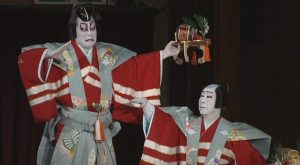
In one notable production, the young actor playing Kojirō delivered a genuinely striking performance — carrying both childlike innocence and a samurai’s resolve at once, without a hint of strain. The quiet strength of accepting one’s fate while still holding onto love for a father came through clearly, tightening the atmosphere of the entire stage the moment he appeared. Rather than dramatic gestures, it was restrained movement and subtle expression that let the emotion seep through — a strong reminder of just how much depth kabuki can carry without ever raising its voice.
Frequently Asked Questions
- Is the head presented in the inspection scene real?
-
No — it’s revealed to be a fake, part of a plan by Takatsuna. Kojirō’s response to this deception is what drives the play’s tragic climax.
- Is this play part of a longer work?
-
Yes — it’s the eighth act of the nine-act jōruri play Ōmi Genji Senjin Yakata, though it’s popular and self-contained enough to be performed on its own regularly.
- What should I watch for in the head inspection scene?
-
Watch Moritsuna’s expression and pacing rather than his words — his internal conflict is conveyed almost entirely through restrained, subtle performance rather than dialogue.
Summary
Moritsuna Jinya is a substantial jidai-mono drama about a family torn apart by war, each member confronting duty, loyalty, and love in their own impossible way. Its tension-filled head inspection scene and Kojirō’s quiet resolve make it one of the more emotionally powerful history plays in the kabuki repertoire.
Related Reading
🎭 Want to See Kabuki Live?
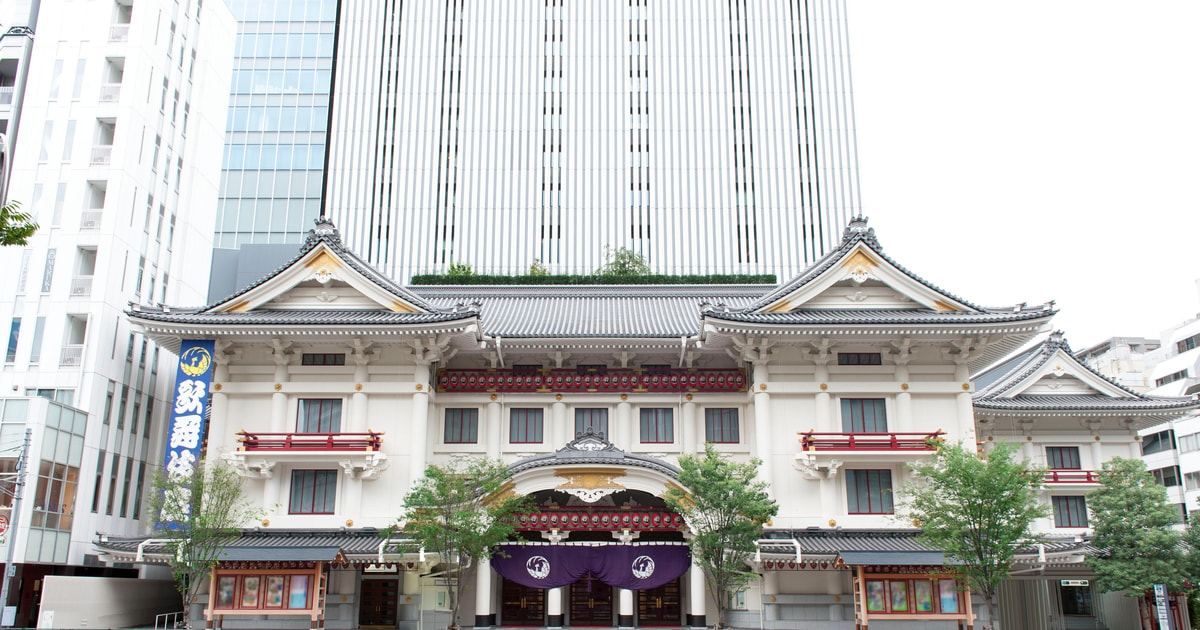
If you’re planning a trip to Tokyo, Kabuki-za is one of the most memorable ways to experience Japanese culture firsthand. GetYourGuide offers English-friendly Kabuki-za tickets and guided experiences, including options with headset translation and pre-show introductions for first-time viewers.
👉 Check Kabuki-za Tickets on GetYourGuide
This section may contain affiliate links. Booking through them costs you nothing extra and helps support this site.


コメント
コメント一覧 (1件)
[…] あわせて読みたい Moritsuna Jinya Explained: A Head Inspection, Two Brothers, and a Father’s Sacrifice Moritsuna Jinya follows two warring brothers and a tense head inspection scene that reveals a father’s hidden plan and a s […]