Kabuki has more than one lion dance, and they’re not interchangeable. If you’ve seen the term shakkyō-mono and wondered how Renjishi relates to Shunkyō Kagamijishi, or why a lion suddenly shows up mid-performance shaking its mane wildly, here’s how the whole family of kabuki lion dances actually fits together.
What Is Shakkyō-mono?
Shakkyō-mono (“Stone Bridge pieces”) is the umbrella term for kabuki’s lion dance tradition, rooted in the Noh play Shakkyō, which depicts a lion spirit dancing in a wild frenzy amid a field of peonies on a legendary stone bridge. Kabuki adapted this basic premise into several distinct dance pieces over the centuries, each with its own structure, cast, and specific highlights — but all sharing the same core image: a lion spirit whose mane-shaking dance embodies raw, untamed vitality.
The Signature Move: Ke-Furi (Mane Shaking)
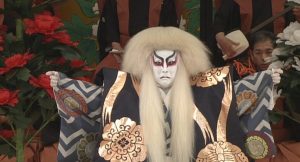
Every piece in this family builds toward the same central spectacle: ke-furi, the dynamic, sustained shaking of a long mane of hair, whipped in wide circles and figure-eights with real physical intensity. It’s one of kabuki’s most purely thrilling displays of stamina and control, and it’s the moment audiences are ultimately waiting for whenever a shakkyō-mono piece is on the program.
Renjishi: A Parent, a Child, and a Trial by Ravine
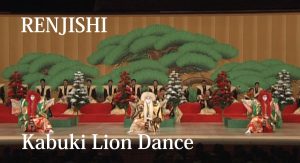
Renjishi pairs a parent lion and a cub, built around the legend that a parent lion will push its own cub down into a ravine, only accepting it back once the cub proves its strength by climbing back out. The piece dramatizes this trial as a moving statement about discipline, growth, and the bond between parent and child, culminating in the two lions performing ke-furi together in perfect synchronization — making it as much a story about family as it is a display of raw technique.
Shunkyō Kagamijishi: One Actor, Two Natures
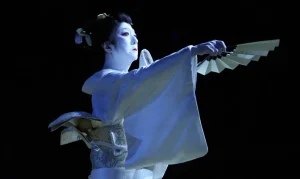
Where Renjishi splits its lion role between two performers, Shunkyō Kagamijishi asks a single actor to embody both sides of the story alone: a delicate, reserved young attendant in the piece’s first half, who transforms into a fierce lion spirit by the end. It’s a genuine showcase of range, contrasting soft, controlled femininity against explosive physical power within one continuous performance — arguably the more demanding acting challenge of the two, even if Renjishi’s parent-child dynamic carries the more immediately moving story.
How to Tell Them Apart at a Glance
| Renjishi | Shunkyō Kagamijishi | |
| Cast structure | Two performers (parent and cub lion) | One performer, playing two natures |
| Central theme | Parental discipline and growth | Transformation and contrasting range |
| Emotional register | Moving, bond-driven | Suspenseful, technically dazzling |
| Best for | Viewers who want a clear, touching story | Viewers who want to see one actor’s full range |
The Noh Roots Behind Every Version
It’s worth remembering that every shakkyō-mono piece is, at its root, an adaptation of a single Noh play depicting a lion spirit dancing among peonies on a legendary stone bridge said to connect the earthly world to a Buddhist paradise. Kabuki didn’t just borrow the premise — it transformed Noh’s famously restrained, minimalist style into something far more physically explosive, replacing Noh’s slow, controlled movement with the full-throttle intensity of ke-furi. That transformation says a lot about kabuki’s identity as an art form: even when drawing directly from an older, more austere tradition, it consistently pushes toward spectacle and raw physical expression.
Why Kabuki Keeps Returning to Lions
Part of the appeal is structural: a shakkyō-mono piece guarantees a genuinely spectacular closing image regardless of the specific staging, making it a dependable, crowd-pleasing choice for a program’s climax. But there’s real substance behind the spectacle too — these pieces consistently use the lion’s wild physicality as a vehicle for very human themes, whether that’s a parent testing a child’s resolve or a quiet character revealing a fiercer nature underneath. The mane-shaking finale isn’t just a technical flex; it’s usually the emotional payoff of everything that came before it.
Frequently Asked Questions
- What does “shakkyō-mono” mean?
-
It’s the umbrella term for kabuki’s lion dance tradition, rooted in the Noh play Shakkyō, encompassing pieces like Renjishi and Shunkyō Kagamijishi that share the same core lion-spirit premise.
- Which lion dance should a beginner see first: Renjishi or Shunkyō Kagamijishi?
-
Renjishi is often the easier entry point, with a clear, emotionally direct parent-child story. Shunkyō Kagamijishi offers a more technically demanding showcase of a single actor’s range, which can be even more rewarding once you’re familiar with the genre.
- What is “ke-furi”?
-
Ke-furi is the dynamic, sustained mane-shaking movement that forms the climax of every shakkyō-mono lion dance, demanding real physical stamina and precise control from the performer.
Summary
Kabuki’s lion dances all share the same wild, mane-shaking DNA, but each piece in the shakkyō-mono family tells its story differently — Renjishi through the bond between parent and child, Shunkyō Kagamijishi through one performer’s dramatic transformation. Knowing the difference means you’ll know exactly what kind of lion dance you’re walking into the next time one shows up on a program.
Related Reading
🎭 Want to See Kabuki Live?
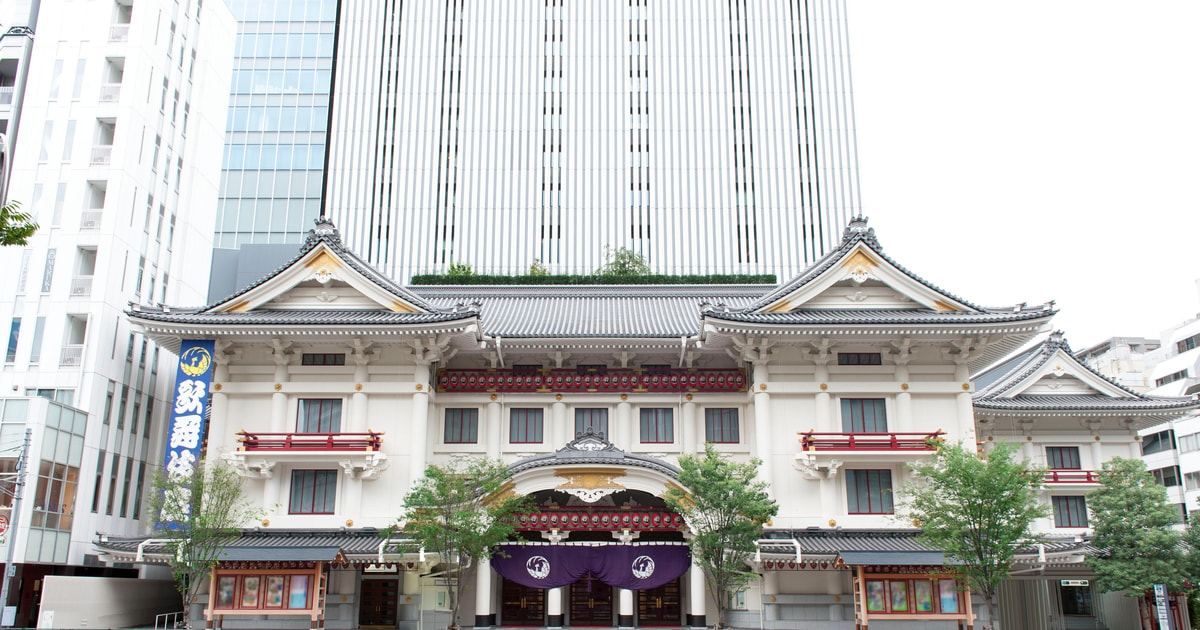
If you’re planning a trip to Tokyo, Kabuki-za is one of the most memorable ways to experience Japanese culture firsthand. GetYourGuide offers English-friendly Kabuki-za tickets and guided experiences, including options with headset translation and pre-show introductions for first-time viewers.
👉 Check Kabuki-za Tickets on GetYourGuide
This section may contain affiliate links. Booking through them costs you nothing extra and helps support this site.
コメント