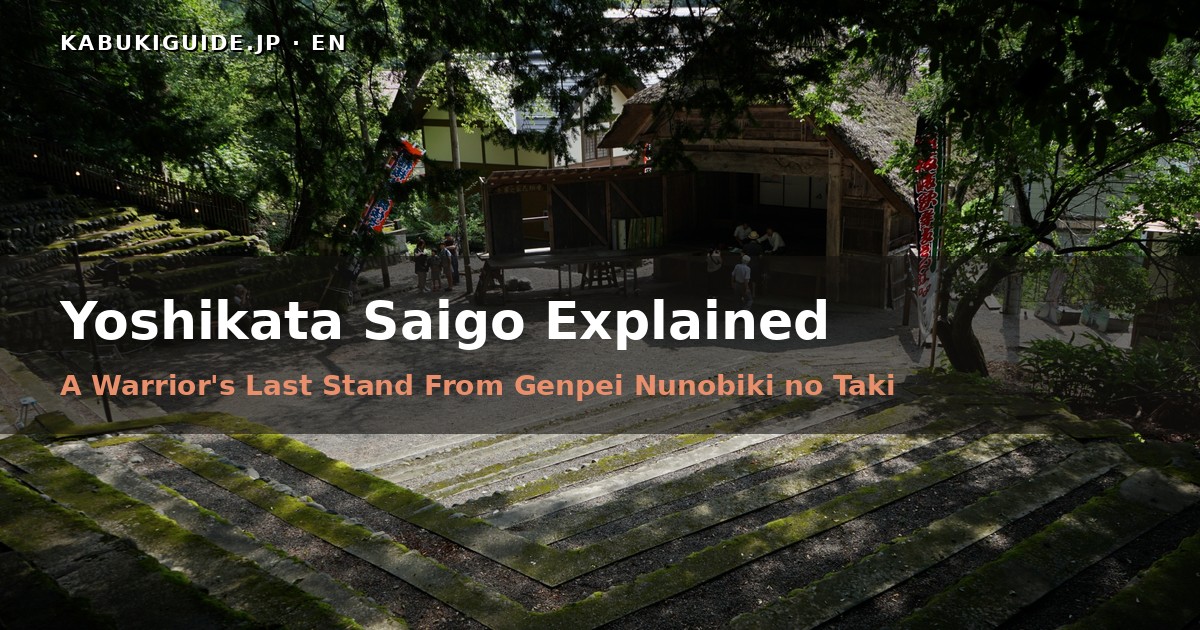
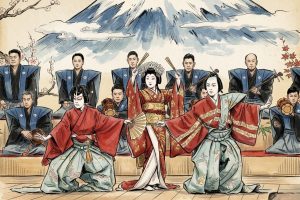
Yoshikata Saigo (義賢最期, “The Death of Yoshikata”) is the second act of the five-act jōruri classic Genpei Nunobiki no Taki, a gidayū kyōgen — a kabuki play adapted directly from a bunraku puppet-theater script. On stage, a narrator (tayū) and shamisen player narrate the story’s progress, emotion, and setting through sung narration, with the actors’ movement and dialogue tightly synchronized to that music — a defining feature of this style of kabuki.
Synopsis
With the Minamoto clan in decline after the death of Minamoto no Yoshitomo, his younger brother Yoshikata lives in hiding at a residence in Kyoto. His retainer, Orihei, is secretly Tada Yukitsuna, a warrior devoted to restoring the Minamoto clan’s fortunes. Yoshikata sees through the disguise — and reveals that he, too, secretly holds on to his own loyalty to the Minamoto cause.
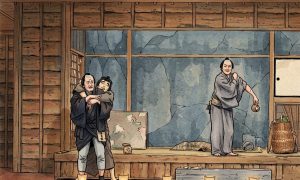
A Taira messenger soon arrives, demanding Yoshikata surrender the Minamoto clan’s treasured white banner and, in a deliberate insult, ordering him to trample on his late brother Yoshitomo’s skull. Enraged, Yoshikata cuts the messenger down, helps Yukitsuna and the others escape, and then stands alone against the full might of the Taira army.
The scene is packed with theatrical spectacle — powerful stylized combat and the dramatic hotoke-daoshi (“Buddha fall”) stunt, in which a fallen warrior collapses rigidly forward like a toppled statue. It’s a vivid portrait of samurai pride and resolve, and a genuinely moving depiction of the Minamoto clan’s tragic decline under Taira rule, culminating in one man’s solitary, spectacular final stand.
Characters
Kiso Senjō Yoshikata
A Minamoto warrior hiding in Kyoto after his brother Yoshitomo’s death, secretly holding on to his hope of restoring the clan. He meets a spectacular end under mounting pressure from the Taira. (“Senjō” is an honorific title for a person of great skill in the martial or scholarly arts.)
Aoi Gozen
Yoshikata’s second wife, pregnant and anxiously guarding the household while worrying for her husband’s safety.
Matsuyoi-hime
Yoshikata’s daughter from his first marriage, deeply attached to Orihei (Yukitsuna) and worried for his safety.
Orihei, Actually Tada Kurōdo Yukitsuna
A warrior devoted to restoring the Minamoto clan, serving Yoshikata under the false name “Orihei” — though Yoshikata sees through the disguise. While hiding from the Taira, he marries Koman.
Hyakushō Kurōsuke
Koman’s father, entrusted by Yoshikata with protecting Aoi Gozen.
Koman, Kurōsuke’s Daughter
A woman who visits the residence claiming to be Orihei’s wife, and who is entrusted with the Minamoto clan’s white banner.
Highlights
Bold Combat and the “Hotoke-daoshi”
Yoshikata cutting down enemy after enemy is already a spectacular sequence, but the true showstopper is the hotoke-daoshi — a stunt where Yoshikata falls forward while staying perfectly rigid, timed to the full force of the gidayū narration and shamisen. Considered one of the most technically demanding feats in all of aragoto-style performance, this single moment of dramatic collapse holds the audience completely captive.
The Tense Confrontation With Orihei (Yukitsuna)
The reveal that the servant Orihei is actually Tada Yukitsuna, a warrior devoted to the Minamoto restoration, is a major turning point — the quiet tension of each man testing the other’s true loyalty, followed by the dramatic realization that they share the same cause.
The Banner Inquiry and the Skull Scene
The story’s climax arrives when the Taira messenger demands the Minamoto’s white banner and, in a final act of cruelty, orders Yoshikata to trample his own brother’s skull. The moment Yoshikata’s carefully held composure finally breaks into fury is the emotional peak of the entire piece.
Summary
Yoshikata Saigo is a powerful jidai-mono set piece depicting the resolve and downfall of a Minamoto warrior living under Taira rule. The plot itself is simple, but its themes — samurai pride, loyalty, and resolve in the face of death — land powerfully even for viewers new to kabuki. Between the bold stylized combat, the dramatic hotoke-daoshi fall, and Yoshikata’s solitary last stand, it’s a piece that captures kabuki’s raw intensity in full force.
Frequently Asked Questions
- What is “hotoke-daoshi”?
-
It’s a demanding stunt where a fallen warrior collapses forward while remaining perfectly rigid, like a toppled statue — considered one of the hardest physical feats in aragoto-style kabuki, and the visual highlight of Yoshikata’s death scene.
- What is a “gidayū kyōgen”?
-
It’s a kabuki play adapted from a bunraku puppet-theater script, performed with a narrator and shamisen player driving the story’s emotion and pacing while the actors’ movement stays tightly synced to that music.
- Is this play part of a larger story?
-
Yes — it’s the second act of the five-act jōruri play Genpei Nunobiki no Taki, though it’s frequently performed as a self-contained piece due to its popularity.
Related Reading
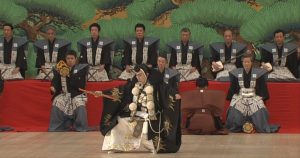
🎭 Want to See Kabuki Live?
If you’re planning a trip to Tokyo, Kabuki-za is one of the most memorable ways to experience Japanese culture firsthand. GetYourGuide offers English-friendly Kabuki-za tickets and guided experiences, including options with headset translation and pre-show introductions for first-time viewers.
👉 Check Kabuki-za Tickets on GetYourGuide
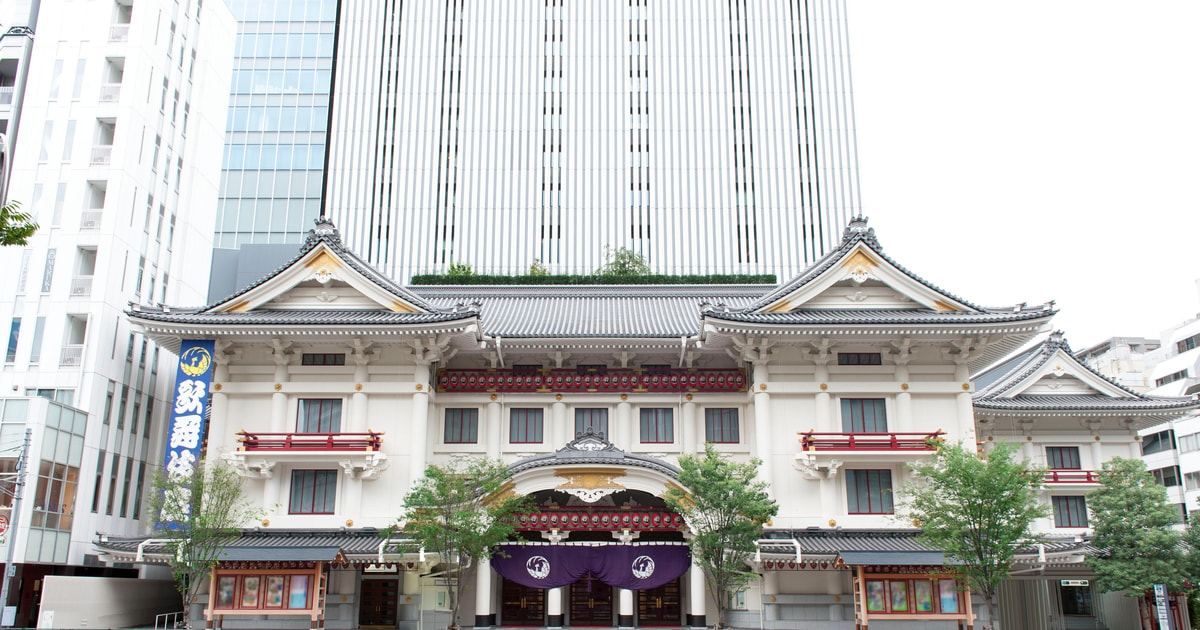
This section may contain affiliate links. Booking through them costs you nothing extra and helps support this site.




コメント
コメント一覧 (1件)
[…] — the story behind this distinctive kabuki dance drama. あわせて読みたい Yoshikata Saigo Explained: A Warrior’s Last Stand From Genpei Nunobiki no Taki Yoshikata Saigo depicts a Minamoto warrior’s defiant last stand against the Taira, capped by […]