Sanbasō (三番叟) is a ceremonial dance in kabuki and bunraku puppet theater, developed from the Noh ritual piece Shiki Sanban. Pieces adapted from Noh like this are called matsubame-mono — staged against a painted pine backdrop that evokes a traditional Noh stage.
Sanbasō is danced with bells in hand, a prayer for a bountiful harvest and peace throughout the land, expressed through powerful, rhythmic foot-stamping. It’s traditionally performed on celebratory occasions — New Year’s programs, name-succession ceremonies, and similar milestone events. The best-known versions are Kotobuki Shiki Sanbasō and Ayatsuri Sanbasō.
What Is Kotobuki Shiki Sanbasō?
When performed by three roles together — Okina, Senzai, and Sanbasō — the piece is called Kotobuki Shiki Sanbasō. A shortened version featuring two dancers performing just the Sanbasō portion is called Ninin Sanbasō (“Two-Person Sanbasō”).
Synopsis
Since this is fundamentally a ceremonial dance, there’s no real plot to speak of. What comes through instead is a distinctly New Year’s atmosphere — festive, yet solemn and dignified at the same time.
An attendant carries a box containing a Noh mask. In Noh, Okina becomes a deity by physically putting on this mask; in kabuki, the mask is never actually worn — instead, the dancer performs already embodying the role of the deity.
The Structure of the Dance
The first half opens with hand drums, weighty vocal narration, and shamisen, followed by a purifying dance from Senzai, and then a solemn dance from Okina — a dignified passage devoted to praying for peace throughout the realm.
The second half shifts into something far more energetic, as Sanbasō dances with bold, dynamic movement. Sanbasō’s dance itself divides into two sections:
- Momi no Dan — powerful, brisk foot-stamping
- Suzu no Dan — a dance performed while shaking bells, dignified yet light on its feet, with movements evoking sowing seeds and tilling soil, expressing a prayer for a plentiful harvest
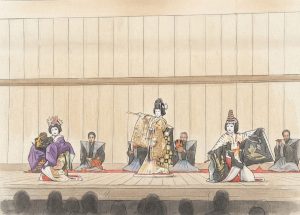
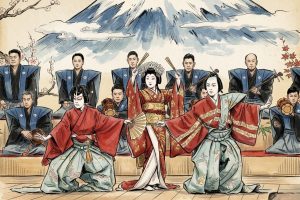
Kabuki productions frequently feature two performers dancing the Sanbasō role together, moving in perfect sync to a light hand-drum rhythm — a solemn yet festive dance celebrating a bountiful harvest.
Characters
Okina
The figure who dances solemnly to pray for peace across the realm — the central, most sacred role in this celebratory dance.
Senzai
An attendant to Okina, responsible for the opening purification dance that clears the stage. The role symbolizes youthful purity.
Sanbasō
The role that dances vigorously to pray for a bountiful harvest, bells in hand, stamping out a rhythm and bringing festive energy to the stage.
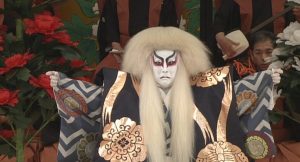
On first viewing, it can be hard to tell the three roles apart — as a quick guide, Okina wears gold-toned robes, Senzai wears white, and Sanbasō wears black.
Highlights
Powerful Foot-Stamping and the Bell Dance
Sanbasō’s stamping and bell-shaking carry a prayer for a plentiful harvest, and bring real vitality to the stage.
A Festive, Celebratory Atmosphere
There’s no story here, but the dance carries a genuine prayer for peace and prosperity — a piece that’s both festive and dignified, perfectly suited to a New Year’s program.
The Mysterious Opening Chant
Okina’s dance opens with a chant that sounds almost like an incantation — a string of rhythmic, largely untranslatable syllables. Its meaning has been debated for centuries, and to this day, no definitive interpretation exists.
Summary
Kotobuki Shiki Sanbasō is a distinctly celebratory kabuki dance, prioritizing prayer and ritual over narrative. Okina, Senzai, and Sanbasō each dance in turn, together forming a prayer for peace and a bountiful harvest — less a story with ups and downs, and more an expression of celebration through solemn, ceremonial flow.
Sanbasō’s dynamic dance is the clear highlight, its bell-shaking movement bringing a burst of festive energy to close out the piece. Since it’s a piece to be experienced as atmosphere rather than followed as plot, it’s genuinely approachable even for someone watching kabuki for the very first time — a fitting way to mark a special occasion, and a piece that captures the feeling of kabuki’s own beginnings.
Frequently Asked Questions
- Is there a story in Kotobuki Shiki Sanbasō?
-
No — it’s a ceremonial dance built around ritual and prayer rather than narrative, praying for peace throughout the land and a bountiful harvest.
- How can I tell the three roles apart on stage?
-
Okina wears gold-toned robes, Senzai wears white, and Sanbasō wears black — a simple visual guide for a first-time viewer.
- Is Kotobuki Shiki Sanbasō a good choice for kabuki beginners?
-
Yes — since it’s meant to be experienced as atmosphere rather than followed as a plot, there’s no story to keep track of, making it an easy, approachable entry point into kabuki.
Related Reading
🎭 Want to See Kabuki Live?
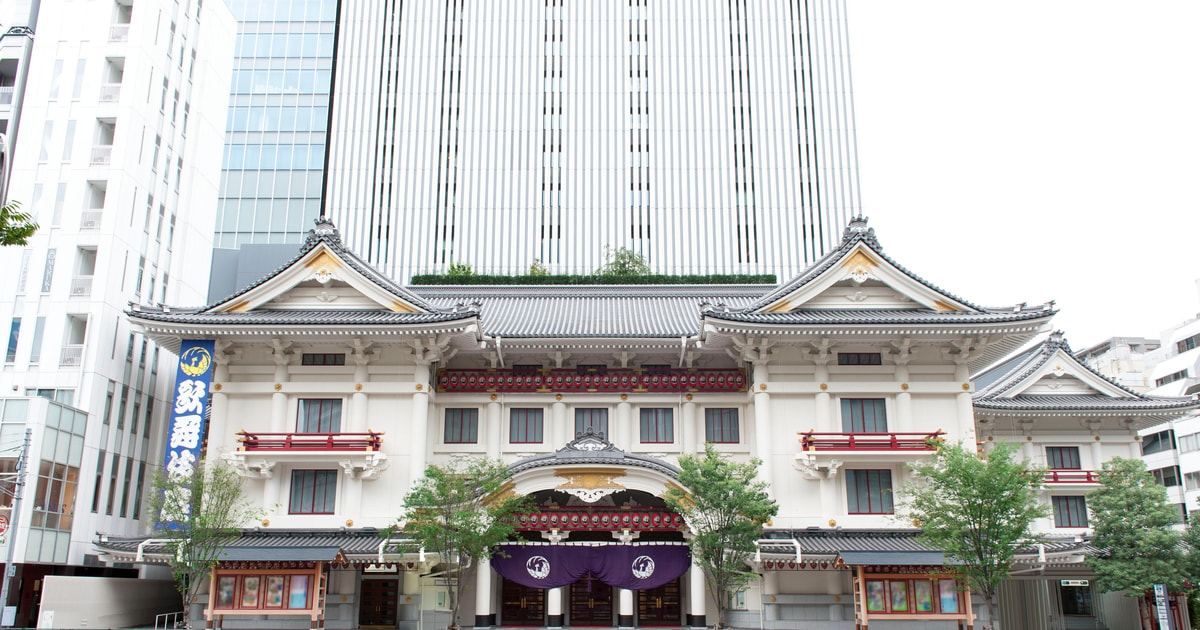
If you’re planning a trip to Tokyo, Kabuki-za is one of the most memorable ways to experience Japanese culture firsthand. GetYourGuide offers English-friendly Kabuki-za tickets and guided experiences, including options with headset translation and pre-show introductions for first-time viewers.
👉 Check Kabuki-za Tickets on GetYourGuide
This section may contain affiliate links. Booking through them costs you nothing extra and helps support this site.

コメント