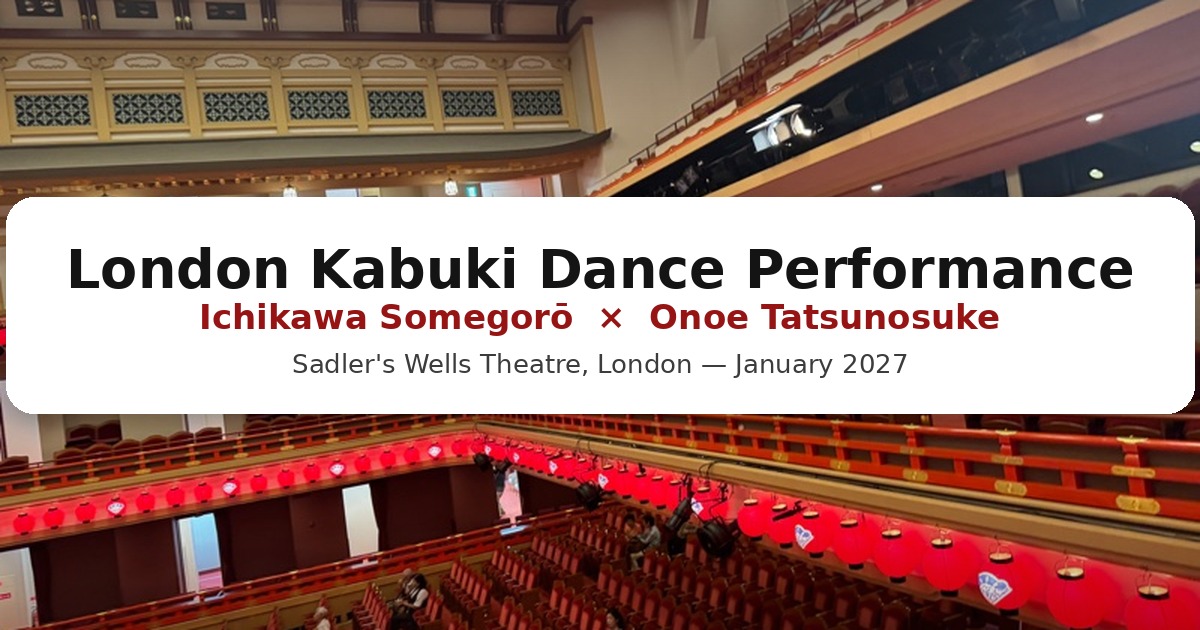
The “London Kabuki Buyō (Dance) Performance” will be held over two days, January 30 (Sat.) and 31 (Sun.), 2027, at Sadler’s Wells Theatre in London.
The performers are Ichikawa Somegorō VIII and Onoe Tatsunosuke III — two actors in their early twenties, close in age, who will present three dance works: Fuji Musume, Yuki no Shakkyō, and Danjo Dōjōji.
A Shochiku-produced kabuki performance hasn’t been staged in the UK since the 2010 “Shochiku Grand Kabuki London” tour — about 17 years ago. For both Somegorō and Tatsunosuke, this will also be their first performance overseas.
This article explains the schedule, venue, cast, program, and key highlights of the London Kabuki Buyō Performance, based on the announcement made at the Foreign Correspondents’ Club of Japan (FCCJ) in Tokyo on August 24, 2026.
What Is the London Kabuki Buyō Performance? Coming to the UK in January 2027
The “London Kabuki Buyō Performance” is an overseas production by Shochiku. It will take place at Sadler’s Wells Theatre in London over two days, January 30 (Sat.) and 31 (Sun.), 2027.
The program consists of three dance works that showcase kabuki’s physical movement and formal beauty. Onoe Tatsunosuke dances Fuji Musume solo, Ichikawa Somegorō dances Yuki no Shakkyō solo, and the two perform together in Danjo Dōjōji.
Schedule and Venue
The performance dates are January 30 (Sat.) and 31 (Sun.), 2027. The venue, Sadler’s Wells Theatre, is a world-renowned home of contemporary dance.
That a kabuki-buyō-centered program is being staged at a theatre so closely tied to dance is worth noting when thinking about what this project represents. It’s an opportunity to send the movement and aesthetics cultivated by classical kabuki out to a London stage.
Tickets Go on Sale from Mid-September 2026
Tickets are expected to go on sale on the official website from mid-September 2026. However, specific details such as the exact on-sale date and pricing had not been announced as of the press conference.
Anyone planning to attend should keep an eye on official updates as they’re announced. At this point, the only confirmed detail is that sales will begin “from mid-September on the official website.”
Ichikawa Somegorō and Onoe Tatsunosuke Head Overseas for the First Time
Ichikawa Somegorō and Onoe Tatsunosuke, the performers in the London Kabuki Buyō Performance, are actors of the same generation, closely watched as the young talent carrying kabuki’s future forward. Somegorō is 21, and Tatsunosuke is 20. That this is the first overseas performance for both of them is one reason it’s drawing so much attention.
Ichikawa Somegorō VIII
Ichikawa Somegorō VIII is 21 years old. His father is Matsumoto Kōshirō X, and Somegorō made his first stage appearance (o-memie) at age two. Alongside the kabuki stage, he also has experience appearing in NHK taiga dramas.
In spring 2026, he appeared in a straight-play production of Hamlet, a role his father and grandfather had also played before him. In the London performance, he will dance Yuki no Shakkyō solo, and also join Tatsunosuke in Danjo Dōjōji.
At the opening of the press conference, Somegorō shared his excitement:
“This time, we’ve been given the opportunity to hold a kabuki performance at Sadler’s Wells Theatre, and I’m truly grateful to have the chance to convey the power of kabuki abroad together with Tatsunosuke, who is from the same generation as me. This is also my own first overseas performance. I’m very thankful, and honestly, an overseas performance was always something I’d dreamed of in the back of my mind, so I’m very happy about it.”
His words convey both the sense of bringing kabuki abroad alongside an actor of his own generation, and his genuine anticipation for what will be his own first performance overseas.
Onoe Tatsunosuke III
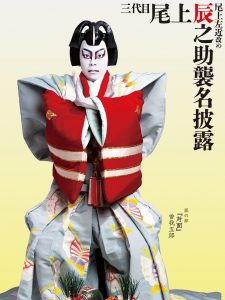
Onoe Tatsunosuke III is 20 years old. His father is Onoe Shōroku IV, and Tatsunosuke made his first stage appearance (o-memie) at age three. In May 2026, his name-succession (shūmei) performance as “Onoe Tatsunosuke III” was held at Kabukiza, drawing full houses every day of the run.
In London, he’ll dance Fuji Musume solo and join Somegorō in Danjo Dōjōji. It’s a milestone stage in more ways than one, coming in the very year of his name-succession and marking his first performance overseas.

Asked why he chose classical works, Tatsunosuke said it was “precisely because I believe in the power of classical kabuki,” and described great art as “something that transcends nationality and ethnicity.” There’s real anticipation around a young actor bringing the appeal of the classics abroad head-on.
The Program: Fuji Musume, Yuki no Shakkyō, and Danjo Dōjōji
This program features three dance works: Fuji Musume, Yuki no Shakkyō, and Danjo Dōjōji. Fuji Musume and Yuki no Shakkyō are solo dances, while Danjo Dōjōji is performed by both actors together.
Here’s how the announced works and performers line up. Note that this is centered on the performance format confirmed for the announcement — specific staging details have not been released.
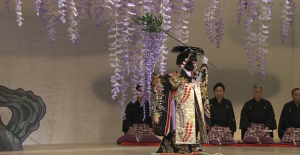
Fuji Musume — Onoe Tatsunosuke Dances Solo
Fuji Musume is danced solo by Onoe Tatsunosuke. He’ll present this classic of kabuki buyō — at 20 years old — to a London audience.
For Tatsunosuke, this piece marks not just his overseas debut, but a work he carries entirely on his own. As a solo dancer rather than half of a duet, how he conveys the power of classical kabuki will be closely watched.
You can read a detailed explanation of Fuji Musume below.
Yuki no Shakkyō — Ichikawa Somegorō Dances Solo
Yuki no Shakkyō is danced solo by Ichikawa Somegorō. It’s another of the three dance works announced for this tour, and the piece in which Somegorō carries the stage alone.
Somegorō has described kabuki as “born more than 400 years ago, growing by absorbing the culture and values of each era — an existence that symbolizes generations of accumulated Japanese heritage.” This piece will likely be a stage that expresses that idea, through dance, for audiences abroad.
Yuki no Shakkyō belongs to the lineage of kabuki dances known as shakkyō-mono, based on the celebrated Noh piece Shakkyō (“The Stone Bridge”). You can read more about what shakkyō-mono dances are like below.
Danjo Dōjōji — Ichikawa Somegorō and Onoe Tatsunosuke Together
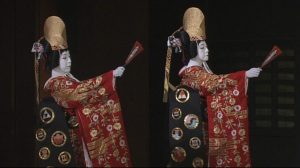
Danjo Dōjōji is danced by Ichikawa Somegorō and Onoe Tatsunosuke together. While Fuji Musume and Yuki no Shakkyō are each solo dances, this piece brings both performers onto the stage at the same time.
The so-called Dōjōji-mono works are broadly known as a group of pieces passed down within kabuki. Danjo Dōjōji is known specifically as a version of the celebrated onnagata masterpiece Kyōganoko Musume Dōjōji, reworked to be danced by a man and a woman together. That said, the specific staging and how the piece will unfold have not yet been announced.
You can read more about the source work, Kyōganoko Musume Dōjōji, below.
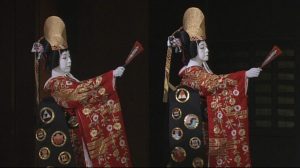
A pairing of two actors close in age — Somegorō at 21 and Tatsunosuke at 20. Staging two solo dances alongside one duet, so that each performer’s individual expression can be appreciated in turn, is one of the defining features of this program.
Highlights of the London Kabuki Buyō Performance
Two Young Actors of the Same Generation Bringing Classical Kabuki Abroad
The biggest draw is that Ichikawa Somegorō and Onoe Tatsunosuke — two actors of the same generation — are taking on their first overseas performance together, carrying classical kabuki dance with them.
Within Japan, new kabuki productions based on anime and other contemporary source material have been staged one after another, drawing in younger audiences and proving popular. For this London engagement, by contrast, three classical dance works were chosen instead.
Tatsunosuke spoke about the choice of program:
“There was also the option of staging a new work in London. But I believe in the power of classical kabuki. So that this doesn’t end as just a passing boom, but carries forward, I’d really like audiences in London to see live kabuki.”
Choosing the classics over a new work suggests a desire to share the very expression kabuki has carried forward over the long term. It’s also striking to hear an actor speak of wanting to carry the current wave of attention into something lasting, rather than let it end as a passing trend.
A Program That Balances Solo Dances and a Duet
In the program, Tatsunosuke dances Fuji Musume solo, Somegorō dances Yuki no Shakkyō solo, and the two perform Danjo Dōjōji together.
A dance carried by one performer alone, and a dance created by two performers together — the program is built to include both. Audiences get to see each actor’s individual solo work as well as a duet between two performers of the same generation.
How Somegorō and Tatsunosuke will each project their presence in their solo pieces, and what kind of partnership they bring to Danjo Dōjōji, are both worth watching for — and comparing their expression across all three works is part of the appeal.
Sharing Japanese Culture and Aesthetics Through Dance
Toward the end of the press conference, Somegorō spoke about what kabuki means to him:
“Kabuki is packed with Japanese culture, aesthetics, and formal beauty — it’s a symbol of everything Japan has built up over time. I’d love for more people in Japan to get to know it and watch it too. I hope this London performance can be a chance for people in Japan to become interested in it as well.”
He’s not just hoping to introduce kabuki to audiences abroad — he’s also hoping that news of this performance reaches people back in Japan and becomes a reason for them to take an interest in kabuki, too.
Asked about the possibility of a kabuki performance cast entirely by non-Japanese performers, Somegorō answered: “My grandfather and great-grandfather used to teach kabuki abroad. Maybe someday there’ll be a kabuki performance made up entirely of performers from overseas.” It’s a comment that hints at where the reach of kabuki might go beyond this current overseas performance.
Sadler’s Wells’ Deep Ties to Kabuki
Sadler’s Wells Theatre is renowned worldwide as a home of contemporary dance. It’s also an important venue when it comes to the history of kabuki in the UK.
Site of Britain’s First Kabuki Performance in 1972
The theatre hosted Britain’s very first kabuki performance back in 1972. This isn’t the first time the venue is welcoming kabuki — it’s a place with a long-standing connection to the art form.
The 2027 London Kabuki Buyō Performance will mark the eighth kabuki performance at Sadler’s Wells overall. Japanese kabuki dance is set to return once again to a theatre world-renowned for dance.
Shochiku’s First UK-Produced Performance in About 17 Years
A Shochiku-produced kabuki performance hasn’t been held in the UK since the 2010 “Shochiku Grand Kabuki London” tour — about 17 years ago.
The eighth kabuki performance at this particular theatre, and roughly the seventeenth year since a Shochiku production last played in the UK — both numbers point to a performance that arrives with real continuity behind it, building on a history of overseas kabuki performances that stretches back decades.
Is This Accessible for Kabuki Beginners and Overseas Audiences?
For anyone unfamiliar with kabuki, the language barrier and the sense that you need background knowledge can feel daunting. This program consists of three dance works — Fuji Musume, Yuki no Shakkyō, and Danjo Dōjōji. When asked about kabuki’s name recognition in London, Somegorō answered:
“These are dance pieces without dialogue, and they’re full of the kind of beauty that says ‘kabuki’ unmistakably, so I believe audiences will enjoy them.”
It’s a view that kabuki can be experienced through dance and visual beauty rather than by following dialogue. For a London audience that doesn’t speak Japanese, that could be an accessible entry point into kabuki’s aesthetics. Kabukiza itself, incidentally, now offers an English-language guide service for international visitors, which is one reason overseas audiences there have been growing.

No Prior Knowledge Needed — Just Watch the Stage
First-time viewers of classical performing arts don’t need to feel they must understand everything before setting foot in the theatre. For this performance, the actors themselves have said they hope audiences simply enjoy the beauty of the dance.
Watching how Somegorō and Tatsunosuke each move on stage, and noticing the contrast between the solo dances (Fuji Musume and Yuki no Shakkyō) and the duet they perform together (Danjo Dōjōji) — simply knowing the announced lineup of works and performers can already be a helpful way into watching the show.
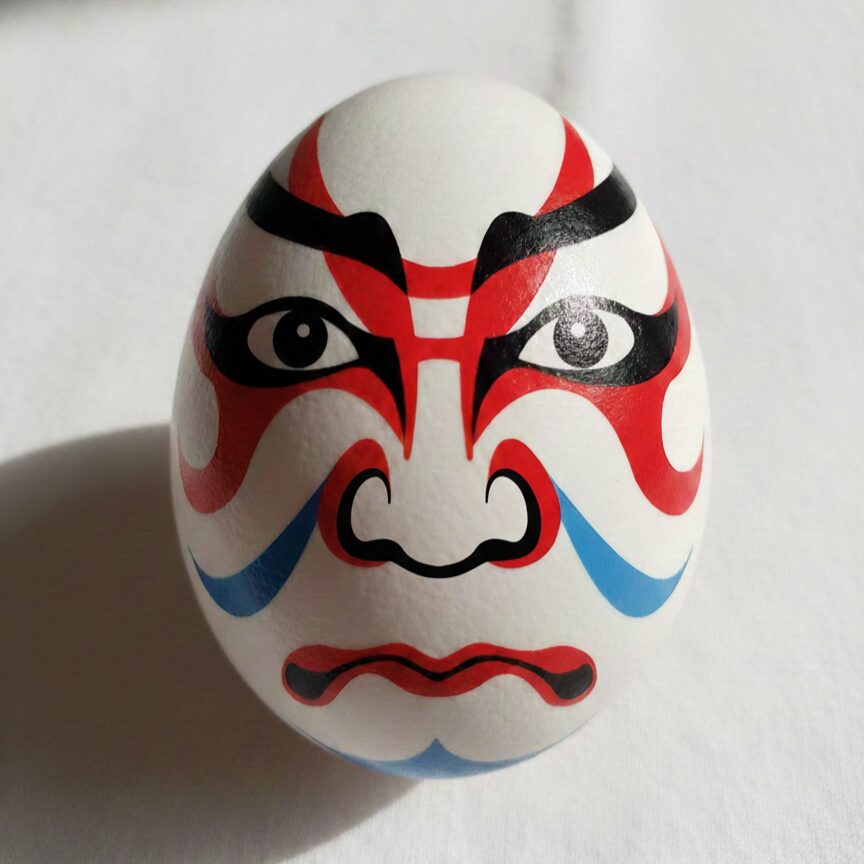
Stage Makeup Is Part of Kabuki Culture Too
At the press conference, a question was also raised about kabuki makeup. Tatsunosuke answered, “Kabuki makeup is a culture in itself. It makes anyone look beautiful.”
It’s a comment that frames kabuki makeup itself as part of the culture. For newcomers to kabuki, paying attention to the makeup, alongside the movement and costuming, can be another entry point into appreciating the performance.
Beyond the Kabuki Boom: What the Press Conference Reveals
Spurred in part by the film Kokuho (National Treasure), interest in kabuki has been spreading worldwide. In recent years, the number of international tourists visiting Kabukiza has also been rising, reflecting growing interest in kabuki from outside Japan.
Within Japan, meanwhile, new kabuki productions based on anime and other contemporary material have been staged one after another to introduce the art form to younger audiences, and have proven popular. Amid that expansion of new entry points, this London performance is built entirely around classical kabuki dance.
Tatsunosuke spoke of choosing the classics “precisely because I believe in the power of classical kabuki.” He also described great art as “something that transcends nationality and ethnicity.”
Somegorō, for his part, described kabuki as a symbol of generations of accumulated Japanese heritage. What both actors’ comments share is a view of the classics not as relics of the past, but as works with real power to reach today’s audiences — including audiences abroad.
Announced at an August 24, 2026 Press Conference
The performance was announced at a press conference held on August 24, 2026, at the Foreign Correspondents’ Club of Japan (FCCJ) in Tokyo.
At this stage, this remains pre-performance announcement news. What’s confirmed is that the show will run January 30 (Sat.) and 31 (Sun.), 2027, at Sadler’s Wells Theatre; the two performers and the three-work dance program; and that tickets are due to go on sale from mid-September 2026 on the official website. Ticket pricing and specific staging details have not yet been announced.
For now, what stands out is the commitment Somegorō and Tatsunosuke expressed toward this performance, and the three works chosen for it. How this first UK-produced Shochiku kabuki performance in roughly 17 years will be received remains to be seen — the curtain rises in January 2027.
Frequently Asked Questions
- When and where is the London Kabuki Buyō Performance being held?
-
It will be held over two days, January 30 (Sat.) and 31 (Sun.), 2027, at Sadler’s Wells Theatre in London. It’s an overseas production by Shochiku.
- Is this the first overseas performance for Ichikawa Somegorō and Onoe Tatsunosuke?
-
Yes. According to their own comments at the press conference, the London Kabuki Buyō Performance will be the first overseas performance for both actors.
- Do the works performed include dialogue? Can beginners enjoy it?
-
The program consists of three dance works: Fuji Musume, Yuki no Shakkyō, and Danjo Dōjōji. At the press conference, Ichikawa Somegorō said these are dances without dialogue, full of unmistakably “kabuki” beauty, and that he believes audiences will enjoy them. Kabuki beginners can appreciate the performance through the dance and its visual beauty as an entry point.
- When and where can I buy tickets?
-
Tickets are expected to go on sale on the official website from mid-September 2026. Specific details, including the exact on-sale date and pricing, had not been announced as of the press conference.
- Is this the first time kabuki has been performed at Sadler’s Wells Theatre?
-
No, it isn’t. The theatre hosted Britain’s first kabuki performance back in 1972, and the 2027 London Kabuki Buyō Performance will be the eighth kabuki performance held there overall.
- What will be performed at the London Kabuki Buyō Performance?
-
Three works will be performed: Fuji Musume, danced solo by Onoe Tatsunosuke; Yuki no Shakkyō, danced solo by Ichikawa Somegorō; and Danjo Dōjōji, performed by both actors together.
New to kabuki? If you’re wondering how to approach watching kabuki for the first time, our beginner’s guide covers the basics — kabuki’s conventions and forms of expression are unlike anything else, and knowing just a little goes a long way toward making it click.
Summary
The “London Kabuki Buyō Performance” will be held January 30 (Sat.) and 31 (Sun.), 2027, at Sadler’s Wells Theatre in London — the first Shochiku-produced kabuki performance in the UK since 2010, about 17 years ago.
The cast is Ichikawa Somegorō VIII and Onoe Tatsunosuke III. Somegorō dances Yuki no Shakkyō solo, Tatsunosuke dances Fuji Musume solo, and the two perform Danjo Dōjōji together. It will be the first overseas performance for both of them.
Amid a worldwide kabuki boom, the works chosen for this occasion were classical kabuki dances. Somegorō has explained that these are dances without dialogue, full of unmistakably “kabuki” beauty, and that he believes audiences will enjoy them. It’s a performance expected to reach not only overseas audiences, but also kabuki newcomers in Japan looking for a way into the classics.
Tickets are expected to go on sale on the official website from mid-September 2026, though pricing and other details remain unannounced — check official sources for updates as they come.


コメント