
Ichikawa Somegorō (21), Ichikawa Danko (22), and Onoe Sakon (20) are the rising stars widely seen as the next generation of kabuki. Having pushed each other forward since childhood, the three had long been known by the affectionate nickname “Somedansa.” But in May 2026, with Sakon’s succession to the name Onoe Tatsunosuke III, they stepped into a new chapter together — now known as “Somedantatsu.”
The “Somedansa” Years: Comrades in Arms
Tatsunosuke describes the bond among the three not as simple friendship, but as something closer to “comrades in arms.” Each with a distinct personality, they’ve spent years pushing and inspiring one another.
Starting in May 2020, the online series Kabuki Kawa gave audiences a rare, informal look at the three away from the stage. In January 2025, an event at Tōgeki theater celebrating Somegorō’s and Danko’s coming of age drew considerable attention.
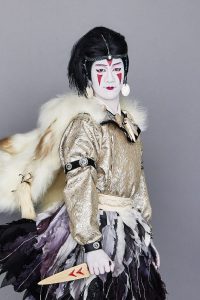
Alongside taking on major roles in classic works for the first time, each has continued to branch out into new challenges. Somegorō took the lead role of Ina Kikunosuke in Kobikichō no Adauchi during the April Grand Kabuki production; Danko took on the role of Ashitaka in Super Kabuki’s Princess Mononoke; and Sakon expanded into new-style kabuki, television, and stage work, including the role of Kasu Kiyomitsu in the kabuki production Tōken Ranbu: Azuma Kagami Yukimayoi.
The Succession to Onoe Tatsunosuke III: A Name Inherited, a New Challenge Ahead
On May 3, 2026, Sakon formally succeeded to the name Onoe Tatsunosuke III at Kabukiza’s “Dan-Kiku Festival” May Grand Kabuki in Tokyo. “Tatsunosuke” was previously carried by his grandfather, the first-generation Tatsunosuke, and his father, Onoe Shōroku (51) — a lineage traditionally associated with bold, powerful male roles.
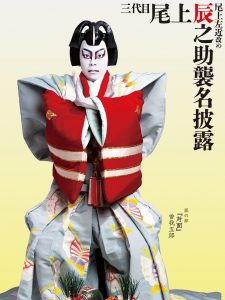
Rather than staying within that tradition alone, the new Tatsunosuke has charted a path as a performer who takes on both male and female roles. “What I’m aiming for as a performer who does both is to follow in the footsteps of Onoe Kikugorō VII,” he said. “I want to keep working toward two figures I deeply admire: my grandfather, the first Tatsunosuke, and Kikugorō VII.”
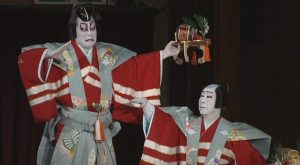
The succession plays were the classics Kotobuki Soga no Taimen and the “Kikubatake” scene from Kiichi Hōgen Sanryaku no Maki — the former notably giving him the chance to perform alongside Kikugorō VII, the very artist he named as his goal. “I imagine he’ll bring an extraordinary intensity to the stage,” he said, “so all I can do is meet that head-on.”
Both succession plays have their own stories worth knowing — the celebratory Soga-brothers classic, and the Kikubatake scene from the Kiichi Hōgen play.

Details of the “Dan-Kiku Festival” May Grand Kabuki Celebration
Run: May 3–27, 2026
Venue: Kabukiza
Showtimes: Matinee 11:00 AM / Evening 4:30 PM
Dark days: May 11 (Mon), May 19 (Tue)
The succession celebration took place on stage, with leading figures of the kabuki world — including Ichikawa Danjūrō, Onoe Kikugorō VIII, and Onoe Kikugorō VII — lending their support. In the evening program’s Sukeroku Yukari no Edo Zakura, Ichikawa Danjūrō’s son Ichikawa Shinnosuke delivered a formal congratulatory speech — a moment that, alongside the “Sannosuke” grouping the three represent, underscored a genuine sense of solidarity spanning generations of the kabuki world.

Beyond Kabuki: A Shared Dream of Historical Drama
As “Somedantatsu,” the three aren’t just pushing each other in kabuki. All three share a common ambition: appearing in NHK’s annual year-long historical drama series (taiga drama).
Somegorō has already appeared in 2022’s Kamakura-dono no 13-nin, and Danko is set to appear in 2026’s Toyotomi Kyōdai!. Tatsunosuke, meanwhile, has a real name that happens to be Fujima Taiga — and he’s joked, with a laugh, about searching his own name online in January and finding posts describing Somegorō and Danko as “taiga drama actors” while he was simply “a taiga,” poking fun at the coincidence.
But taiga dramas carry real weight for Tatsunosuke’s family specifically. His great-grandfather, Onoe Shōroku II, starred in the very first taiga drama, 1963’s Hana no Shōgai, and both his grandfather and father have appeared in the series as well. “It means a lot to me personally,” he has said, expressing hope that he might one day continue that family tradition into a fourth generation.
The Weight of Turning 40: Honoring His Grandfather
Tatsunosuke’s grandfather, the first-generation Onoe Tatsunosuke, passed away suddenly in 1987 at just 40 years old. “I think of 40 as my own personal milestone,” the new Tatsunosuke has said. “This year is a starting point. I want to have accomplished something solid by the time I reach 40.”
“I want to keep the core of who I am as a kabuki actor while still exploring many different things. By living as Tatsunosuke, I hope today’s audiences come to know the first Tatsunosuke through me.” He believes his own growth can help elevate his grandfather’s legacy in turn.
In February 2025, he also performed the role of Kaworu Nagisa in Kabuki Kōkyōkyoku Dai Kyū-ban: Evangelion, based on the classic anime series — continuing to build a career spanning both tradition and innovation in equal measure.
Frequently Asked Questions
- Why did the nickname change from “Somedansa” to “Somedantatsu”?
-
The nickname reflects the three performers’ names. When Onoe Sakon succeeded to the name Onoe Tatsunosuke III in May 2026, the “sa” from Sakon in the original nickname was replaced with “tatsu” from Tatsunosuke.
- Are these three the same as the “Sannosuke” trio?
-
Yes — Ichikawa Somegorō, Ichikawa Danko, and Onoe Tatsunosuke also form the Reiwa-era “Sannosuke,” a recurring kabuki tradition naming trios of promising young stars whose names end in “-nosuke.”
- Have any of the three appeared in NHK taiga dramas?
-
Yes — Somegorō appeared in 2022’s Kamakura-dono no 13-nin, and Danko is set to appear in 2026’s Toyotomi Kyōdai!. Tatsunosuke has not yet appeared in one, though his family has a long history with the taiga drama series.
Summary
From “Somedansa” to “Somedantatsu,” the name change marks more than wordplay — it reflects three young performers stepping into a new stage of their careers together. Each sharpening a distinct artistic identity, occasionally crossing paths, sometimes resonating in unexpected ways — that trajectory is breathing new energy into the kabuki world. A promising Tatsunosuke building range across both male and female roles, a Somegorō moving fluently between classical and new works, and a Danko pushing at the boundaries of what kabuki can become: where these three young comrades take their story next may be one of the more compelling threads to watch in kabuki’s future.
🎭 Want to See Kabuki Live?
If you’re planning a trip to Tokyo, Kabuki-za is one of the most memorable ways to experience Japanese culture firsthand. GetYourGuide offers English-friendly Kabuki-za tickets and guided experiences, including options with headset translation and pre-show introductions for first-time viewers.
👉 Check Kabuki-za Tickets on GetYourGuide

This section may contain affiliate links. Booking through them costs you nothing extra and helps support this site.





コメント
コメント一覧 (1件)
[…] あわせて読みたい From Somedansa to Somedantatsu: Three Young Stars Shaping Kabuki’s Next Generation Three young kabuki stars once known as “Somedansa” step into a new era as “Somedantatsu” — their shared […]