If you’ve read our guide to Sukeroku, you know the story — but here’s something that surprises even some kabuki fans: depending on which acting family performs the role, the play’s actual title and music change entirely. This guide explains that system, and why it exists.
One Role, Three Different Titles
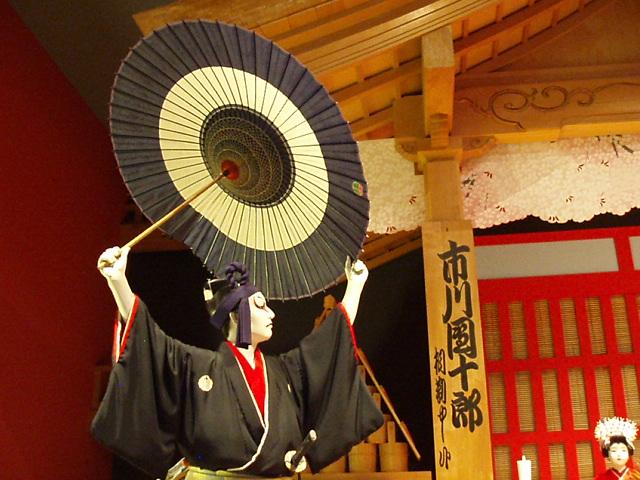
Sukeroku is one of the Kabuki Jūhachiban, the signature repertoire of the Ichikawa acting family — and its full, official title, Sukeroku Yukari no Edo Zakura, along with its accompanying katōbushi music, is used only when an actor from the Ichikawa family performs the role. When a different acting family takes on Sukeroku, both the title and the music change.
Otowaya (Onoe Kikugorō Family): Sukeroku Kuruwa no Momoyogusa
When performed by the Onoe Kikugorō line, the play’s title changes to Sukeroku Kuruwa no Momoyogusa, and the accompanying music shifts to kiyomoto. Rather than the raw aragoto intensity of the Ichikawa version, this rendition brings out a different quality entirely — the stylish, sensual charm distinctive to the Otowaya line.
The Kataoka Family: Sukeroku Kuruwa no Hatsuzakura
When the fifteenth Kataoka Nizaemon performed the role for his own name-succession production in 1998, the title became Sukeroku Kuruwa no Hatsuzakura, accompanied by nagauta music instead. This version leans into the softness and refinement of wagoto style, giving it a noticeably different character from the Ichikawa family’s Sukeroku Yukari no Edo Zakura.
Why Does the Title Change at All?
Sukeroku was established as an aragoto signature piece specifically by the Ichikawa family, which is why the “official” title is reserved for their performances alone. When another family takes on the role, the title and accompanying music are adjusted to reflect that family’s own artistic style, the individual performer, and their associated school of music.
The result is a genuinely distinctive feature of kabuki: the same story of Sukeroku can feel like an entirely different experience depending on who’s performing it — one of the ways kabuki’s family-based artistic traditions (iegei) shape a piece far beyond just casting.
How Sukeroku Came to Be
The play traces back to a real double-suicide incident in Osaka during the Genroku era, involving a man named Yorozuya Sukeroku and a courtesan. The story was dramatized repeatedly in jōruri and theater, becoming hugely popular, and it was the second Ichikawa Danjūrō who first adapted it into the Sukeroku known today.
At the time, Danjūrō was known specifically for aragoto — bold, superhuman roles — so his choice to perform Sukeroku, a more wagoto-flavored otokodate character, was considered a genuinely bold artistic risk, and it became a sensation. The seventh Ichikawa Danjūrō later refined the staging into essentially the form performed today, cementing its place among the Kabuki Jūhachiban.

Frequently Asked Questions
- Is the story different depending on which family performs Sukeroku?
-
The core story stays the same, but the title, accompanying music, and overall artistic flavor shift to reflect each family’s own performance tradition.
- Why is the “official” title reserved for the Ichikawa family?
-
Because Sukeroku was established as one of the Ichikawa family’s signature Kabuki Jūhachiban pieces, and the full title Sukeroku Yukari no Edo Zakura, along with katōbushi music, is tied specifically to their performance tradition.
Related Reading
🎭 Want to See Kabuki Live?
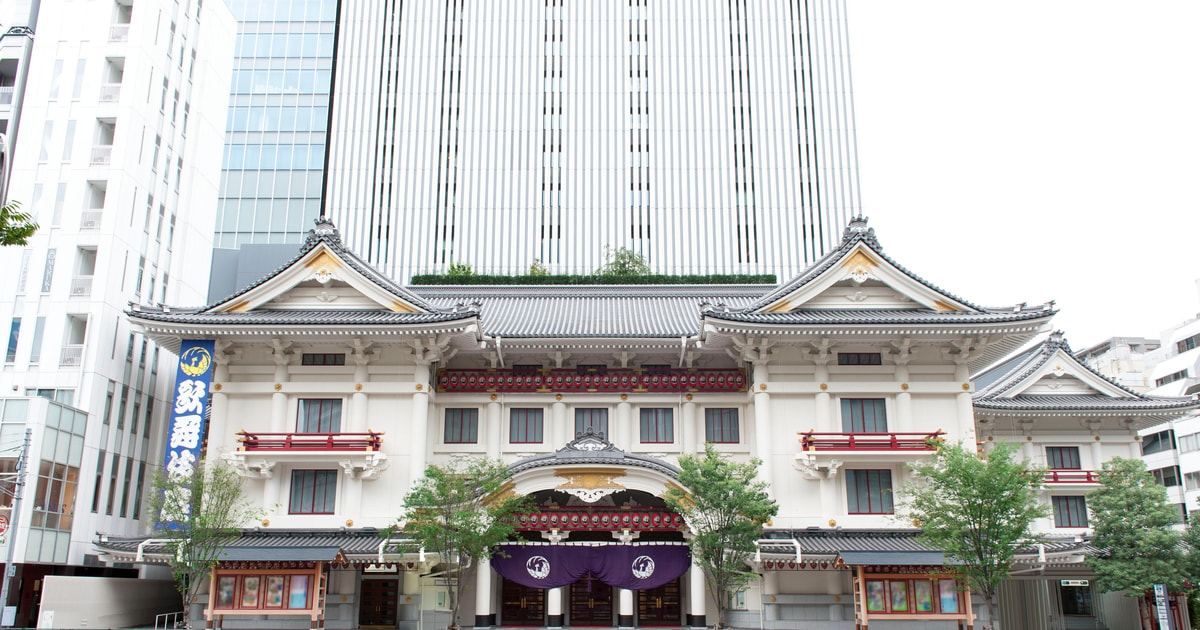
If you’re planning a trip to Tokyo, Kabuki-za is one of the most memorable ways to experience Japanese culture firsthand. GetYourGuide offers English-friendly Kabuki-za tickets and guided experiences, including options with headset translation and pre-show introductions for first-time viewers.
👉 Check Kabuki-za Tickets on GetYourGuide
This section may contain affiliate links. Booking through them costs you nothing extra and helps support this site.

コメント