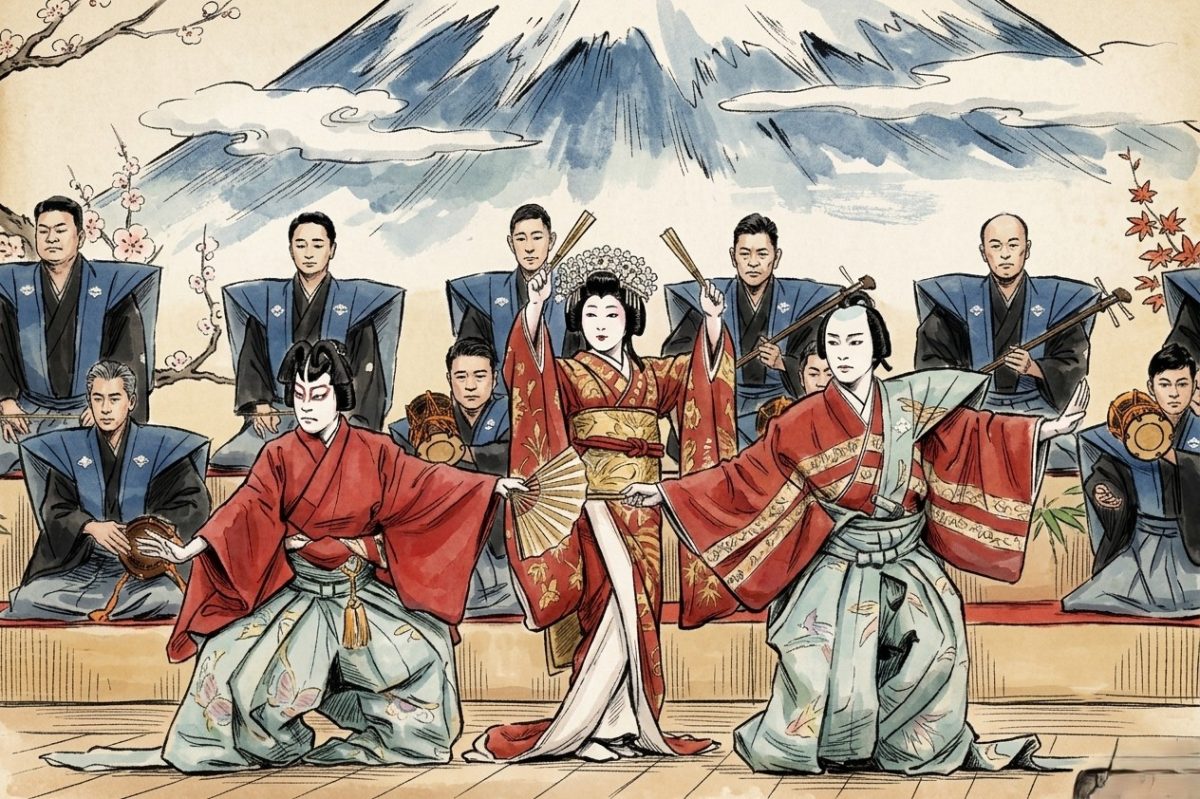
Shunchō Musume Nanakusa (“Spring Melody: The Maiden and the Seven Herbs”) is a festive nagauta dance built around a New Year’s tradition — and a rare showcase where kabuki’s three defining performance styles share the stage side by side, letting audiences compare them directly in a single piece.
What Is Shunchō Musume Nanakusa?
Premiering in 1767 at Edo’s Nakamura-za theater, Shunchō Musume Nanakusa (also known simply as Musume Nanakusa) is a nagauta dance piece built around nanakusa-gayu, the New Year’s tradition of preparing a rice porridge with seven spring herbs to pray for good health through the coming year. It’s typically staged as part of New Year’s programming, and while it draws its setting from the Soga revenge cycle — kabuki’s beloved tradition of plays built around the Soga brothers’ quest to avenge their father — this particular piece puts far more weight on dance, music, and individual performance than on dramatic incident.
Synopsis
The setting is the residence of Kudō Suketsune at the start of a new year. Lady Shizuka, at a herb-cutting ceremony meant to ward off illness, arranges the seven spring herbs on a cutting board and dances gracefully as she chops them in time with the music.
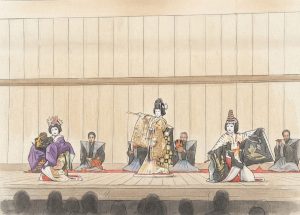
Into this scene arrive Soga Jūrō and Soga Gorō, the brothers watching for their chance to avenge their father’s death at the hands of their host, Kudō Suketsune. The elder brother, Jūrō, performs with elegant, refined restraint; the younger, Gorō, brings bold, powerful physicality to his movement. The dance of all three performers blends into a single harmonious, festive picture of spring.
Nothing especially dramatic occurs over the course of the piece — its reward instead comes from savoring each performer’s distinct individual artistry, brought together on one stage.
Characters
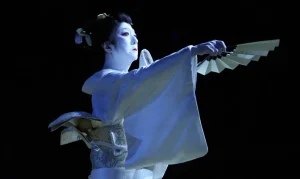
Lady Shizuka — the shirabyōshi dancer known as the beloved companion of Minamoto no Yoshitsune. She dances gracefully while cutting the seven herbs, lending the piece much of its visual elegance, and gives full expression to the delicate, refined artistry of onnagata performance.
Soga Jūrō Sukenari — the elder of the Soga brothers, whose composed, dignified performance style represents wagoto at its most characteristic.
Soga Gorō Tokimune — the younger Soga brother, bold and full of youthful intensity, bringing aragoto’s powerful mie poses and forceful movement to the piece.
Kudō Suketsune — the man responsible for the Soga brothers’ father’s death. He’s an important figure in the story’s background, but in this particular piece functions more as the host of the New Year’s celebration than as the story’s central concern.
Highlights
Three Performance Styles, Side by Side
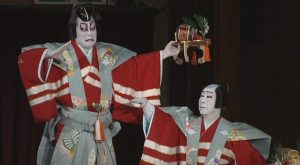
The piece’s greatest appeal is the chance to experience kabuki’s three defining performance styles within a single work. Soga Gorō delivers aragoto’s bold mie poses and forceful physicality; Soga Jūrō embodies wagoto’s gentle, composed elegance; and Lady Shizuka showcases onnagata’s refined, delicate artistry. Watching all three performers’ contrasting styles play off one another is a genuinely rare opportunity to compare kabuki’s core artistic vocabularies side by side.
The Beauty of Cutting the Herbs
The piece’s signature image is Lady Shizuka’s herb-cutting sequence — dancing while rhythmically working a small knife, radiating the fresh, elegant spirit of a new year. The sound of the herbs actually being cut becomes part of the performance itself, blending beautifully with the nagauta accompaniment.
The Beauty of Three Dancers in Harmony
The sequence where Lady Shizuka and both Soga brothers dance together is the piece’s true centerpiece — strength and grace, masculine and feminine beauty, brought together in one harmonious, festive picture that only kabuki dance can produce.
An Auspicious New Year’s Piece
The seven spring herbs traditionally carry a wish for good health through the coming year, which is exactly why Shunchō Musume Nanakusa is regularly staged during New Year’s programming — a beloved, celebratory way to mark the start of a fresh year.
A Good Fit for Beginners
You don’t need to follow a complex plot to enjoy Shunchō Musume Nanakusa — the piece rewards simply taking in its lavish costumes, beautiful choreography, nagauta music, and the contrast between each performer’s individual artistry. It’s a genuinely welcoming choice for anyone watching kabuki dance for the first time, and since it lets you compare aragoto, wagoto, and onnagata directly within one piece, it doubles as an excellent introduction to kabuki’s core performance styles.
Frequently Asked Questions
- What are the “seven herbs” in the title?
-
They refer to nanakusa-gayu, a New Year’s tradition of preparing rice porridge with seven specific spring herbs to pray for good health through the coming year — the ceremony Lady Shizuka performs in the piece.
- Is this piece connected to the Soga revenge story?
-
Yes, in setting — the Soga brothers appear as characters, and their father’s killer, Kudō Suketsune, hosts the scene. But the piece emphasizes dance and individual artistry far more than dramatic revenge plotting.
- Why is this a good piece for comparing kabuki’s performance styles?
-
Because all three of kabuki’s core styles appear together: aragoto (Soga Gorō), wagoto (Soga Jūrō), and onnagata (Lady Shizuka), letting first-time viewers see the contrast directly within a single piece.
Summary
Shunchō Musume Nanakusa turns a simple New Year’s herb-cutting ritual into a genuine showcase of kabuki’s full artistic range — aragoto’s power, wagoto’s grace, and onnagata’s refinement, brought together in one festive, accessible piece. It’s exactly the kind of dance that rewards newcomers and longtime fans alike, in equal measure.
Related Reading
🎭 Want to See Kabuki Live?
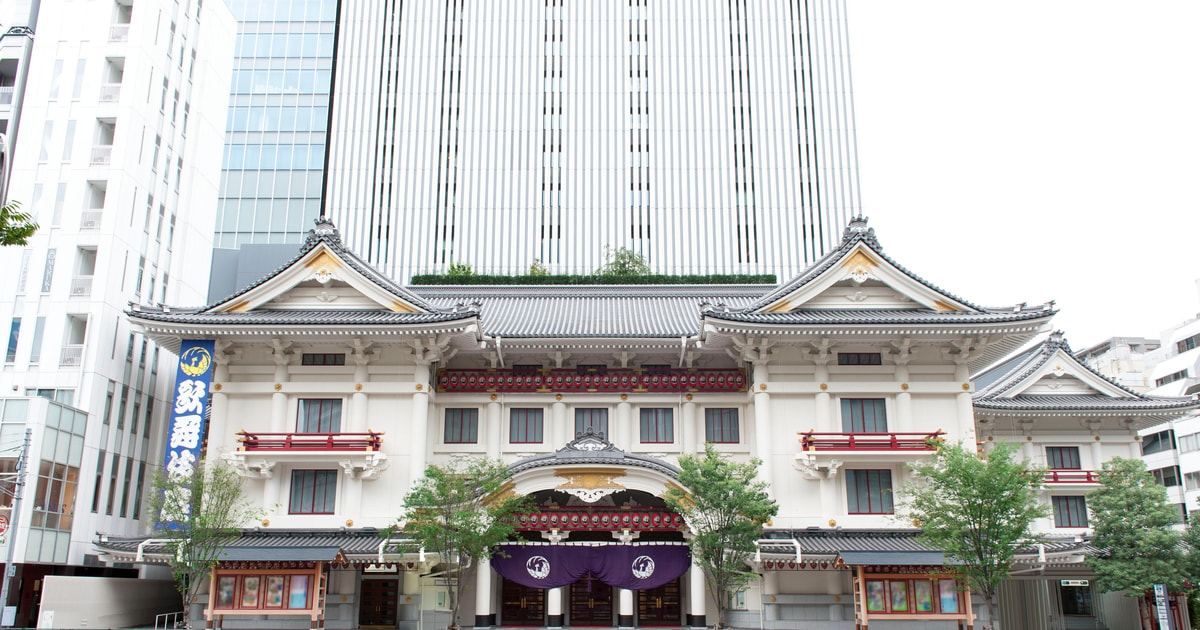
If you’re planning a trip to Tokyo, Kabuki-za is one of the most memorable ways to experience Japanese culture firsthand. GetYourGuide offers English-friendly Kabuki-za tickets and guided experiences, including options with headset translation and pre-show introductions for first-time viewers.
👉 Check Kabuki-za Tickets on GetYourGuide
This section may contain affiliate links. Booking through them costs you nothing extra and helps support this site.

コメント