
Why did the warlord Akechi Mitsuhide turn against his own lord? Tokiwa Ima Kikyō no Hataage answers that question through humiliation, endurance, and the moment a breaking point finally arrives.
What Is Tokiwa Ima Kikyō no Hataage?
Tokiwa Ima Kikyō no Hataage (時今也桔梗旗揚) is a kabuki play modeled on the Sengoku-era warlord Akechi Mitsuhide. The title itself carries a hidden meaning: “toki wa ima” (“the time is now”) alludes to the Honnō-ji Incident, and “kikyō” (bellflower) refers to the Akechi family crest — together, the title essentially means “now is the time to raise the bellflower banner.”
In other words, this is a story about the emotional journey and decision that led Mitsuhide to the Honnō-ji Incident — one of the most consequential betrayals in Japanese history. Rather than a straight historical account, it’s a heavily dramatized character study, and that dramatic intensity is exactly where its appeal lies.
One-Minute Summary
The story’s protagonist, the warlord Takechi Mitsuhide (a stand-in for Akechi Mitsuhide), serves his lord Oda Harunaga (a stand-in for Oda Nobunaga). After a series of humiliations, Mitsuhide’s suppressed anger reaches its breaking point. Finally declaring “the time is now,” he raises his banner in revolt — setting the stage for the incident that would go on to change the course of Japanese history.
Synopsis
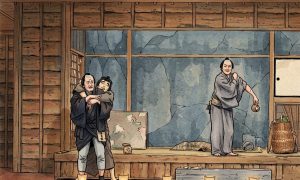
The story opens with Mitsuhide serving Harunaga faithfully. Entrusted with hosting envoys from the imperial court, he pours everything into the preparations. But his sincerity isn’t rewarded — it’s crushed. Harunaga finds fault with the bellflower-crest curtain Mitsuhide has used for the occasion, accusing him of showing off, and has his retainer Mori Ranmaru strike Mitsuhide across the forehead with an iron fan, drawing blood in a public humiliation.
Even so, Mitsuhide swallows his anger and continues acting as a loyal retainer. The story then moves to Honnō-ji, where Mitsuhide again offers his continued service — but Harunaga’s cruelty only escalates. In a grotesque insult, he pours sake into a horse-washing trough and forces Mitsuhide to drink from it. He hints at confiscating Mitsuhide’s territory, gives away an honor that should have been Mitsuhide’s, and publicly exposes the fact that Mitsuhide’s wife once sold her own hair to support the family — a relentless, systematic destruction of his dignity.
Still, Mitsuhide accepts the cup and drinks. “Though my lord may not act as a lord should, I will still act as a loyal retainer” — true to those words, he holds his position. But underneath, something has clearly begun to break.
The scene shifts to Mount Atago. Mitsuhide confides in his wife, Satsuki, about everything he’s endured, and resolves to take responsibility as a samurai through seppuku. But just before he does, he composes a poem: “The time is now, for the rains of the fifth month know all beneath heaven.” It’s no simple death poem — it’s a coded declaration that the moment for rebellion has arrived.
In the next instant, everything changes. Mitsuhide strikes down the messenger before him, and it’s revealed that his own forces have already surrounded Honnō-ji — the entire uprising was planned from the start. Mitsuhide is no longer a retainer enduring hardship; he has transformed into a man seizing power for himself. Brushing off his wife’s and sister’s attempts to stop him, he declares his intent to seize the realm and marches on Honnō-ji. The Honnō-ji Incident begins.
Characters
Akechi Mitsuhide (Takechi Mitsuhide)
A warlord devoted to loyalty, who endures repeated humiliation before finally resolving to rebel.
Oda Nobunaga (Oda Harunaga)
Mitsuhide’s lord — fierce and unpredictable, and the source of Mitsuhide’s escalating mistreatment.
Mori Ranmaru
Harunaga’s attendant, who carries out his lord’s order to strike Mitsuhide with an iron fan.
Satsuki
Mitsuhide’s wife, who absorbs her husband’s anguish and is swept up in the fate that follows.
Kikyō
Mitsuhide’s sister, who supports her brother even as she confronts the weight of his decision to rebel.
Highlights by Act
Act One: The Banquet Scene (The Forehead-Striking)
This is the opening humiliation: despite Mitsuhide’s careful preparations, he’s harshly rebuked over a minor pretext and struck across the forehead — a genuinely shocking visual moment. What matters most here is that Mitsuhide continues behaving as a loyal retainer throughout, insisting he holds no resentment toward his lord. That restraint is exactly what makes his eventual explosion so much more powerful. At this stage, the audience is still left wondering why Mitsuhide will eventually turn traitor.
Act Two: The Honnō-ji Scene (The Horse Trough)
Often considered the play’s most famous scene — humiliation taken to its absolute extreme. Harunaga forces Mitsuhide to drink sake poured into a horse-washing trough, on top of ignoring his accomplishments, hinting at confiscating his lands, seizing his prized possessions, and exposing his wife’s past hardship. And yet Mitsuhide drinks it down anyway, insisting on his loyalty regardless of how his lord behaves. The power of this scene lies in loyalty that refuses to break even past its apparent limit — and it’s exactly what completes the tension needed for the uprising to come.
Act Three: The Atago Renga Scene
This is where Mitsuhide transforms from loyal retainer into rebel. After confessing his humiliation to his wife Satsuki and nearly choosing seppuku, his death poem reveals itself as something else entirely — a coded confirmation of resolve, not a farewell. In the next moment, he strikes down a messenger, and it’s revealed that his own troops are already in position, exposing his true intentions. Brushing off the pleas of his wife and sister, Mitsuhide declares his ambition to seize the realm — no longer a victim, but a man acting entirely on his own will.
The Three-Act Structure
These three acts follow a clean structure:
- Act One — unjust humiliation (the cause)
- Act Two — mounting pressure taken to its limit (the buildup)
- Act Three — the uprising and reversal (the result)
What this means is that the play isn’t simply a retelling of the Honnō-ji Incident — its true subject is the process by which a person is pushed to betrayal.
What Makes the Play Work
The appeal of Tokiwa Ima Kikyō no Hataage isn’t historical reenactment — it’s the careful, escalating portrayal of the emotional process behind a betrayal. The humiliation of Act One, the extreme pressure of Act Two, and the uprising of Act Three build on each other to make Mitsuhide’s final decision feel genuinely earned.
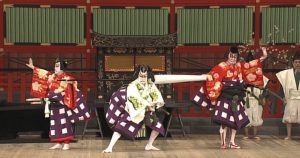
On top of that, the exaggerated aragoto-style movement and striking mie poses give the character’s anger and resolve added intensity — kabuki’s own techniques amplifying a very human story.
Who Should Watch This Play?
- Anyone who enjoys history
- Fans of Sengoku-era figures
- Viewers who appreciate weighty, substantial human drama
- Fans of Chūshingura-style stories
Watching it with the question “why did Mitsuhide really betray his lord?” in mind makes the whole piece land far more powerfully.
Frequently Asked Questions
- Is Tokiwa Ima Kikyō no Hataage based on a true story?
-
It’s based on the real Honnō-ji Incident, but character names and details have been changed and dramatized for the kabuki stage.
- What does the title mean?
-
“Toki wa ima” means “the time is now” (referring to the moment of the uprising), and “kikyō” refers to the bellflower crest of the Akechi family — together, “now is the time to raise the bellflower banner.”
- Is this play good for beginners?
-
Its structure is fairly easy to follow, though knowing a little about the historical Honnō-ji Incident beforehand will make it land even more clearly.
Summary
Tokiwa Ima Kikyō no Hataage is a psychological drama built around the exact moment Akechi Mitsuhide’s resolve breaks. Rather than simple historical reenactment, its real power comes from the raw human emotion at its center — conflict, anger, and resolve, escalating relentlessly toward the point of no return.
🎭 Want to See Kabuki Live?
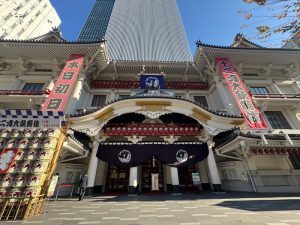
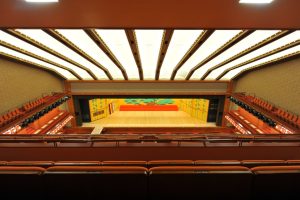
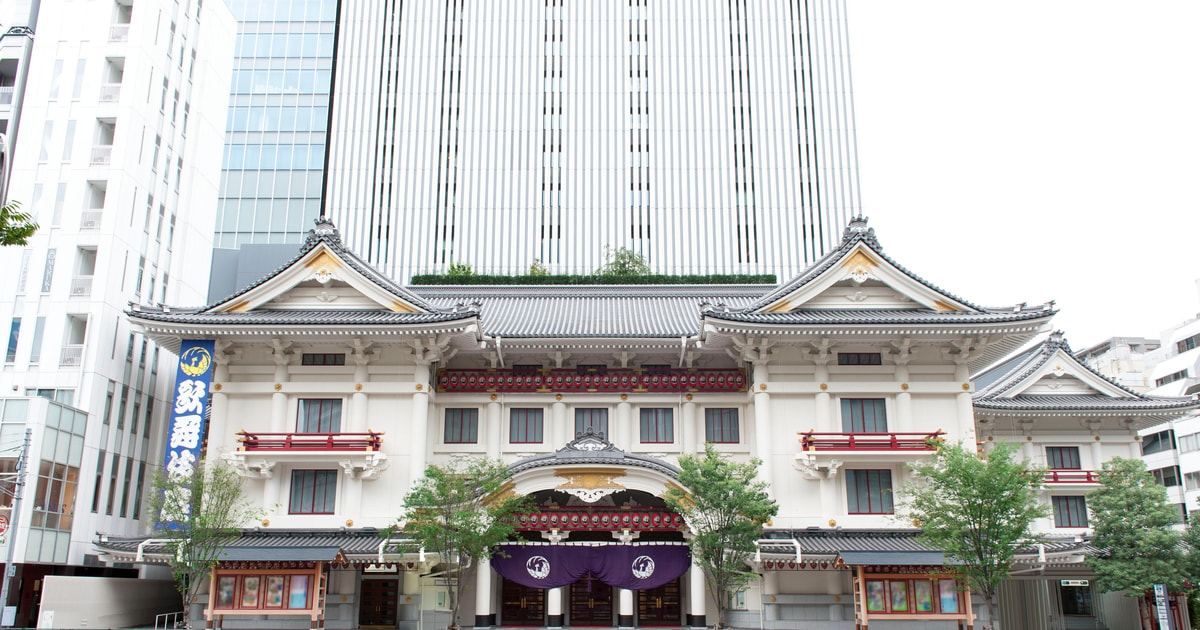
If you’re planning a trip to Tokyo, Kabuki-za is one of the most memorable ways to experience Japanese culture firsthand. GetYourGuide offers English-friendly Kabuki-za tickets and guided experiences, including options with headset translation and pre-show introductions for first-time viewers.
👉 Check Kabuki-za Tickets on GetYourGuide
This section may contain affiliate links. Booking through them costs you nothing extra and helps support this site.


コメント