
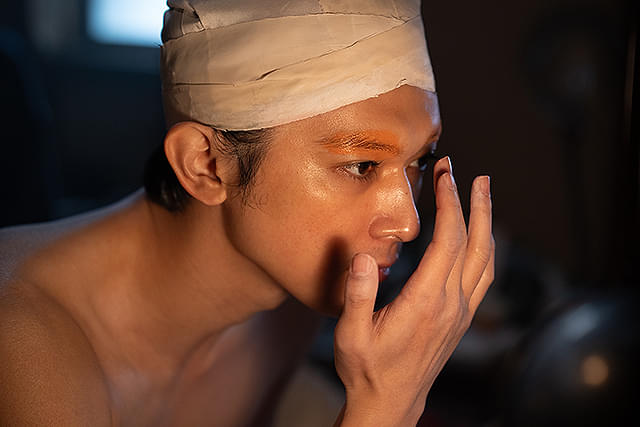
Looking for kabuki plays that share the same world as the movie KOKUHO — bloodline, talent, jealousy, obsession? If that “beautiful yet brutal” world moved you, kabuki has plenty of works where human obsession itself is transformed into art.
Here are the three plays that resonate most closely with the lingering feeling KOKUHO leaves behind, ranked.
Quick Comparison
| Play | Theme | Beginner-Friendly? |
| Ninin Dōjōji | Madness and beauty | Moderate |
| Tsumoru Koi Yuki no Sekinoto | Obsession and beauty | Good |
| Sonezaki Shinju | Love and death | Excellent |
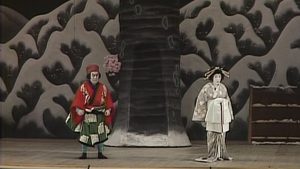
#3: Tsumoru Koi Yuki no Sekinoto (The Barrier Gate)
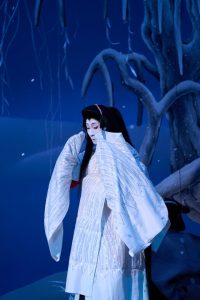
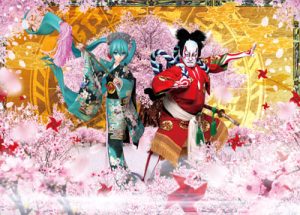
Connection to KOKUHO: A confrontation between “Sumizome” (the spirit of a cherry tree) and the barrier guard “Sekibei,” set in a dreamlike snow-covered landscape — a dignified scene where stylized beauty and drama fuse together.
Synopsis
At the Ōsaka Barrier, the courtier Munesada and the barrier guard Sekibei are approached by the maiden Komachi-hime, and an elegant dance unfolds. But Sekibei’s true identity is revealed as Ōtomo no Kuronushi, a great villain plotting rebellion — and Sumizome, too, reveals her true nature as the spirit of a cherry tree. The story suddenly shifts into tense, high-stakes drama.
Highlights
The appeal of this play lies in how a subtle unease hidden beneath the stillness gradually reveals itself. It opens wrapped in graceful dance and an elegant atmosphere — but something unsettling lingers underneath the whole time. Once Sekibei’s and Sumizome’s true identities are revealed, the atmosphere of the stage transforms completely: the beauty that came before flips directly into tension, and you realize this was never “just a dance” at all. That double structure — beauty and unease existing simultaneously — is the biggest highlight of the entire piece.
Why KOKUHO Fans Will Love It
The true nature of beauty here is attachment. Behind every polished, complete beauty lies feelings that could never quite be let go. This play is built entirely on the structure of “unresolved feeling becoming art itself.”
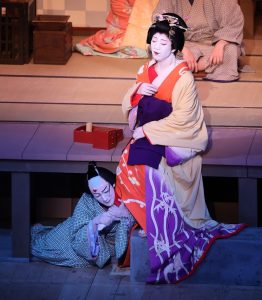
#2: Sonezaki Shinju (The Love Suicides at Sonezaki)
Connection to KOKUHO: The exact play that marks the moment Kikuo “transforms” (awakens) as an artist. Ohatsu’s obsessive devotion to love directly mirrors Kikuo’s own life.
Synopsis
Tokubei, a shop clerk at a soy sauce merchant, and Ohatsu, a courtesan, love each other deeply but are slowly cornered by the world around them. Tokubei loses his standing through money troubles and betrayal, and Ohatsu has no freedom of her own to escape her circumstances. With nowhere left to turn, the two vow, “If we cannot be together in this life, then let it be the next” — and choose to die together.
Highlights
The appeal here isn’t a dramatic twist — it’s the slow, inescapable process of losing every option one by one. Tokubei and Ohatsu aren’t destroyed all at once; they’re cornered gradually, through dialogue and circumstance, until the audience itself feels there’s simply no other path left. And the choice they make at the end, tragic as it is, reads as strangely beautiful. That transformation — accumulated despair becoming a beautiful ending — is the core of this piece.
Why KOKUHO Fans Will Love It
This is the extreme choice of “a beautiful ending” over mere survival — the same sacrifice-for-one’s-art theme that runs through KOKUHO, expressed here as romantic love instead, completed in the form of death.
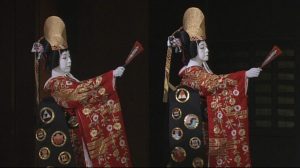
#1: Kyōganoko Musume Ninin Dōjōji
Connection to KOKUHO: The absolute peak of onnagata artistry — a piece that tests an actor’s entire “rank” as a performer. It functions almost as the key visual and symbolic touchstone for the training scenes throughout the film.
Synopsis
At a memorial service for a temple bell at Dōjōji, the shirabyōshi dancer Hanako appears and performs a dance. But her true identity is the vengeful spirit of Kiyohime, a woman betrayed in love. Her elegant dance gradually grows more intense, an eerie obsession with the bell surfaces, and finally, the emotion she can no longer suppress explodes.
Highlights
The greatest appeal of this piece is watching beauty collapse in real time, in perfect synchronization between two dancers. Hanako’s opening dance is depicted as pure, complete elegance. But as the dance progresses, that balance slowly erodes — suppressed emotion begins to bleed into the movement and the atmosphere itself. Eventually it becomes obsession that can no longer be hidden, the dance grows fiercer, and the piece transforms entirely into a different expression altogether. What began as beauty converts directly into madness — and that continuous transformation is the overwhelming highlight of the whole piece.
Why KOKUHO Fans Will Love It
Art itself, here, is the collapse of the inner self. KOKUHO’s core idea is that living for one’s art also means wearing away at one’s own heart. In this piece, a beautiful dance directly becomes madness — a moment where artistry and madness become one and the same. That’s exactly why it takes the top spot.
Which Should You Watch First?
If this is your first time seeing kabuki, our recommendation is clear: start with #2, Sonezaki Shinju.
The reasons are simple:
- The story is easy to follow
- It’s easy to emotionally connect with the characters
- It’s dialogue-driven, which makes it easier to understand
By comparison, Ninin Dōjōji is dance-centered and somewhat abstract, while Tsumoru Koi Yuki no Sekinoto requires a bit more familiarity with kabuki’s stylized world to fully land.
Frequently Asked Questions
- Do all three of these plays actually appear in the movie KOKUHO?
-
Yes — all three are featured as performances within the film, each tied to a key turning point in the protagonist’s story.
- I’m new to kabuki entirely — where should I start?
-
Start with Sonezaki Shinju. It’s dialogue-driven and emotionally direct, making it the easiest of the three to follow on a first watch.
- What makes Ninin Dōjōji so demanding for actors?
-
It requires two onnagata dancers to move in perfect synchronization while carrying a single character’s transformation from elegance into obsession — widely considered one of the ultimate tests of onnagata artistry.
Summary
What makes KOKUHO linger in memory isn’t simple success or beauty — it’s the moment human obsession and karma are transformed into art. All three plays above share that same theme:
- Sonezaki Shinju — beauty chosen at the cost of one’s life
- Tsumoru Koi Yuki no Sekinoto — beauty born from unresolved attachment
- Ninin Dōjōji — the exact point where madness and beauty become one
Kabuki isn’t a world of beauty alone — it’s an art form that turns the extremes of human experience into beauty itself. The feeling KOKUHO left you with can be experienced even more deeply through these three plays.
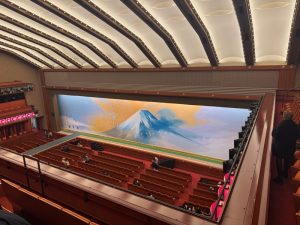
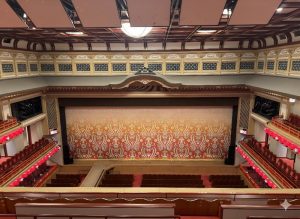
🎭 Want to See Kabuki Live?
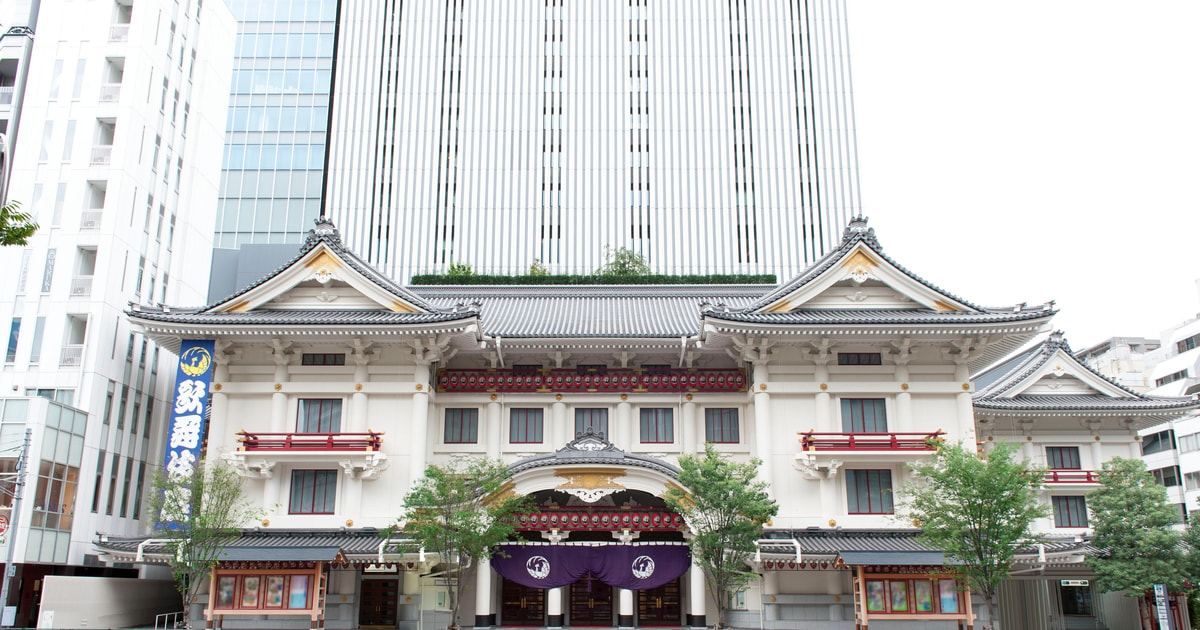
If you’re planning a trip to Tokyo, Kabuki-za is one of the most memorable ways to experience Japanese culture firsthand. GetYourGuide offers English-friendly Kabuki-za tickets and guided experiences, including options with headset translation and pre-show introductions for first-time viewers.
👉 Check Kabuki-za Tickets on GetYourGuide
This section may contain affiliate links. Booking through them costs you nothing extra and helps support this site.


コメント