Introduction:
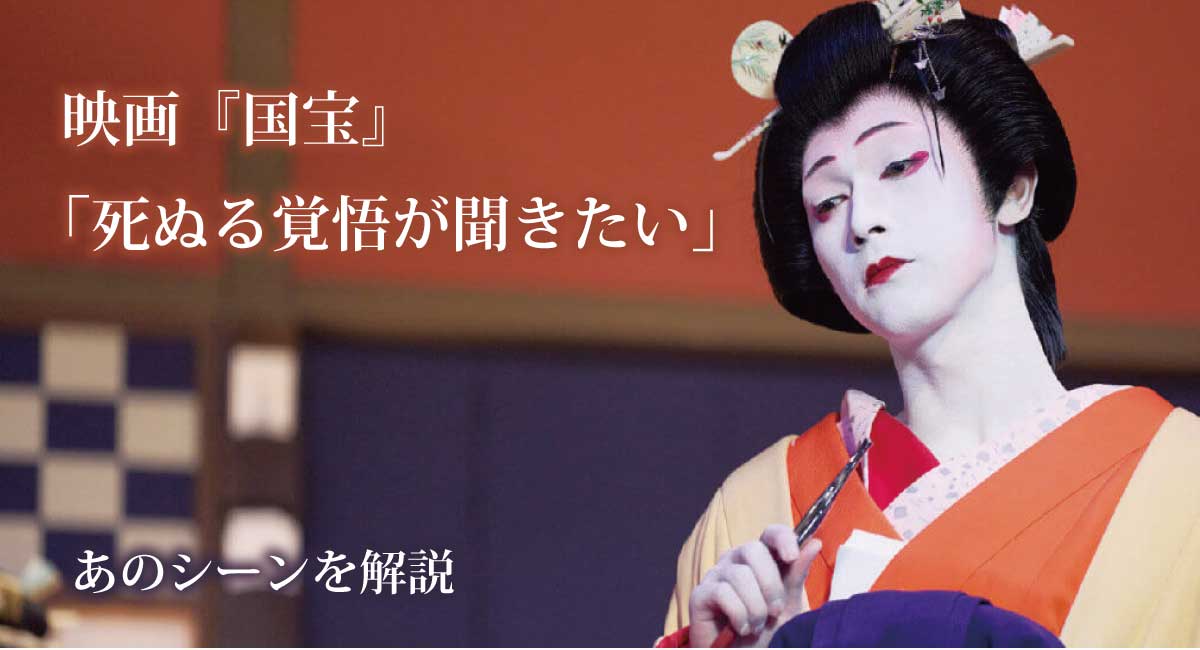
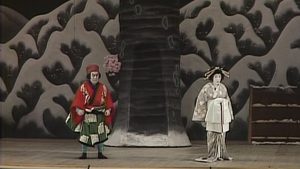
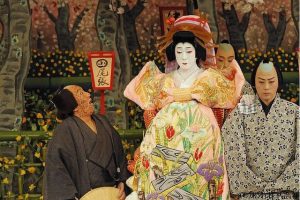
In the movie Kokuho (National Treasure), the play “Sonezaki Shinju” (The Love Suicides at Sonezaki) leaves a powerful impression.
While several Kabuki plays appear in the story, this masterpiece by Chikamatsu Monzaemon stands out as a symbol of the two protagonists’ lives.
In the original novel, this play appears only once, but in the film, it is depicted twice—each time carrying a different, heavy weight.
The Story of KOKUHO (National Treasure): A Tale of Two Destinies
The story revolves around two young men: Shunsuke (Ryusei Yokohama), born into a prestigious Kabuki dynasty, and Kikuo (Ryo Yoshizawa), born into a yakuza family.
Since childhood, they shared everything—both the joys and the struggles of their lives.
However, a single decision changes their destinies forever. Shunsuke’s father (played by Ken Watanabe), a legendary actor himself, chooses Kikuo—not his own son—to be his understudy (substitute).
This pivotal moment causes the gears of their lives to spiral out of control, setting them on a path of intense rivalry and heartbreaking tragedy.
The First Performance: The Moment Kikuo’s Genius Awakens
A Fateful Substitute Appearance
Early in the story, Kikuo (played by Ryo Yoshizawa) is chosen as a last-minute substitute for the role of Ohatsu (the heroine).
Just before the curtain rises, Shunsuke (played by Ryusei Yokohama) silently helps a trembling Kikuo apply his stage makeup.
The Crushing Weight of Pure Talent
When the performance begins, Kikuo delivers a breathtaking performance.
His acting overflows with elegance, sensuality, and the profound sorrow of Ohatsu heading toward death with her lover, Tokubebei.
For Shunsuke, watching from the audience, this moment is devastating.
He is crushed by the sheer weight of Kikuo’s natural talent, leading him to eventually vanish from the world of Kabuki.
The Second Performance: A Life-on-the-Line Reunion
Roles Reversed: Tokubebei and Ohatsu
Years later, the two face each other on stage again.
This time, the casting is reversed: Shunsuke plays Ohatsu, and Kikuo plays Tokubebei.
Defying the Limits: Shunsuke’s Final Stage
Despite having lost a leg to illness and performing with a prosthetic—a condition that would normally end a Kabuki actor’s career—Shunsuke is determined to perform “an Ohatsu that no one else can do.
” This is his final stage, and Kikuo resolves to meet that resolve with his own.
“Are You Ready to Die?”: Decoding the Symbolic Mastery of the Scene
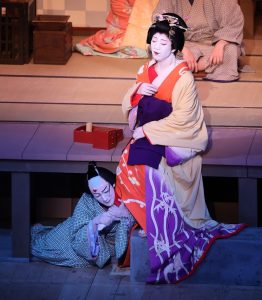
One of the most famous moments in Sonezaki Shinju is the scene where the question “Are you ready to die?” is asked.
In this moment, Tokubebei seems to be clinging to Ohatsu’s feet.
The Symbolic Gesture: The Foot as a Blade
However, this is a symbolic gesture (Kata):
he treats her foot as a blade and presses it against his throat. It is a silent vow that his heart is set on death.
In the movie, this scene takes on a dual meaning, as Shunsuke himself is literally performing while his body is failing.
The story of the play and Shunsuke’s own life become inseparable.
Bloodline vs. Artistry: The Cruel Reality of the Kabuki World
The Hunger for Noble Blood
In the original novel Kokuho by Shuichi Yoshida, there is a striking scene where Kikuo tells Shunsuke:
“What I want most right now is your blood, Shun-bon. I want to pour your blood into a glass and gulp it down.”
Kikuo, who was born into a yakuza family and lacks a traditional Kabuki lineage, desperately envied the “noble blood” of a prestigious Kabuki house.
However, Nakamura Ganjiro, who served as the Kabuki consultant for the film, offers a different perspective:
“If asked whether it is bloodline or artistry that matters most, in the end, it must be the artistry.”
Kikuo, with no lineage, climbs to the pinnacle through sheer talent and effort.
Shunsuke, born into the elite, suffers under the weight of his own art.
This stark contrast serves as the heart of the film’s narrative.
Feeling the Weight of Shunsuke’s Heart
What must it be like to be born into a legendary Kabuki family, only to realize that your own talent may never match the expectations of your bloodline?
The pain of that realization is almost unimaginable.
As I watched the film, I found myself deeply moved by Shunsuke’s inner turmoil.
His journey—striving to perfect his craft even as his body fails him—adds a layer of tragedy that mirrors the very characters he portrays on stage.
Conclusion: Discover “Sonezaki Shinju” After Watching Kokuho
The Verdict of the Stage: Art Above All
To truly understand the emotional depth of Kokuho, a deeper knowledge of Sonezaki Shinju is essential.
The way the movie interlaces the real lives of the actors with the stories of the plays they perform is what makes it a masterpiece.
If this play has piqued your interest, I encourage you to read more about its history and plot. Understanding the “dramatic and complex human relationships” behind the scenes will make your next viewing of the film—or even a live Kabuki performance—an entirely different and more profound experience.
コメント