
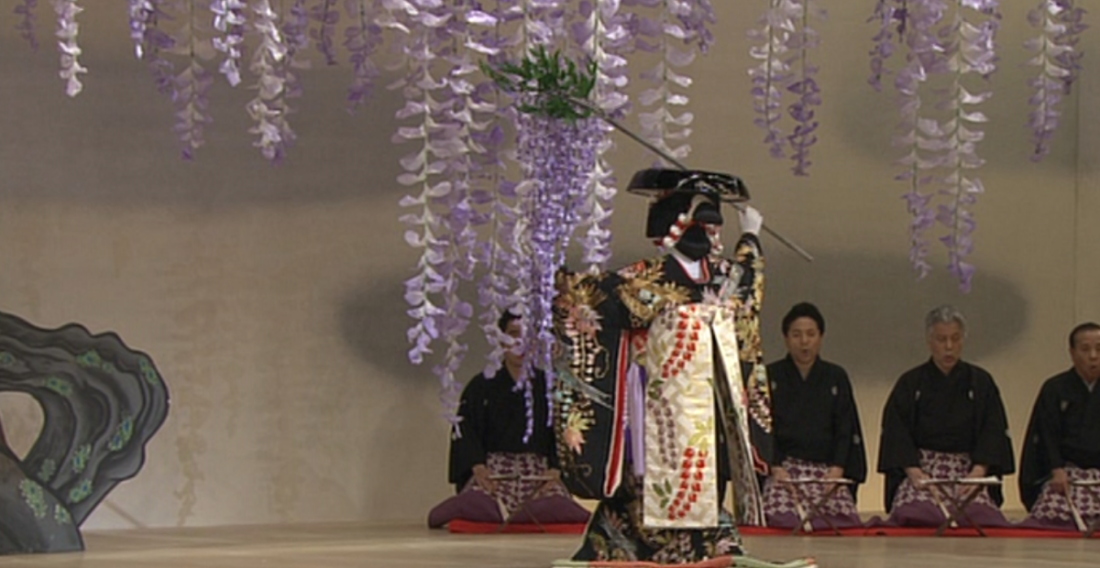
What is Fuji Musume?
Fuji Musume is a masterpiece of Kabuki dance (Nihon Buyo) inspired by Otsu-e (folk pictures from Otsu).
It depicts the spirit of a wisteria flower that transforms into a beautiful young maiden to dance elegantly, expressing the flickering emotions of a woman in love.
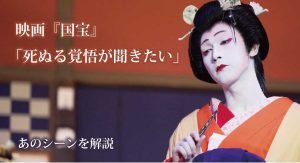
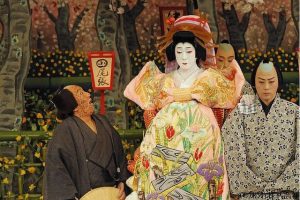
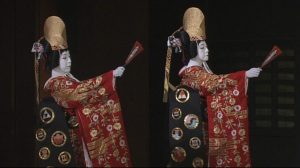
Her iconic appearance—wearing a black lacquered hat, a wisteria-patterned kimono, and carrying a branch of wisteria over her shoulder—is widely recognized and remains a popular motif for Japanese dolls and hagoita (decorative paddles).
The World of the Play and Synopsis
The maiden on stage is not human but the spirit of the wisteria flower.
The dance portrays the shifting heart of a woman: her longing for a loved one, frustration over infidelity, coquettishness, and sorrow. Rather than following a linear plot, the performance focuses on illustrating different emotions in each scene through changes in costume and movement.
Detailed Scene Breakdown
1. Appearance of the Wisteria Spirit
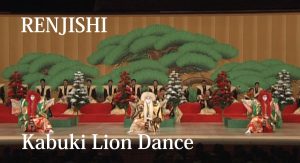
Against a spring backdrop of a large pine tree with trailing wisteria, the maiden appears quietly.
Her initial movements are reserved, carrying an ethereal atmosphere.
This scene literally brings a 2-D Otsu-e painting to life.
2. The Dance with the Hat: Resentment and Sulking
As she dances with her hat, her emotions deepen.
She rebukes the fickleness of men and shows a sulking side.
Hiding her face with the hat or turning away, she expresses a mix of loneliness and a desire for affection.
3. Fuji Ondo (The Wisteria Song): Drunken Revelry
The “Fuji Ondo” is the highlight of the play.
To the rhythmic sound of a bell (kane), the maiden becomes slightly tipsy after being offered sake.
In her intoxication, her true feelings spill out—she tries to stop her lover from leaving and clings to him, only to feel embarrassed when she snaps back to her senses.
4. The “Ryo-hada Nugi” (Stripping the Shoulders): Innocence and Sensuality
The music becomes bright and upbeat. Here, she shows an innocent yet subtly sensual charm.
Her gestures—such as lying down as if she hasn’t had enough sleep—represent the pure heart of a woman in love.
5. Finale: Returning as a Spirit
As the temple bell rings, the atmosphere of reality returns.
he maiden shoulders her wisteria branch once more.
Looking up at the wild geese flying across the sunset sky, she sheds her human emotions and returns to being the spirit of the wisteria. The curtain falls on a lingering, dreamlike note.
Highlights
- The Hat Technique: The way she expresses a woman’s jealousy and adorable pouting through the use of her hat.
- Fuji Ondo: The rhythmic, intoxicating dance that captures the overflow of a woman’s heart.
- Visual Beauty: The contrast between the purple wisteria and the green pine tree, and the stunning costume changes.
History and Origin
First performed in 1826 as part of a series of “transformation dances” (henge-buyo), it originally featured characters jumping out of folk paintings.
The current version was established in 1937 by Onoe Kikugoro VI, who reimagined it as “the spirit of the wisteria.” This version focuses on visual and musical perfection, making it a staple of the Kabuki repertoire today.
Summary
Fuji Musume is a representative work of Onnagata (male actors playing female roles) dance, where the spirit of a flower dances the complexities of love.
Its charm lies not in the story, but in the portrayal of pure emotion through gesture, costume, and music.
コメント