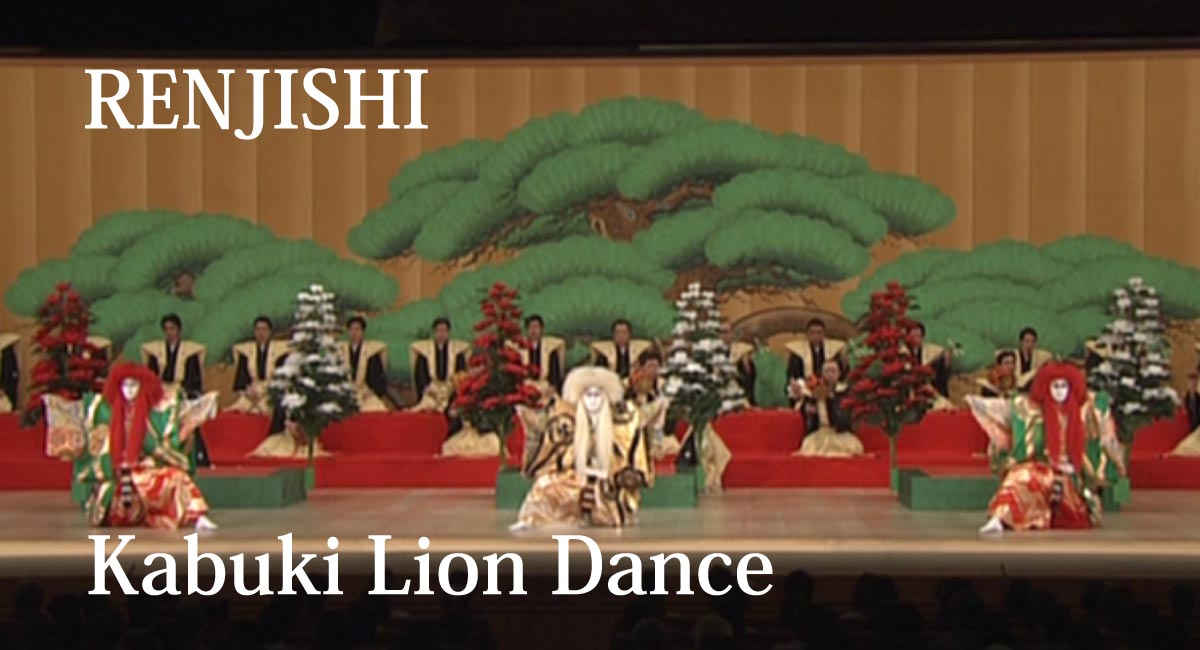
Renjishi is one of the most iconic Kabuki dances, famous for its powerful lion hair-swinging performance.
But what is the story behind it? And why is it considered one of the best Kabuki plays for beginners?
In this guide, you’ll learn:
– The story of Renjishi in simple terms
– The meaning behind the lion legend
– The highlights you shouldn’t miss
– Why it’s perfect for first-time Kabuki audiences
What is Renjishi kabuki?
Renjishi is one of the most famous Kabuki dance performances in Japan.
It is based on an old legend and tells a simple yet powerful story about a parent testing a child so that they may grow stronger.
Unlike Western theater, Kabuki often expresses stories through movement, music, and visual symbolism rather than spoken dialogue.
Renjishi is a perfect example of this style and is especially popular with first-time audiences.
The Story in Simple Terms
The performance is inspired by a legend about lions living near a sacred stone bridge.
A father lion throws his young cub into a deep valley.
Only the cub that is strong enough to climb back up is accepted as a true lion.
This act may seem cruel at first, but it represents strict love and belief in a child’s strength.
In Renjishi, this story becomes a metaphor for training, growth, and the bond between parent and child.
The Highlight: The Lion Dance (Kefuri)
The most famous part of Renjishi is the lion dance, known as kefuri.
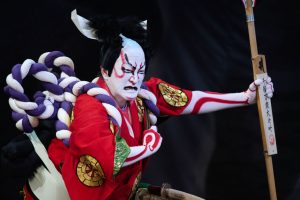
The performers wear long, flowing lion wigs and swing them powerfully across the stage.
This movement requires:
- Great physical strength
- Perfect rhythm
- Years of training
The energy of this scene is overwhelming, and even audiences who do not understand Japanese can feel its intensity.
Visual Beauty and Kabuki Style
Renjishi is also known for its striking visuals:
- Bold red and white lion costumes
- Dynamic poses and dramatic movement
- Traditional music that builds tension and excitement
Often, the roles of the father and child lions are played by real-life parent and child actors, which adds emotional depth to the performance.
Why Renjishi Is Perfect for Beginners
- The story is easy to understand
- No knowledge of Japanese is required
- The emotions are expressed through movement, not words
- It showcases the power and beauty of Kabuki at its best
This is why Renjishi is frequently recommended as a first Kabuki performance for international audiences.
A Universal Story Beyond Language
At its heart, Renjishi is not just a traditional Japanese performance.
It is a universal story about:
- Discipline and love
- Struggle and growth
- The moment a child becomes independent
That is why Renjishi continues to move audiences across cultures and generations.
Synopsis of Renjishi
Opening Scene: The Kyōgen Actors Appear
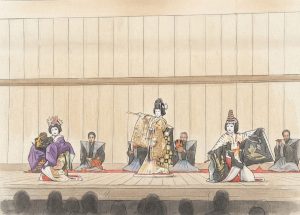
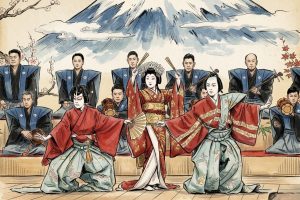
On a stage designed like a Noh theater, with a painted pine backdrop (matsubame), two Kyōgen actors, Ukonn and Sakonn, appear.
Ukonn holds a white lion wig and cloth, while Sakonn’s are red, symbolizing the contrast between age and youth, parent and child.
They begin a solemn dance, evoking the sacred landscape of Mount Seiryō, the holy mountain of Monju Bosatsu (Manjushri Bodhisattva), and the legendary Stone Bridge (Shakkyō) that spans it.
This bridge is not built by human hands.
It is said to have appeared naturally through divine power, resembling a rainbow suspended in the sky.
Beyond it lies a sacred realm where lions, messengers of Monju Bosatsu, play among blooming peonies.
The Legend of the Lion Cub
The dance gradually shifts to the famous legend of “casting the lion cub into the valley.”
According to this tale, a lion tests its offspring by throwing the cub into a deep ravine.
Only the cub strong enough to climb back up is worthy of being raised.
Ukonn dances with the spirit of the father lion, while Sakonn embodies the young cub.
The father casts the child into a terrifyingly deep valley.
The cub struggles and manages to climb up once, only to be thrown down again.
As a fierce storm arises, the cub can no longer cling to the rocks and retreats to rest in the shadows—represented by the hanamichi (runway).
Father and Child Reunited
When the cub does not return, doubt crosses the father’s mind:
“Has the child lost courage? Was my effort in raising him in vain?”
Peering into the ravine, the father notices reflections in the water—his own image overlapping with that of the child.
Upon spotting his father, the cub gathers new strength.
Ignoring the steep cliffs, he races upward in one powerful surge.
The cub rushes from the hanamichi back onto the main stage, where the father awaits him.
Their reunion is deeply moving, expressing the bond between parent and child without a single word.
The two once again take up the lion wigs, chase butterflies playfully, and disappear down the hanamichi.
Interlude (Ai-Kyōgen)
After the lions exit, the performance shifts to a comic interlude.
At the foot of Mount Seiryō, a monk of the Nichiren sect and a monk of the Pure Land sect begin climbing the mountain together.
At first, they chat amicably, but once they discover each other’s religious affiliation, their conversation turns into a heated doctrinal debate.
Each praises the merits of his own faith—the Nichiren monk extolling the virtues of the Lotus Sutra, the Pure Land monk praising the blessings of chanting the Buddha’s name.
Soon, the Nichiren monk beats a hand drum while chanting
“Namu Myōhō Renge Kyō,”
and the Pure Land monk strikes a gong while chanting
“Namu Amida Butsu.”
Before long, however, they accidentally mix up each other’s chants.
Caught in a sudden violent wind, they panic and flee the stage in confusion.
Final Scene: The Parent and Child Lions
A powerful Ōsatsuma narration (a style of jōruri chanting) vividly describes the Stone Bridge once more.
Then, in majestic form, the spirit lions of parent and child appear.
Following Noh tradition, this climactic appearance is called the “ato-shite” (later appearance of the main character).
The lions inhale the fragrance of the peonies and gradually move into an intense, frenzied dance known as “kurui.”
Holding branches of peonies, they portray the harmony between blooming flowers and the lions at play.
The performance reaches its peak with their perfectly synchronized lion hair-swinging dance (kefuri).
With long manes flying powerfully through the air, the lions assume a commanding pose—
and the curtain falls.
Main Characters in Renjishi
Kyōgen Actor → Spirit of the Parent Lion
Ukonn
Ukonn appears first as a Kyōgen actor and later transforms into the spirit of the parent lion.
He carries a white lion wig and cloth, symbolizing maturity and authority.
This role embodies the famous legend of “casting the lion cub into the valley,” in which a parent lion throws its child into a ravine and raises only the cub strong enough to climb back up.
In the latter half of the performance, Ukonn dances alongside the young lion, presenting a powerful and heroic hair-swinging dance (kefuri) that expresses strength and dignity.
Kyōgen Actor → Spirit of the Young Lion
Sakonn
Sakonn, who forms a pair with Ukonn, first appears as a Kyōgen actor and later becomes the spirit of the young lion.
He carries a red lion wig and cloth, representing youth and vitality.
Together with Ukonn, he brings the world of the lions to life through dance.
Thrown into the valley, the young lion suffers and struggles, but upon seeing his father’s figure, he gathers courage and desperately climbs the rocky cliffs.
In the final scene, he performs a dynamic and vigorous hair-swinging dance alongside the parent lion.
The Monk Rennnen
A monk of the Nichiren (Hokke) sect, Rennnen praises the spiritual power of the Lotus Sutra and chants the sacred phrase
“Namu Myōhō Renge Kyō.”
Beating a hand drum (uchiwa-daiko), he competes with the Pure Land monk to prove the superiority of his faith.
The Monk Hennen
A monk of the Pure Land (Jōdo) sect, Hennen preaches the blessings of chanting the Buddha’s name,
“Namu Amida Butsu.”
Striking a small gong (tataki-gane), he challenges the Nichiren monk, leading to a humorous and chaotic exchange.
Highlights of Renjishi
The Dramatic Entrance of the Parent and Child Lions
After the comic interlude (ai-kyōgen), the parent and child lions appear on the hanamichi (runway).
They step out once, briefly retreat by pulling back with their hind legs, and then re-enter the stage.
This subtle moment of withdrawal is beautifully executed and heightens the sense of anticipation before the powerful dance begins.
The Powerful Lion Hair-Swinging Dance (Kefuri)
The perfectly synchronized hair-swinging of the parent and child lions is one of the greatest highlights of Kabuki.
When two young lions appear, the impact is even greater.
Their long, flowing manes sweep across the stage in bold, dynamic movements, creating an overwhelming visual spectacle unique to Kabuki.
The Comic Interlude: Shūron (Religious Debate)
Performed between the first and second halves of the play, this interlude provides a lighthearted contrast to the solemn and intense dance scenes.
A monk of the Nichiren sect and a monk of the Pure Land sect compete over the superiority of their beliefs, eventually mixing up their chants in a comical exchange.
The humor comes not only from the mistaken chants, but also from the slightly foolish rivalry between two monks who happened to meet on the road to Mount Seiryō.
Together with the rich narration of the Ōsatsuma chanting, this scene also helps paint the broader landscape of the story.
The Thunderous Foot Stamps
Another striking feature is the sound of the powerful foot stamping on the shosaita, the wooden boards built into the stage for dance performances.
Each stamp echoes through the theater, enhancing the strength and intensity of the lions’ movements and leaving a strong physical impression on the audience.
Read the original Japanese version:連獅子(れんじし)あらすじ、登場人物解説|歌舞伎演目
The Kokuhō Blu-ray/DVD deluxe edition includes a full, uncut Renjishi hair-whirling sequence among its bonus footage — worth knowing if you want to see the whole thing after the film only showed a glimpse.
🎭 Want to See Kabuki Live?
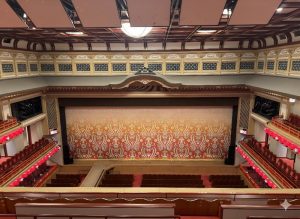
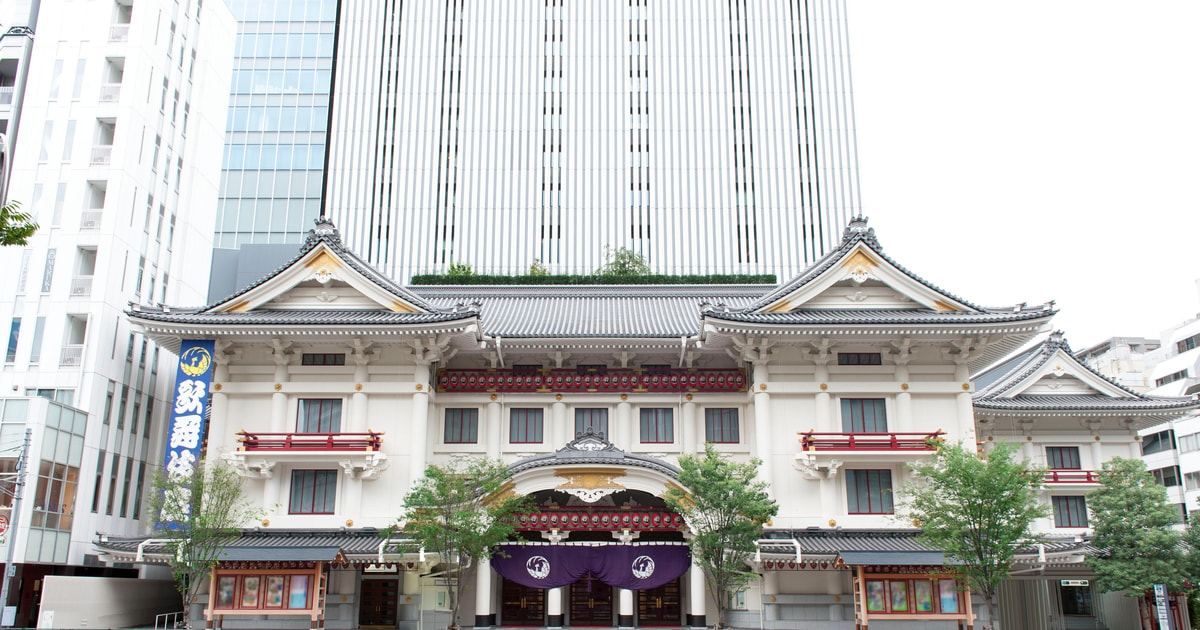
If you’re planning a trip to Tokyo, Kabuki-za is one of the most memorable ways to experience Japanese culture firsthand. GetYourGuide offers English-friendly Kabuki-za tickets and guided experiences, including options with headset translation and pre-show introductions for first-time viewers.
👉 Check Kabuki-za Tickets on GetYourGuide
This section may contain affiliate links. Booking through them costs you nothing extra and helps support this site.

コメント