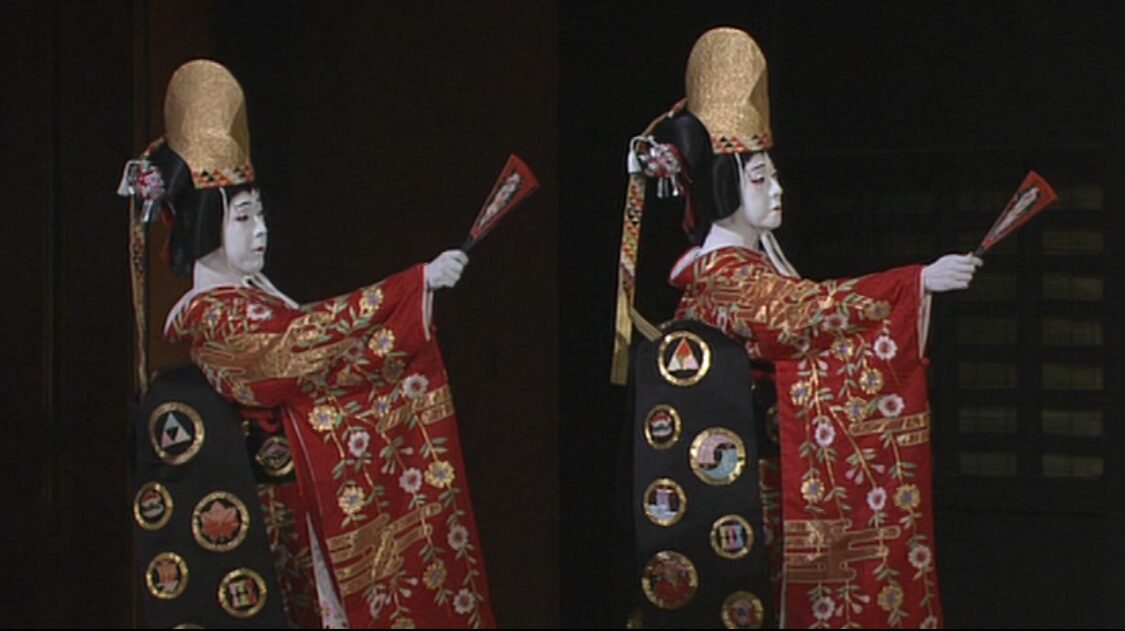
I had the pleasure of watching “Kyōganoko Musume Ninin Dōjōji.”
February 2009.
The “Farewell to the Kabuki-za” performances marked the final days of the old Kabuki-za theater before its reconstruction.
I watched on DVD Kyōganoko Musume Ninin Dōjōji, performed by Bandō Tamasaburō and Onoe Kikunosuke, which was staged during this special run.
The performance covered the story from the michiyuki (the travel scene) to the moment the bell is entered. There was no oshimodoshi scene, and the performance came to a close with the bell itself.
What Is “Oshimodoshi”?
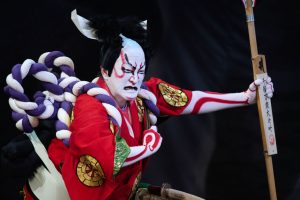
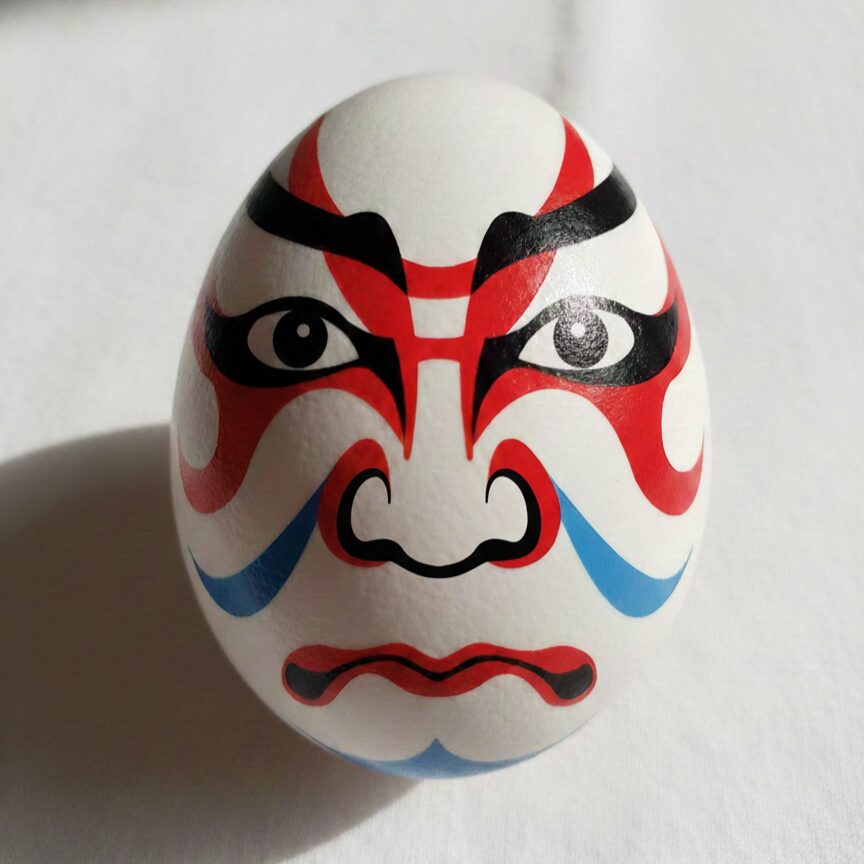
Appearing in bold kumadori makeup and dressed in the wig and costume of the aragoto style, Ōdate Samagorō makes a powerful entrance, stomping in on tall wooden clogs. Wearing a bamboo hat and carrying a thick green bamboo staff, his figure is the very image of strength and valor. He advances from the hanamichi (runway) onto the stage, driving back raging vengeful spirits and monsters one after another, until he finally forces them to retreat to the rear of the stage.
This scene, known as oshimodoshi (“the pushing back”), is a theatrical device used to pacify lingering resentment. In Dōjōji-themed dance pieces, it is often employed as the finale, creating a brilliant and forceful ending filled with energy and spectacle.
Synopsis
At Dōjōji Temple in Kii Province, a memorial service is being held for a newly cast temple bell. Long ago, this very bell was destroyed by Kiyohime, who, in her desperate pursuit of her lover Anchin, transformed into a great serpent and burned it in the flames of her passion.
During the ceremony, a shirabyōshi dancer named Hanako (performed by Bandō Tamasaburō and Onoe Kikunosuke) appears and asks to be allowed to view the bell. Granted permission on the condition that she perform a dance, Hanako presents a series of graceful and splendid dances.
However, Hanako’s true identity is the vengeful spirit of Kiyohime, who harbors deep resentment toward the bell that once hid Anchin and stood in the way of their love. As the dance progresses, her expression gradually changes, and she ultimately reveals her true nature.
About Related and Derivative Works
With Musume Dōjōji as its foundation, a number of derivative works have been created, developing its structure and music in various ways.
Notable examples include:
- Ninin Dōjōji (“Two-Person Dōjōji”), in which two shirabyōshi dancers perform together,
- Yakkō Dōjōji, a distinctive version that places a tachiyaku (male-role actor) in the leading role, and
- Meoto Dōjōji , danced by a man and a woman.
All of these works follow the music and basic structure of Musume Dōjōji.
A Detailed Synopsis of Kyōganoko Musume Ninin Dōjōji
“Did You Hear, Monk?”
The stage is set at Dōjōji Temple in Kii Province (present-day Wakayama), with cherry blossoms in full bloom. Young novice monks (shoke) enter, calling out to one another:
“Did you hear?”
“I heard, I heard!”
Today is the day a new temple bell has been restored and a memorial service will be held for the old one that once burned down. What weighs on the monks’ minds, however, is not the solemnity of the ceremony but the long, tedious sutra chanting they must endure. They begin to whisper among themselves, searching for some way to pass the time.
One monk says,
“Well then, for a bell memorial, I’ve brought some hannyatō.”
Another replies,
“Then I’ve brought a tengai.”
In fact, both hannyatō and tengai are coded words: hannyatō means sake, and tengai refers to octopus. In other words, the monks are really saying, “Since we’ll be bored during the service, let’s drink some sake and have a snack.”
This comical and worldly exchange, so far removed from the purity of a temple ritual, is deliberately drawn to contrast sharply with the bewitching elegance of the shirabyōshi dancer Hanako who will soon appear. It serves as an important and playful introduction to Kyōganoko Musume Dōjōji.
The Journey (Michiyuki)
From the hanamichi runway enters Hanako (Onoe Kikunosuke), a shirabyōshi—a female dancer who makes her living through song and dance. She appears as a modest young woman, wearing her hair in a Shimada style and dressed in long-sleeved furisode.
Soon after, another Hanako (Bandō Tamasaburō) emerges from the suppon trap at the front of the stage.
The young Hanako walks as if her heart is in a hurry. She suddenly notices her sleeves and hem in disarray and blushes with embarrassment, her gestures hinting that she has just parted from a lover. She recalls their farewell and the sound of the morning bell that announced dawn—the very sound that tore them apart. A note of resentment creeps into her expression as she suggests her growing hatred toward the bell itself, and she continues on toward Dōjōji Temple.
“At last, I have arrived at Dōjōji—
Yes, at last, I have arrived at Dōjōji.”
As Hanako (Kikunosuke) finishes her movements on the hanamichi and steps onto the stage, she stops before the tightly closed temple gate. At the same moment, the other Hanako (Tamasaburō) disappears back down through the suppon into the understage.
The Exchange (Mondō)
Hanako introduces herself as a shirabyōshi and asks the monks for permission to view the bell. A playful yet philosophical exchange begins.
Monk: “Devadatta’s evil is—”
Hanako: “The compassion of Kannon.”
Monk: “Panthaka’s ignorance is—”
Hanako: “The wisdom of Monju.”
These questions draw on Buddhist teachings.
Monk: “The willow is—”
Hanako: “Green.”
Monk: “The flower is—”
Hanako: “Crimson.”
These represent what is natural and self-evident.
Monk: “What is a dancer?”
Hanako: “A dancing girl.”
Monk: “What is a tengai?”
Hanako: “A woven hat.”
Monk: “No—it’s a live octopus!”
Then Hanako turns the tables and asks the monks whether the sparrow in her hand is alive or dead.
Hanako: “Is the sparrow in my hand alive or dead? Tell me.”
Monk: “If I say it’s alive, you’ll squeeze it to death. If I say it’s dead, you’ll let it go.”
Hanako opens her hand.
“There’s nothing.”
“Think it is, and it is. Think it is not, and it is not. Form is emptiness, emptiness is form. Now, please—let me see the bell.”
Though women are normally forbidden to enter for the bell memorial, the monks grant her entry on the condition that she dance.
Hanako passes through the gate, receives an eboshi cap from the monks, and withdraws briefly to change into a red furisode. The stage is set for her formal shirabyōshi dance.
The Shirabyōshi Dance
Both Hanakos now appear in red furisode, wearing eboshi and holding folding fans. They perform a solemn, Noh-inspired dance.
“Beyond the flowers, there are only pines…
Does the bell now echo in the twilight?”
The lyrics speak of the bell and the Buddhist truths it proclaims, while Hanako hints at her growing resentment toward it. When the dance ends, she removes her eboshi.
The Town Girl’s Dance
The scene shifts to a bright, kabuki-style dance of a lively town girl. Through light, hand-held movements, Hanako portrays the restless heart of a woman in love and the fickleness of men.
Midway through, the hikinuki technique is used: in an instant, her red costume transforms into pale aqua. The mood of the stage changes dramatically. This dazzling costume change symbolizes the shifting emotions within Hanako and is one of the highlights of Ninin Dōjōji.
The Ball-Playing Girl
To a rhythmic refrain of shamisen and drums, Hanako gathers fallen cherry blossoms and pretends to shape them into a ball, then begins to bounce it playfully like an innocent child.
The song soon becomes a “pleasure-quarter medley,” weaving in the names of famous entertainment districts such as Yoshiwara, Shimabara, Fushimi, and Sumizome—places of both amusement and romance. The synchronized dancing of the two Hanakos captures the joy and excitement of love in a colorful, approachable way.
The Flower Girl
From stage right, Hanako (Kikunosuke) appears as a charming flower girl, wearing a red hat and dancing with a furidashi-gasa. The monks enter holding flower umbrellas, and together they perform a cheerful group dance filled with playful, carefree energy.
The Hand Towel Dance (Kudoki)
From stage right, Hanako (Tamasaburō) enters in a wisteria-colored costume, holding a hand towel. Through delicate, restrained movements, she expresses the sorrow and longing of a woman in love. This is one of the most emotionally rich and famous scenes, known as the kudoki, in which a woman’s heartfelt feelings are spoken through dance.
Hanako (Kikunosuke) soon joins her from stage left, also in wisteria, and together they continue the tender, melancholy exchange. At the end, they toss their hand towels into the audience—the beloved tenugui-maki, a moment many spectators dream of experiencing.
The Mountain Medley (The Kakko Dance)
To lyrics that name twenty-two famous mountains, the dance continues. The Hanakos change into pale yellow costumes, fasten a kakko drum to their chests, and strike it with sticks as they dance. Their perfectly synchronized deep backbends (ebisori) are especially breathtaking.
The Purple Costume Hand Dance
Hanako (Kikunosuke) returns in a purple costume, performing a series of charming, prop-free hand dances. The lyrics now hint at the bell once more, and a shadow of resentment begins to creep back into the scene.
The Bell and Rattle Drum Dance
With another swift hikinuki, Hanako’s costume turns white. At the same moment, Hanako (Tamasaburō) enters from stage left. The jangling sound of the rattle drum and the stamping of feet fill the stage with restless energy.
Gradually, Hanako’s expression changes, and an ominous atmosphere settles over the theater.
Entering the Bell (Kane-iri)
The two Hanakos cast off their gentle, girlish forms and transform into eerie, fearsome beings. Together, they climb atop the bell.
This is the climactic moment of Kyōganoko Musume Dōjōji.
No Oshimodoshi
In this performance, there is no oshimodoshi—the scene in which Ōdate Samagorō appears in bold aragoto style to forcefully subdue the raging spirit.
If you have never seen oshimodoshi, it is one of the most quintessentially “kabuki-like” moments imaginable. I highly recommend experiencing it at least once.
Watching Kyōganoko Musume Ninin Dōjōji
Signature Roles & Highlights
Signature Performers (Atari-yaku)
- Bandō Tamasaburō V
- Onoe Kikugorō VIII = Onoe Kikunosuke IV
- Nakamura Kankurō VI
- Nakamura Shichinosuke II
- Nakamura Tokizō VI
- Nakamura Kotarō VI
Viewing Ratings
Overall Satisfaction ★★★★★★★★★☆
Beginner-Friendliness ★★★★★★★★★☆
Density of Highlights ★★★★★★★★☆☆
Memorability ★★★★★★★★☆☆
Would Watch Again ★★★★★★★★★☆
Note: These ratings reflect my personal preferences (a fondness for dance pieces and gidayū-style narration).
Kabushige’s Recommended Seats
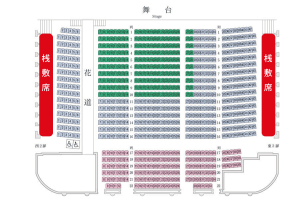
If you want to take in the entire stage, aim for rows 7–9 in the center section, often called the “sweet spot.” The front row of the second tier—sometimes referred to as the “Imperial Viewing Seats”—also offers an excellent overall view.
Top pick: “Hanayoko” (beside the hanamichi).
In Ninin Dōjōji, the first Hanako spends a long time dancing on the hanamichi, and the second Hanako repeatedly enters and exits through the suppon trap.
Seats in rows 1–3 along the hanamichi are especially rewarding.
The bell entrance (kane-iri) happens on the kamite (stage right), so it may feel a bit farther from these seats—but the hanamichi side is still highly recommended.
Note: This does not apply to theaters with double hanamichi.
Summary
Kyōganoko Musume Ninin Dōjōji (“Two-Person Dōjōji”) presents the shirabyōshi dancer Hanako as a dual presence. Two performers embody her, at times moving in perfect unison, at times in contrasting motions—like light and shadow.
It stands at the pinnacle of kabuki dance, portraying the many faces of a woman in love.
To savor how two onnagata bring to life the passion and resentment hidden beneath their dazzling choreography—pushing those emotions to their very limits—is the greatest appeal of Ninin Dōjōji.
For those who wish to explore the deeper background, including the original Noh play Dōjōji and the legend of Anchin and Kiyohime…
コメント