What is the meaning behind that scene?
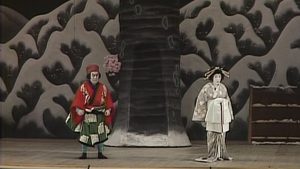
The Kabuki play “Tsumoru Koi Yuki no Sekinoto” (The Barrier Gate) is impressively depicted in the movie “KOKUHO.”
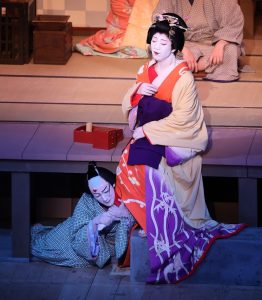
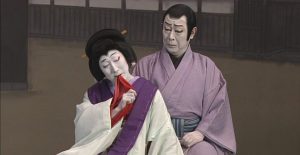
Specifically, the scene where Sekibei and Kikuo (acting as Sumizome) meet— “Aitasa-ni” (Out of longing…) “Iro ni natte kudasanse” (Please, become my lover…)
Even the Kabuki actor Hanjiro was captivated by this scene. A quiet, snowy barrier gate. A mysterious woman and a gatekeeper. Though it is only a few lines of dialogue, why is it so glamorous and filled with tension?
In this article, we provide the full text of the lines from “Sekinoto” used in the movie “KOKUHO” and explain their meanings and background in a way that is easy for Kabuki beginners to understand.
Full Dialogue from the Movie KOKUHO
Sekibei: “Ya, izuku tomo naku minarenu onna. Kono yamakage no sekinoto e, itsu no ma ni, doko kara kita no da.” (Who are you, stranger? Appearing from nowhere at this mountain barrier… When and how did you get here?)
Sumizome: “Ai, watasha ano Shumoku-machi kara kiyanshita.” (Well, I have come all the way from Shumoku-machi [the pleasure quarters].)
Sekibei: “Muu. Nanishi ni kita.” (Hmm. And what brings you here?)
Sumizome: “Aitasa-ni.” (Out of longing to see you.)
Sekibei: “Sorya dare ni.” (To see whom?)
Sumizome: “Konasan-ni.” (To see you, sir.)
Sekibei: “Nani, ore ni. Sorya naze.” (What, me? And why is that?)
Sumizome: “Iro ni natte kudasanse.” (Please, become my lover.)
Context of the Scene: Sekibei and Sumizome
The setting is a barrier gate deep in the snow-covered mountains. A barrier (Sekisho) is a place where people’s passage is strictly controlled. Sekibei is the guard protecting this gate.
Suddenly, the courtesan (Keisei) Sumizome appears. As Sekibei says, she is a “stranger appearing from nowhere.” A lone woman in the middle of a snowy mountain is unnatural and carries an air of mystery.
When questioned, Sumizome casually replies: “I’ve come from Shumoku-machi.” Shumoku-machi was a famous red-light district in Kyoto. By saying this, she hints that she is a courtesan.
She continues with a bold confession: “Out of longing to see you.” Her purpose is simple—she has come to see him. Then she adds: “Iro ni natte kudasanse.” In modern Japanese, this means “Please enter into a romantic relationship with me.”
The Backstory: A Tale of Cherry Blossoms and Ambition
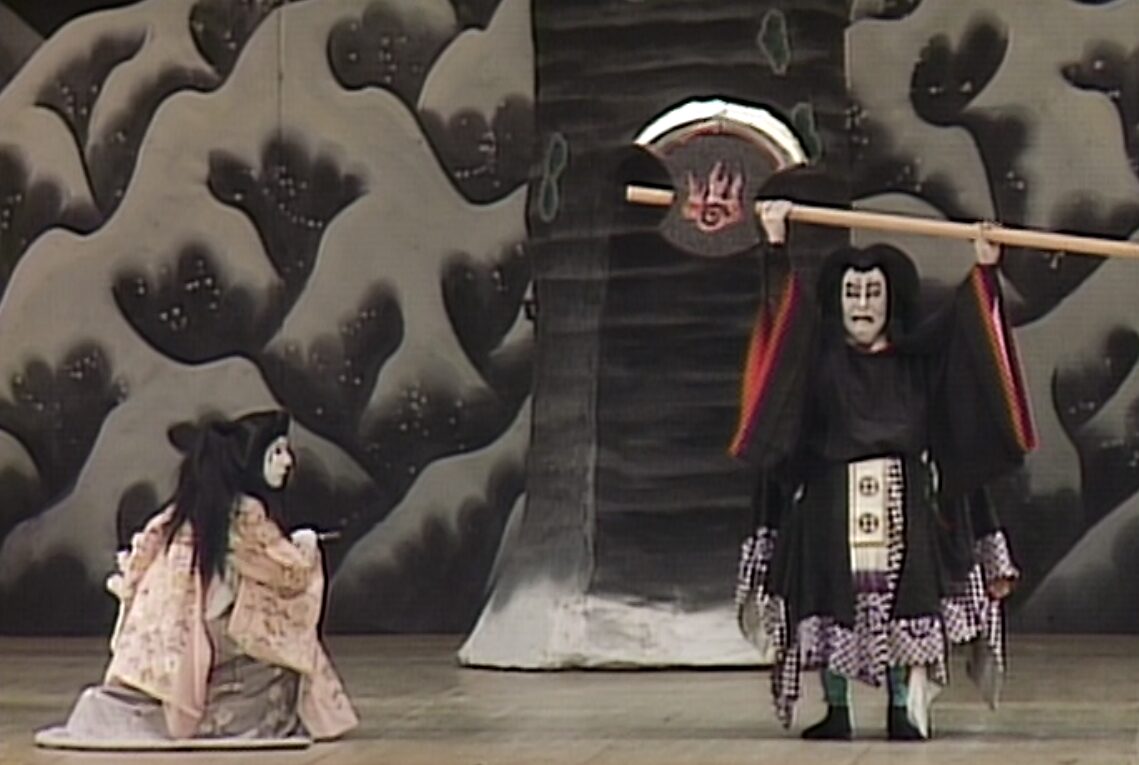
Before Sekibei and Sumizome meet, another story unfolds. Sekibei’s true identity is Otomo no Kuronushi, an ambitious man plotting to seize control of the country. He is no mere gatekeeper.
Kuronushi begins a divination in front of a cherry tree near the barrier. He receives an auspicious omen: “If you cut down this cherry tree tonight and burn it as sacred firewood (Gomagi), your great wish will be fulfilled.”
To achieve his ambition, he raises a giant axe to strike the tree. However, at that moment, his body goes numb, and he loses consciousness. When he wakes up, a beautiful woman emerges from the trunk of the cherry tree. That woman is Sumizome.
The Climax: From Romance to Revelation
Sumizome treats Sekibei like a customer in the pleasure quarters—glamorous, yet meaningful. However, the story takes a sharp turn. Sekibei (Kuronushi) is actually the enemy who killed Sumizome’s lover. Furthermore, Sumizome is the spirit of the Komachi Cherry Tree.
The tree was blooming despite it being winter. The spirit took the form of the courtesan Sumizome to avenge her lover, Yasusada, who was killed by Kuronushi. The sweet atmosphere vanishes, replaced by a quest for revenge.
The Highlight of “Sekinoto”: Miarawashi
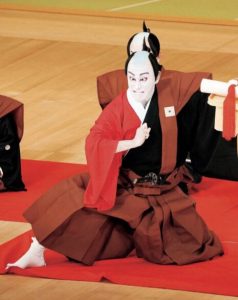
The greatest highlight is the “Miarawashi” (The Revelation). Sekibei reveals his true self through a costume change technique called Bukkyari. Then, Sumizome reveals her true form.
What is Miarawashi? It is a Kabuki stage convention where a character reveals their true identity—”Actually, I am…!” The world of the play flips instantly.
Miarawashi in the Movie KOKUHO
There is a Miarawashi-like moment in the movie “KOKUHO” as well. Hanjiro says: “There are very skilled geisha in Nagasaki, aren’t there?” To which the boss quietly replies: “That is actually my son, Kikuo.”
At this moment, Hanjiro’s perception is flipped. This structure of “Actually, it was…” mirrors the Kabuki technique perfectly. The movie doesn’t just show Kabuki; it weaves the very structure of Kabuki into its own narrative.
Summary: Like a Cherry Blossom in Winter
On the surface, the scene from “Tsumoru Koi Yuki no Sekinoto” depicted in the movie KOKUHO appears to be a story of a glamorous romantic encounter between a man and a woman.
However, beneath the surface lies a complex tapestry of:
- Kuronushi’s ambition to seize control of the world.
- The resentment of the Cherry Spirit, whose beloved was taken away.
- The eerie presence of the supernatural, embodied by the Komachi Cherry blooming in the dead of winter.
The exchange at the barrier gate is far more than the beginning of a simple romance. It is a moment where revenge and destiny quietly strike sparks.
Then comes the “Miarawashi” (The Revelation). The moment their true identities are unveiled, the meaning of every word and gesture that came before is instantly inverted. This dramatic reversal is the true essence—the real thrill—of Kabuki.
Just like a cherry tree blooming amidst the snow, the impossible happens right before your eyes. “Sekinoto” is perhaps a single scene that encapsulates the very “magic of Kabuki.”
Those lines that captivated your heart in the movie KOKUHO—by understanding the depths of their background, the story will surely appear even more profound and beautiful.
コメント