
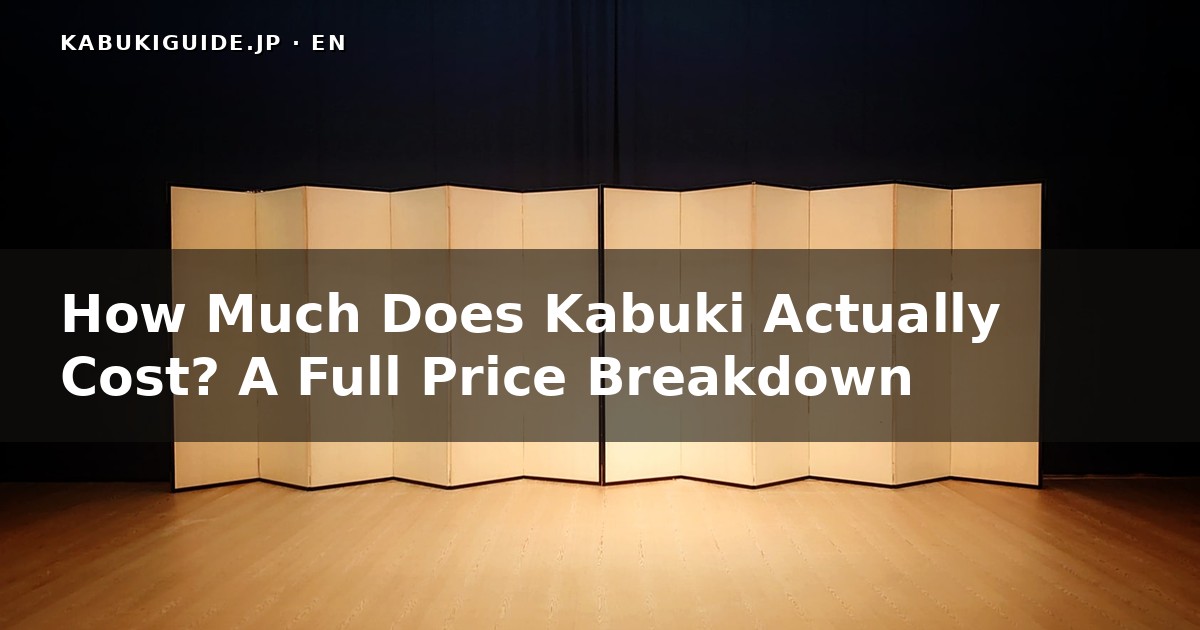
Kabuki has a reputation for being expensive — and it can be, if you’re not paying attention to your options. But it also has one of the most flexible pricing systems in traditional theater anywhere in the world, with legitimate ways to see a real performance for the price of a movie ticket. Here’s an honest breakdown of what you’ll actually pay.
The Full Range, at a Glance
| Seat Type | Typical Price | What You Get |
| Makumi (single-act, 4th floor) | ¥600–¥2,000 | One act only, on Kabukiza’s dedicated budget floor |
| 3rd floor (full program) | ¥5,000–¥6,500 | Full program, higher up, hanamichi out of view |
| 2nd floor (full program) | ¥9,000–¥15,000 | Full program, elevated view of the whole stage |
| 1st floor (full program) | ¥18,000–¥20,000 | Full program, close to stage-level intensity |
| Sajiki (box seats) | ¥20,000 | Semi-private box seating, premium experience |
These figures are based on a real Kabukiza program’s pricing structure and give a realistic sense of scale — actual prices shift by production, season, and specific seat location, so always check current listings before booking.
The Cheapest Real Way In: Makumi Seats
If cost is your main concern, Kabukiza’s makumi (single-act) system is the answer. For roughly ¥600 to ¥2,000, you can watch just one act of a program from a dedicated section on the 4th floor — a completely legitimate, unrestricted view of real actors performing a real kabuki scene, just without the rest of that day’s program. It’s specifically designed as kabuki’s lowest-commitment entry point, and it’s genuinely popular with both budget-conscious locals and curious first-time visitors.
Full-Program Pricing: What Changes the Cost
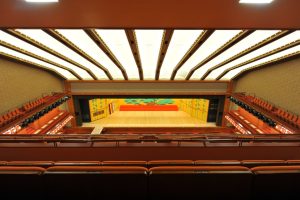
For a full program (typically running three to four hours, including intermissions), price scales almost entirely with floor level and proximity to the stage:
- 3rd floor is the most budget-friendly full-program option, though the hanamichi runway is out of view from up there.
- 2nd floor offers a genuinely excellent middle ground — high enough to see the full stage composition clearly, at a meaningfully lower price than the 1st floor.
- 1st floor carries the highest prices, especially in the middle rows and along the hanamichi, where the experience is at its most immersive and intense.
- Sajiki box seats sit at the top of the price range, offering a semi-private, more spacious seating arrangement along the sides of the 1st floor.
Costs Beyond the Ticket
A few optional extras are worth budgeting for if you want the fuller experience:
- English earphone guide — a modest rental fee for real-time English commentary explaining the plot and cultural context as the performance unfolds.
- Intermission meals — Kabukiza’s intermissions run long enough for a proper meal, with a range of bento boxes and restaurant options at various price points, from quick and cheap to genuinely upscale.
- Opera glasses — worth renting or bringing your own if you’re seated further from the stage, to catch the finer details of makeup and costume.
The Bottom Line
Kabuki can be genuinely expensive if you go all-in on a 1st-floor seat with all the extras — but it doesn’t have to be. A makumi seat gets a curious first-timer into a real, unrestricted performance for less than the price of a movie ticket in most major cities, and a well-chosen 3rd-floor seat delivers a complete program at a very reasonable cost. The wide spread in pricing is a feature, not a barrier — it just takes knowing which option fits your budget and how much of the experience you actually want.
Frequently Asked Questions
- What’s the cheapest way to see kabuki?
-
Makumi (single-act) seats at Kabukiza, typically ¥600–¥2,000, offer a full, unrestricted view of one act of a real performance — the most budget-friendly legitimate way to experience kabuki.
- Is a more expensive seat actually worth it?
-
It depends what you’re after — 1st-floor seats deliver more raw intensity and closeness, while 2nd-floor seats often give a more complete view of the full stage picture at a lower price. Neither is objectively better; it’s a matter of what kind of experience you want.
- Do prices vary a lot between different productions?
-
Yes — pricing shifts based on the specific production, season, and theater, so it’s worth checking current listings for your exact dates rather than assuming fixed prices across the year.
Summary
Kabuki’s pricing spans an enormous range — from a ¥600 makumi seat to a ¥20,000 sajiki box — and that flexibility is exactly what makes it accessible to nearly any budget. Whether you’re testing the waters with a single act or booking the full premium experience, knowing this breakdown in advance means you can book with confidence instead of sticker shock.
🎭 Want to See Kabuki Live?
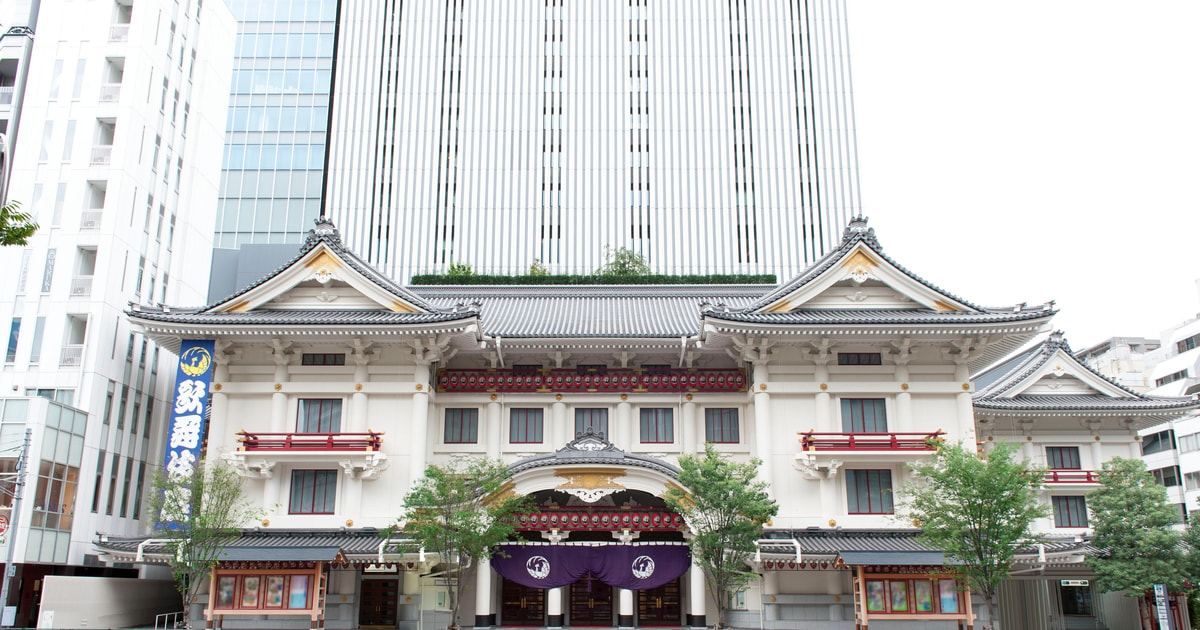
If you’re planning a trip to Tokyo, Kabuki-za is one of the most memorable ways to experience Japanese culture firsthand. GetYourGuide offers English-friendly Kabuki-za tickets and guided experiences, including options with headset translation and pre-show introductions for first-time viewers.
👉 Check Kabuki-za Tickets on GetYourGuide
This section may contain affiliate links. Booking through them costs you nothing extra and helps support this site.


コメント