
Kabuki’s bold colors, dramatic makeup, and larger-than-life poses have genuine circus-like, spectacle-driven appeal — the kind of thing that can genuinely captivate a child even without understanding a word of the dialogue. But a full kabuki program is also a long, formal sit, and that combination means bringing kids requires a bit of planning to get right.
The Short Answer
Kabuki can absolutely work for children, especially those old enough to sit reasonably still for an hour or so, but a full multi-hour program is a tough ask for very young kids. The single best strategy for bringing children to kabuki is choosing a single act via makumi seating rather than committing to an entire program — it keeps the outing short, low-pressure, and easy to leave if attention starts to wane.
Why Kids Often Respond to Kabuki
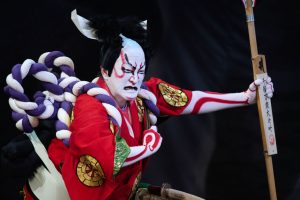
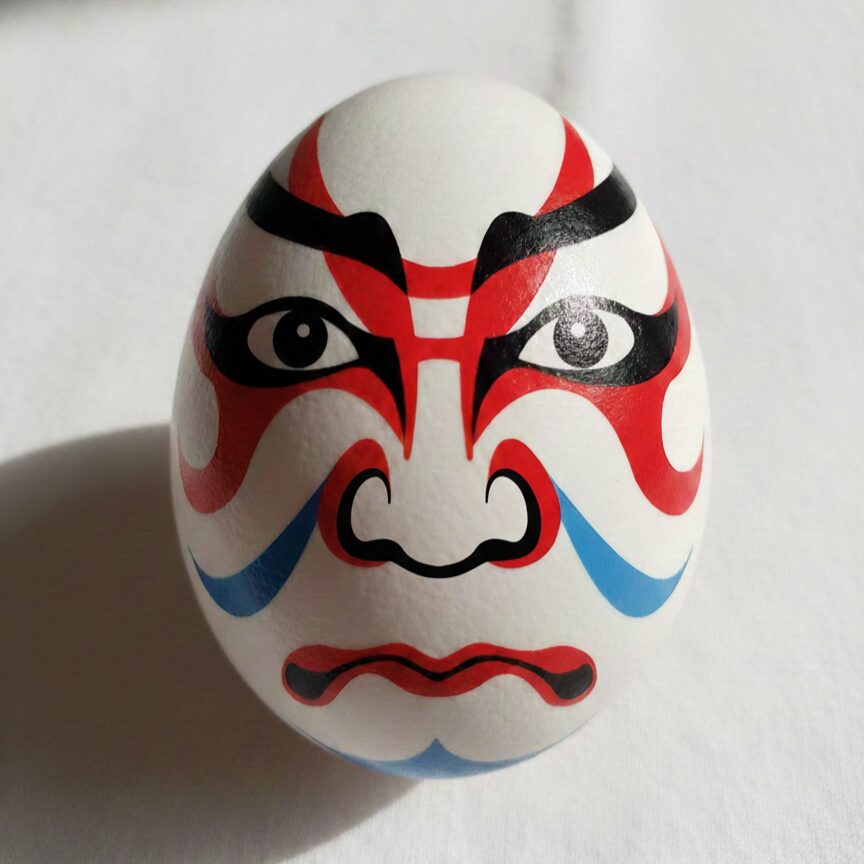
Kabuki was built from the start to grab and hold a general audience’s attention through pure visual spectacle — vivid kumadori face makeup, dramatic freeze-frame mie poses, lavish costumes, sudden reveals, and instantaneous costume changes. None of that requires understanding the plot to enjoy, which makes kabuki genuinely more accessible to a young child than, say, a dialogue-heavy Western play would be. Dance pieces in particular — built around movement, music, and visual transformation rather than spoken dialogue — tend to land especially well with younger audiences.
Choosing the Right Piece
Not every kabuki play is an equally good fit for kids. Dance-driven, visually dynamic pieces with dramatic combat or transformation sequences tend to hold a child’s attention best, while long, dialogue-heavy tragedies are a harder sell for a young audience. Lion dances with dramatic hair-swinging (ke-buri), bold aragoto pieces with larger-than-life heroes, and pieces built around a dramatic reveal or transformation are all strong starting points.
A Note on Content
Kabuki’s classical repertoire wasn’t written with children specifically in mind, and plenty of plays deal with revenge, tragic death, and adult romantic entanglements. That said, violence in kabuki is almost always stylized rather than graphic — combat scenes (tachimawari) are choreographed more like dance than realistic fighting, and even intense moments are filtered through formal, theatrical convention rather than shock value. Most parents find kabuki’s content comparable to a fairy tale or an opera in terms of intensity — worth a quick look at a play’s synopsis in advance if you want to be sure, but rarely a real concern for a general family audience.
Practical Tips for Bringing Kids
- Start with makumi seating to keep the commitment short and low-risk.
- Choose a matinee over an evening performance, when kids (and parents) have more energy to spare.
- Sit where movement is easy — an aisle seat or a spot near the back makes a quiet, early exit far less disruptive if needed.
- Use the intermission fully — Kabukiza’s intermissions run long enough for a proper meal and a bathroom break, giving kids a real chance to reset before the next act.
- Consider the English earphone guide for children old enough to follow along with a real-time plot explanation.

What Age Is Realistic?
There’s no strict minimum age at most theaters, but as a general rule of thumb, children old enough to sit through a feature film in a movie theater are usually old enough to handle a single kabuki act comfortably. Toddlers and very young children can still enjoy the visual spectacle in short bursts, but a full multi-hour program is a genuinely tough ask at that age — the makumi single-act system exists precisely to solve this problem, letting families dip in for exactly as much as their child can handle.
Frequently Asked Questions
- Is there a minimum age requirement for kabuki?
-
Most theaters don’t enforce a strict minimum age, though very young children may struggle with the length and formality of a full program. Checking with the specific theater in advance is worth doing if you’re bringing an infant or toddler.
- Is kabuki content appropriate for kids?
-
Generally yes — while some plays deal with mature themes like revenge and tragedy, violence is stylized rather than graphic, and the overall intensity is comparable to a fairy tale or classic opera.
- What’s the easiest way to try kabuki with young kids for the first time?
-
Book a single act through Kabukiza’s makumi seating system rather than a full program — it’s short, affordable, and easy to leave early if your child’s attention runs out.
Summary
Kabuki’s visual spectacle genuinely appeals to children, even without a full grasp of the story — the trick is matching the commitment to your child’s attention span. Starting with a single act through makumi seating, choosing a visually dynamic dance or aragoto piece, and planning around the intermission turns a potentially long, formal outing into a genuinely fun family introduction to one of Japan’s most striking art forms.
🎭 Want to See Kabuki Live?
If you’re planning a trip to Tokyo, Kabuki-za is one of the most memorable ways to experience Japanese culture firsthand. GetYourGuide offers English-friendly Kabuki-za tickets and guided experiences, including options with headset translation and pre-show introductions for first-time viewers.
👉 Check Kabuki-za Tickets on GetYourGuide

This section may contain affiliate links. Booking through them costs you nothing extra and helps support this site.






コメント