
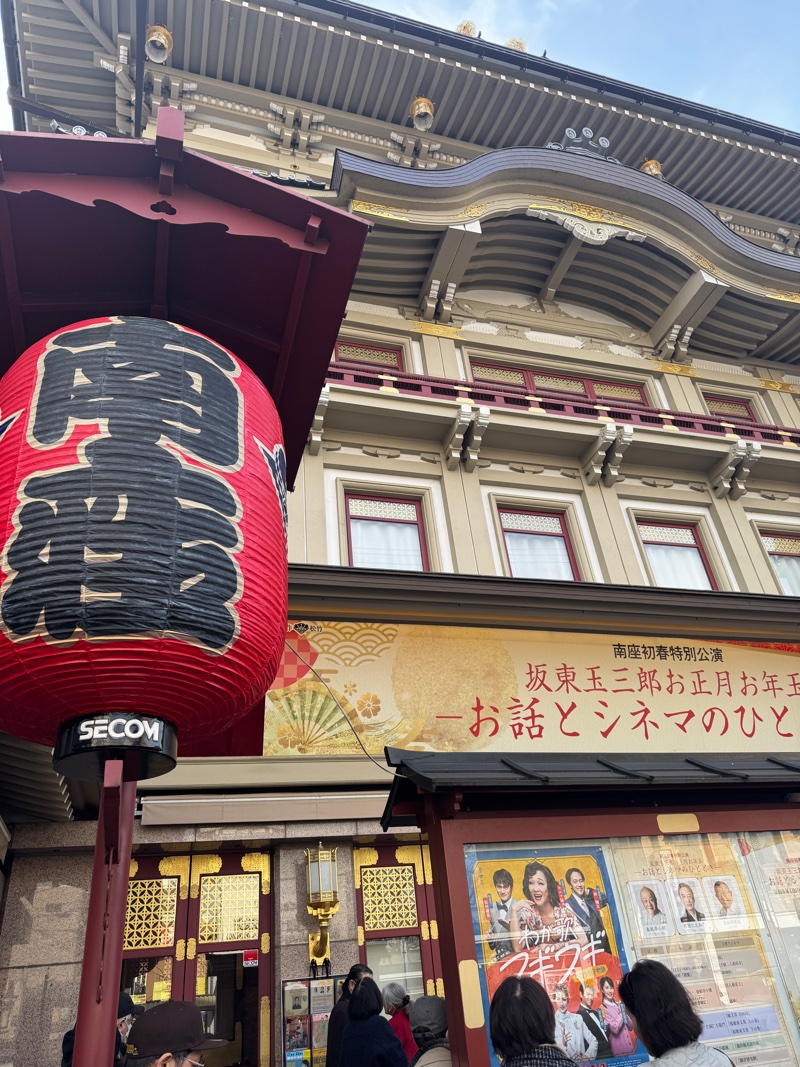
Minamiza, in Kyoto’s Gion district, is Japan’s oldest kabuki theater — and it’s noticeably more compact than Kabukiza, which means every seat in the house feels closer to the stage than you might expect.
That said, Minamiza isn’t a theater where “every seat looks the same.” Some seats put you right beside the hanamichi runway; others frame the whole stage beautifully; some make the shichi-san point easy to see, while others come with real sightline compromises. This guide breaks down what each section actually offers.
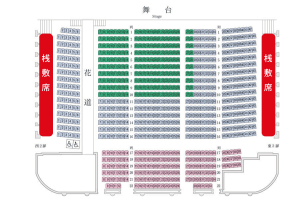
How Minamiza’s Seating Is Organized
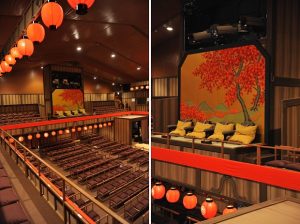
Minamiza has four seating areas: 1st floor, 2nd floor, 3rd floor, and sajiki box seats. With roughly 1,000 seats total, it’s noticeably smaller than Kabukiza — which is exactly why many visitors find that even the “far” seats here feel surprisingly close. The hanamichi runway runs along the left side of the auditorium (as seen from the seats).
1st Floor: Best for Raw Intensity
Front Rows (Roughly Rows 1–4)
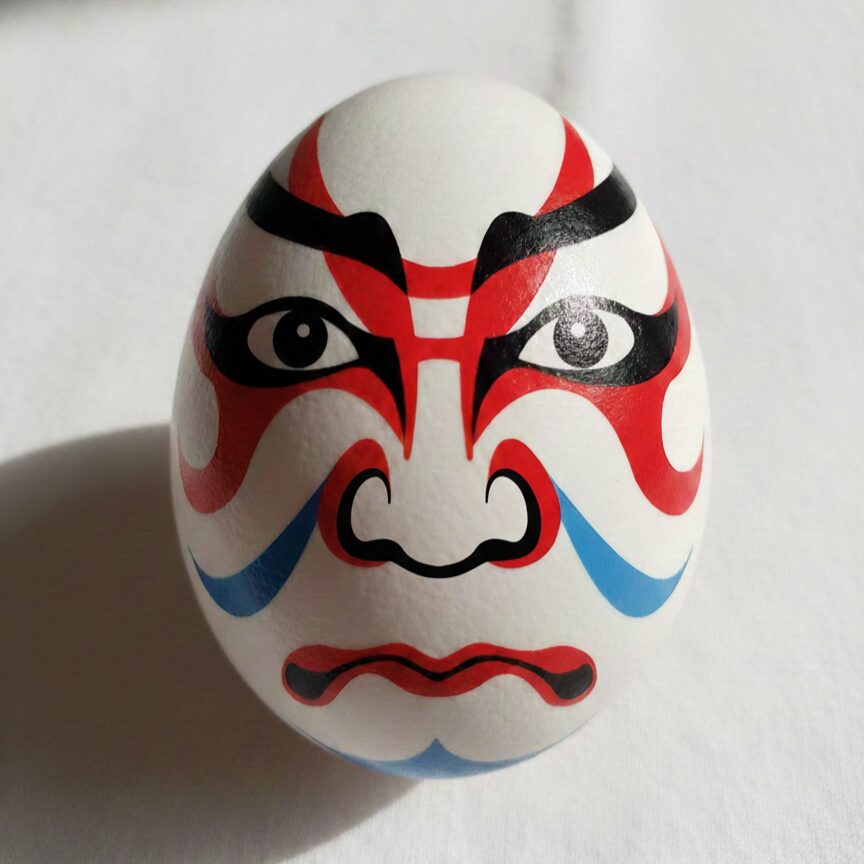
Extremely close to the actors — expressions, costume detail, even kumadori makeup all read clearly. The tradeoff: it’s hard to take in the full stage picture, action further upstage is harder to follow, and part of the hanamichi may be out of view. Best suited to people who specifically want to be immersed in the actors themselves.
Middle Rows (Roughly Rows 5–12) — The Best Overall Balance
The recommended starting point for first-timers. Full-stage visibility, hanamichi, the shichi-san point, and depth of view are all well balanced here — arguably the most natural way to experience what makes Minamiza special. Center seats in this range are the safest choice, and first-time visitors tend to be the most satisfied sitting here.
Back Rows (Row 13 and Beyond)
Easy to take in the whole stage, with a nicely composed view of the staging. The tradeoff: facial expressions are harder to catch and the hanamichi loses some of its intensity, so opera glasses help here. Because Minamiza itself isn’t an enormous theater, though, the back rows don’t feel nearly as distant as you might expect.
Hanamichi-Side Seats: Kabuki’s Signature Thrill
If you want the full kabuki experience, hanamichi-side seating is the way to go — actors pass right beside you during entrances, exits, and mie poses. The area near the shichi-san point specifically is a favorite among kabuki fans. This is a seat chosen for intensity over full-stage visibility.
Sajiki Box Seats: Minamiza’s Signature Special Seating
Sajiki seating might be Minamiza’s single most distinctive feature — semi-private box-style seats along both sides of the 1st floor, offering more room to spread out and a genuine sense of old-fashioned theater occasion.
The tradeoff: due to the theater’s structure, part of the stage edge can be cut off, and some sajiki seats have a limited view of the hanamichi. If watching mie poses on the hanamichi matters to you, choose the stage-right side (higashi-sajiki, “east sajiki”). Think of sajiki less as “the clearest view in the house” and more as “soaking in the full Minamiza atmosphere.”
Sajiki is a Minamiza-specific term, but the choice between box seating and the center-block seats found elsewhere in kabuki theaters comes up at every house. Our broader comparison of tochiri and sajiki seating walks through that tradeoff in more depth.
2nd Floor: An Underrated Favorite
Minamiza’s 2nd floor has a surprisingly strong reputation. The front rows in particular offer a clear view of the full stage, the hanamichi, group choreography, and dance pieces — a well-balanced mix of visual intensity and full staging that’s earned real popularity with repeat visitors. Some regulars actually prefer it to 1st-floor front seating.
East and West Wings
The 2nd-floor wing seats are actually classified as Minamiza’s top price tier — a surprise, since “side seating” often sounds like a budget option. Rows closer to the stage may lose part of the upstage view on one side, but the overall stage remains fairly visible. The west wing in particular sits close to the hanamichi, offering real intensity — though a mie struck at the shichi-san may be seen more from behind here. In exchange, you get an angle on the performance that’s genuinely rare and worth experiencing.
Back of the 2nd Floor
The overhang of the 3rd floor can create a slightly closed-in feeling here, and more than half the hanamichi is out of view. That said, the shichi-san point remains clearly visible, so major mie moments still land well.
3rd Floor: Best Value
The 3rd floor is Minamiza’s most affordable section. It’s a distance from the stage, but the tradeoff is worthwhile: a clear view of the full stage, an attractive overall composition, and the lowest price in the house.
The catch: facial expressions are hard to make out, and the finer details of hanamichi acting are difficult to catch — opera glasses are close to essential here. Still, it’s a genuinely solid choice for a first-timer who wants to experience Minamiza without a big spend.
East and West Wings (3rd Floor)
The west wing has almost no view of the hanamichi, and seats closer to the stage lose significant sightlines. The east wing does offer a hanamichi view, but similarly loses sightlines in the rows closest to the stage.
Bring Opera Glasses for the 3rd Floor
Given the distance involved, 3rd-floor seats make it difficult to catch an actor’s expression or fine gestures with the naked eye. A pair of opera glasses makes a real difference from up here.
Quick Reference: Which Seat Should You Choose?
| Section | Price | Hanamichi View | Best For |
| 1st Floor | Higher | Excellent (esp. hanamichi-side / shichi-san) | First-timers, maximum intensity (middle rows = best balance) |
| Sajiki | High | Fair (east sajiki better for hanamichi mie) | A special, occasion-worthy visit |
| 2nd Floor | Mid | Good (front rows / west wing especially) | Balancing full-stage view with intensity |
| 3rd Floor | Lowest | Weak to none (esp. west wing) | Best value, trying Minamiza for the first time |
If you’re unsure:
- First time ever → 1st floor, center of the middle rows, or 2nd floor, front center
- Want the hanamichi experience → 1st floor, hanamichi side, near the shichi-san
- Want the best value → 3rd floor, front center
Frequently Asked Questions
- What’s the best seat at Minamiza for a first-time visitor?
-
1st-floor middle rows, center, or 2nd-floor front center are the safest, most reliably satisfying picks — both balance full-stage visibility with a strong sense of intensity.
- Do the 3rd-floor seats have blocked views?
-
Yes — both the east and west wings lose sightlines in rows closer to the stage, and the west wing in particular has almost no view of the hanamichi. Center seats are the safer choice.
- What are the sajiki box seats like at Minamiza?
-
Semi-private box seats along both sides of the 1st floor, offering extra room and a distinctive old-theater atmosphere — though part of the stage edge can be cut off, and hanamichi visibility varies by side. Choose the east (stage-right) sajiki for the best view of hanamichi mie.
- Where’s the best seat to be close to the hanamichi at Minamiza?
-
1st-floor hanamichi-side seats, especially near the shichi-san point, offer the closest experience. The 2nd-floor west wing also sits close to the hanamichi, though a mie there may be seen more from behind.
Summary: It Comes Down to How You Want to Experience the Hanamichi
Minamiza isn’t simply a theater where “closer is better.” The right seat depends on whether you want the full stage picture, hanamichi intensity, or to be as close to the actors as possible. Kabuki, more than most theater, is genuinely shaped by where you choose to sit — and that’s especially true at a compact, historic house like Minamiza.
This same box-seat and hanamichi logic isn’t limited to kabuki performances, either. When Minamiza hosted its first non-kabuki production — the ninja stage show Ninja Show NARUTO, running from February 2027 — the same east/west sajiki and hanamichi tradeoffs applied to choosing a seat.

🎭 Want to See Kabuki Live?
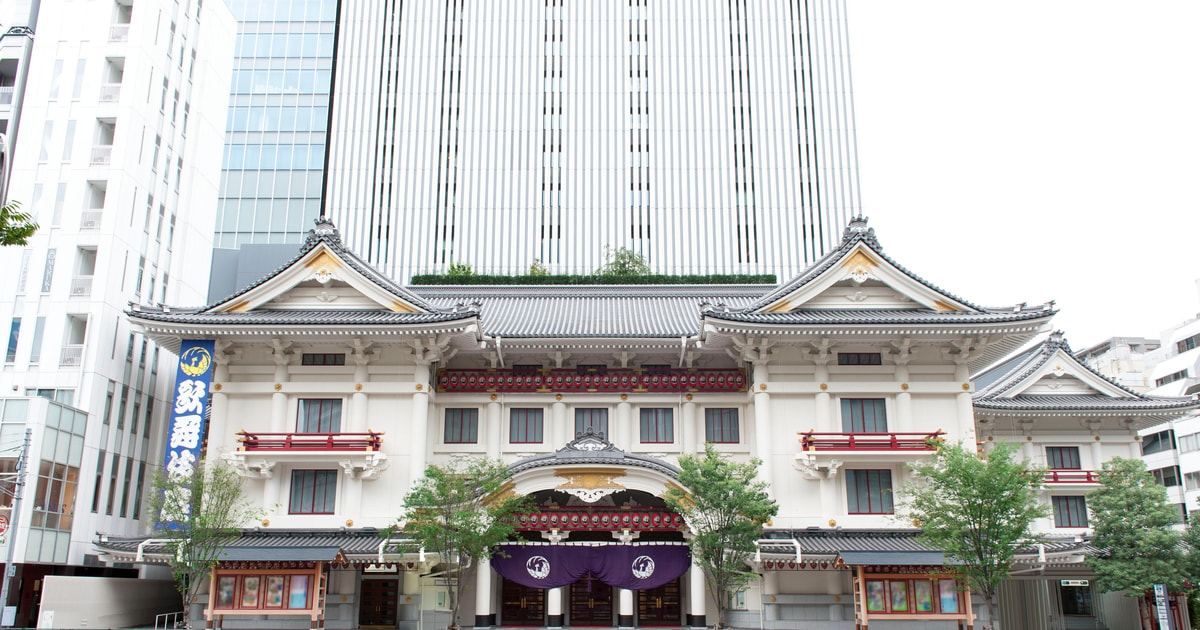
If you’re planning a trip to Tokyo, Kabuki-za is one of the most memorable ways to experience Japanese culture firsthand. GetYourGuide offers English-friendly Kabuki-za tickets and guided experiences, including options with headset translation and pre-show introductions for first-time viewers.
👉 Check Kabuki-za Tickets on GetYourGuide
This section may contain affiliate links. Booking through them costs you nothing extra and helps support this site.


コメント
コメント一覧 (1件)
[…] あわせて読みたい Minamiza Seating Guide: What Every Section Actually Looks Like A seat-by-seat guide to Kyoto’s Minamiza theater: 1st floor intensity, sajiki boxes, an underrated 2nd floor, and 3rd floor value. […]