Loved the movie KOKUHO and thinking about picking up the novel it’s based on? This guide walks through the major differences between the first half of Shūichi Yoshida’s novel — the “Youth” volume — and the film, along with the kabuki plays featured in that section. Knowing the plays in advance adds real depth to both versions of the story.
What’s Different Between the Film and the Novel?
The 2025 film KOKUHO (directed by Lee Sang-il, starring Ryo Yoshizawa) is based on Shūichi Yoshida’s novel of the same name, and became a genuine box-office phenomenon, grossing over ¥17 billion. But the source novel runs well over 800 pages across two volumes — meaning the film, by necessity, had to leave a great deal out.
The Passage of Time the Film Compresses
The film moves quickly through Kikuo’s journey from entering the world of kabuki to rising as a genuine talent. The novel’s first volume spends much more time on that process — the accumulation of practice, stage experience, failure, and recovery. Where the film can feel like Kikuo simply arrives fully formed, the novel fills in exactly how he got there.
How Supporting Characters Are Portrayed
The film restructures the story tightly around the relationship between Kikuo and Shunsuke, while the novel is more of an ensemble piece, giving several people around Kikuo their own independent arcs. The storylines involving the women in his life — Sachiko, Harue, and Akiko — barely register in the film by comparison.
The biggest difference by far is the character Tokuji. In the novel, he’s Kikuo’s childhood friend, introduced as a live-in apprentice within the yakuza household Kikuo was born into — and while the film gives him only a brief moment near the beginning, the novel keeps him close to Kikuo for most of the story, as both attendant and true friend, sharing in both hardship and joy across years. He functions almost as the novel’s embodiment of “loving the person right in front of you,” occupying a genuinely significant place in the story that the film barely touches.
One small but notable change: the geisha character named “Ichigoma” in the novel was renamed “Fujigoma” for the film — a deliberate change made out of consideration, since a real former maiko who had spoken publicly to the UN about labor conditions in the profession shared the same name.
Shared Standout Scenes
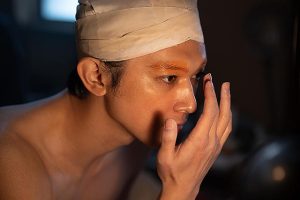
The scene where Shunsuke applies stage makeup to Kikuo appears in both the film and the novel. On the other hand, the moment where Kikuo presses Shunsuke’s leg against his own throat — silently signaling a shared resolve toward death during a performance of Sonezaki Shinjū — is unique to the film.
Different Plays for the Same Scenes
In several places, the film and novel use different kabuki plays to represent the same story beat. The underlying structure stays the same, but the choice of play changes the tone and meaning of the moment — the play-by-play differences are covered below.
The Kabuki Plays Featured in Volume One
Tsumoru Koi Yuki no Sekinoto (The Barrier Gate)
A dance drama built around the conflict between Ono no Komachi’s rival Ōtomo no Kuronushi and the barrier keeper Sekibei — an elegant piece blending onnagata and tachiyaku performance, regarded as one of kabuki’s grander showcase works.
In both the film and the novel, this is the piece Kikuo performs at the very beginning of the story, catching the eye of the master Hanjirō and setting the entire plot in motion — a foundational scene for the whole narrative.
Sumidagawa
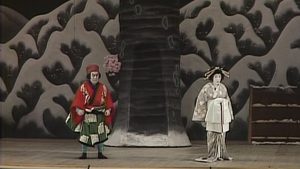
A tragedy about a mother wandering in search of her missing child, centered on the moment she learns of the boy’s death from a boatman on the Sumida River. Known for its portrayal of monogurui — a character driven to the edge of sanity by grief — it’s one of the great showcase pieces for onnagata performance.
In the novel, this is the play Shunsuke and Kikuo watch performed by the Living National Treasure Mangiku, an experience that leaves both of them profoundly shaken — a defining moment early in the story, and the piece Shunsuke later performs as his own final role in the second volume. Structurally, Sumidagawa bookends the entire novel from beginning to end. In the film, this scene instead uses Sagi Musume.
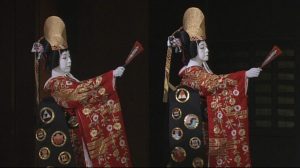
Ninin Dōjōji
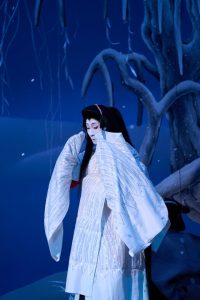
A version of the Dōjōji legend performed by two shirabyōshi dancers together. Originally a defining onnagata showcase, it exists in nagauta, tokiwazu, and kiyomoto versions, prized for the way its dazzling dual choreography sits atop a current of real obsession underneath.
Both the film and novel use this piece as the moment Kikuo and Shunsuke are given their big break — set at a small theater in Kotohira, Shikoku, where the two unexpectedly landed a major role and proved their talent through this very performance.
Sonezaki Shinjū
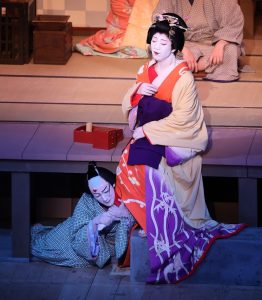
The story of the courtesan Ohatsu and the shop clerk Tokubei, who realize their love can never be fulfilled in this life and resolve to end their lives together in the Sonezaki woods. Written by Chikamatsu Monzaemon, it’s a defining sewamono (contemporary-style drama) steeped in the interplay of duty and genuine feeling, distinctly Kamigata in flavor.
Both the film and novel use this play as the moment Kikuo is chosen to step in for an injured Hanjirō — the same event that sets Shunsuke and Harue on the path to eloping together.
Frequently Asked Questions
- Is the novel worth reading if I’ve already seen the film?
-
Yes — the novel’s first volume fills in a great deal of character development and time that the film compresses or omits entirely, particularly around supporting characters like Tokuji and the women in Kikuo’s life.
- Which kabuki play differs the most between the film and novel?
-
The scene where Shunsuke and Kikuo are shaken by a master’s performance uses Sumidagawa in the novel and Sagi Musume in the film — a change that affects the emotional throughline, since Sumidagawa also bookends the novel’s ending.
- Do I need to know these kabuki plays to enjoy KOKUHO?
-
Not at all — but recognizing the plays and understanding why each one was chosen for a particular scene adds a genuinely rewarding extra layer to both the film and the novel.
Summary
The first volume of the KOKUHO novel gives Kikuo’s rise the time and texture the film simply doesn’t have room for — deepening characters like Tokuji who barely register on screen, and choosing different kabuki plays at key moments that subtly shift the story’s emotional weight. Whether you start with the film or the book, knowing these differences — and the real plays behind them — makes the whole story land with even more impact.
🎭 Want to See Kabuki Live?
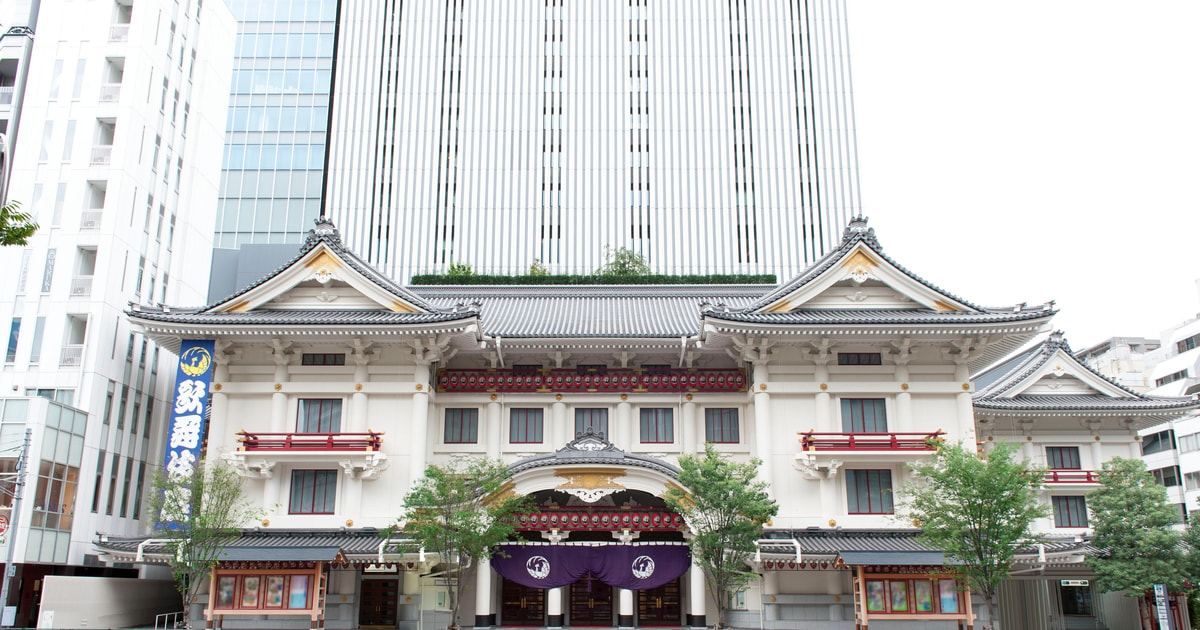
If you’re planning a trip to Tokyo, Kabuki-za is one of the most memorable ways to experience Japanese culture firsthand. GetYourGuide offers English-friendly Kabuki-za tickets and guided experiences, including options with headset translation and pre-show introductions for first-time viewers.
👉 Check Kabuki-za Tickets on GetYourGuide
This section may contain affiliate links. Booking through them costs you nothing extra and helps support this site.
コメント