
The short version: no photos or video once the performance is underway, full stop. But there’s more nuance to kabuki’s photography rules than that single blanket restriction, and knowing exactly when a camera is and isn’t welcome will save you an awkward tap on the shoulder from an usher.
The Core Rule: No Photography During the Performance
At Kabukiza and virtually every major kabuki theater in Japan, photography, video recording, and audio recording are strictly prohibited from the moment a performance begins until it ends. This isn’t a soft suggestion — it’s enforced by ushers walking the aisles, and you’ll typically see reminder signage in both Japanese and English at your seat. Flash photography in particular is treated as a serious disruption, since a sudden flash can genuinely startle performers mid-scene and break the concentration of everyone around you.
The reasoning goes beyond simple courtesy: kabuki actors work from carefully honed muscle memory and stage awareness built over years of training, and camera shutters, phone screens, and flashes are a real distraction in a live, unamplified performance space. Put your phone away and switch it to silent before the curtain opens — not just on vibrate, since a chime slipping through is a common and embarrassing mistake.
When Photography Is Usually Fine
Outside of the performance itself, there’s generally much more room to take pictures:
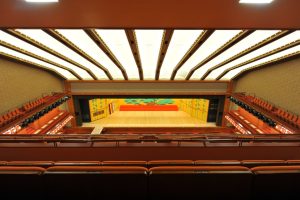
- Before the show starts — photographing the closed curtain, the empty stage, and the theater interior is typically fine while waiting for the performance to begin.
- During intermission — you can generally photograph the set, the curtain, and the theater itself (though be mindful about photographing other patrons without their consent).
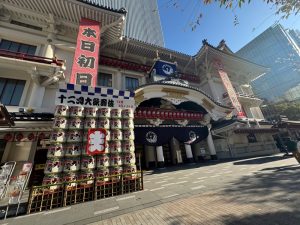
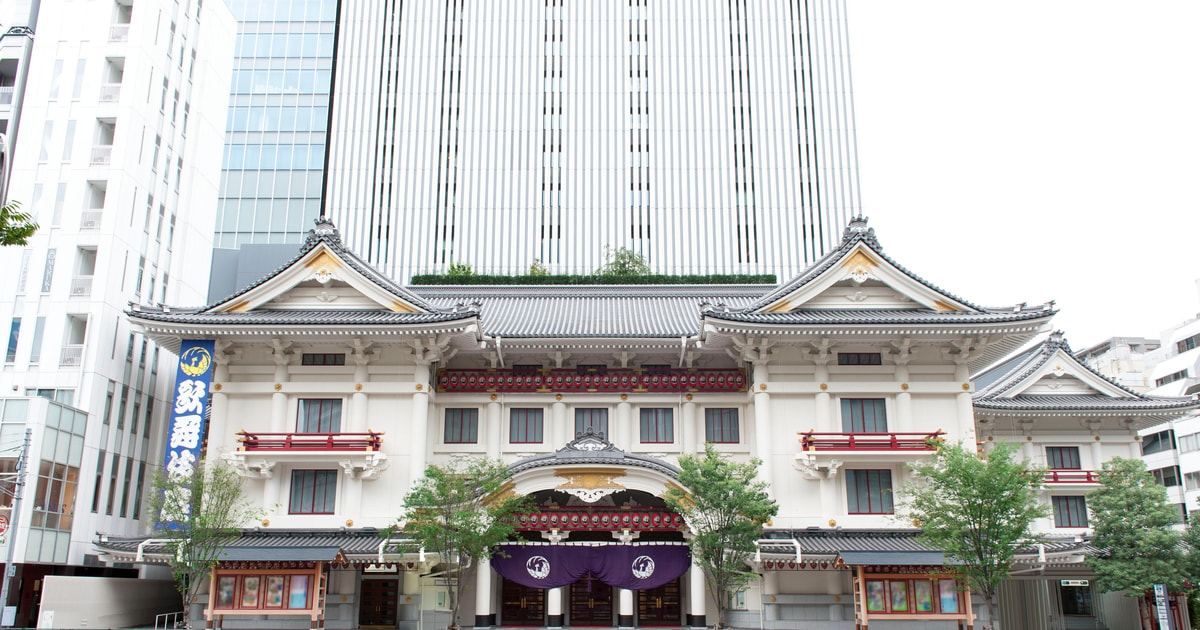
- The theater exterior and lobby — always fair game, and Kabukiza’s own building is a genuinely striking piece of architecture worth a photo in its own right.
- Programs, merchandise, and food — no restrictions on photographing anything you’ve purchased.
Curtain Call Photography: Sometimes, But Not Always
Some productions explicitly announce a designated photo opportunity at the very end of a performance, often during the curtain call — a specific, limited window where photography is suddenly permitted, usually announced clearly by theater staff or signage. This isn’t universal, and you shouldn’t assume it applies unless it’s been specifically announced for the performance you’re attending. When it’s not explicitly stated, treat the entire performance, curtain call included, as off-limits for cameras.
Why the Rule Is So Strict
Beyond simple performer distraction, there are practical reasons behind the policy: theaters and production companies control the rights to official performance photography and video, often producing their own professional recordings for archival or promotional use, and unauthorized recordings can conflict with those rights. It’s a similar logic to why most concerts and Broadway productions restrict recording — the show itself is protected content, not just a live event you happen to be watching.
What Happens If You Break the Rule
In practice, an usher will approach you directly, ask you to stop, and may ask you to delete the photo or video on the spot. It’s treated as a serious lapse in etiquette rather than a minor faux pas, so it’s worth taking seriously — both out of respect for the performers and to avoid an uncomfortable moment in the middle of your own visit.
Frequently Asked Questions
- Can I take photos before the performance starts?
-
Yes, generally — photographing the closed curtain, the theater interior, and the building itself before the show begins is typically fine, though it’s worth confirming with signage at your specific venue.
- Is it ever okay to photograph the actors during a bow or curtain call?
-
Only when the theater or production explicitly announces a designated photo opportunity, which isn’t universal. Without a clear announcement, treat the entire performance, including the curtain call, as off-limits for cameras.
- What happens if I take a photo during the performance by mistake?
-
An usher will typically approach you directly and ask you to stop, and may request that you delete the photo or video. It’s treated as a genuine etiquette violation, so it’s best avoided entirely.
Summary
The rule to remember is simple: no cameras once the curtain opens, no exceptions unless specifically announced. Outside of that window — before the show, during intermission, and around the theater itself — you’re generally free to capture the experience. Respecting this one clear boundary is one of the easiest ways to be a considerate audience member at your first kabuki performance.
Related Reading
🎭 Want to See Kabuki Live?
If you’re planning a trip to Tokyo, Kabuki-za is one of the most memorable ways to experience Japanese culture firsthand. GetYourGuide offers English-friendly Kabuki-za tickets and guided experiences, including options with headset translation and pre-show introductions for first-time viewers.
👉 Check Kabuki-za Tickets on GetYourGuide
This section may contain affiliate links. Booking through them costs you nothing extra and helps support this site.







コメント
コメント一覧 (1件)
[…] あわせて読みたい Kabuki Photography Rules: What You Can and Can’t Do No photos once the curtain opens — but the rules before, during intermission, and at curtain call are more nuanced. A clear guide to when cameras are welcome a […]