Sumo and kabuki might look like they belong to entirely different worlds — one a sport, the other a stage art — but they grew up side by side in Edo-period Japan, borrowing from each other’s spectacle, physicality, and showmanship in ways that still show up on the kabuki stage today.
Two Forms of Entertainment, Born at the Same Time
Both sumo and kabuki rose to real popularity among ordinary Edo-period townspeople around the same era, and both offered something the ruling samurai class’s approved entertainment (like Noh) didn’t: raw, crowd-pleasing spectacle built for a paying general audience. Sumo tournaments and kabuki productions became two of the biggest draws in Edo (present-day Tokyo), often held in the same entertainment districts and drawing overlapping audiences of merchants and commoners eager for larger-than-life heroes to root for.
Sumo Wrestlers as Kabuki Subject Matter
Sumo wrestlers weren’t just kabuki’s neighbors — they became kabuki’s characters. Several beloved plays are built directly around sumo culture and its wrestlers as folk heroes.
Megumi no Kenka dramatizes a real historical clash between Edo firefighters and sumo wrestlers, born from rival questions of pride and honor among two of the era’s most celebrated tough-guy professions — a play that only makes sense once you understand just how much cultural weight sumo wrestlers carried in Edo society.
Sumo shows up in dance form too. Oshidori Fusuma Koi no Mutsugoto opens with an entire “Sumo Scene” built around forty-eight classical sumo techniques, choreographed directly into dance — a genuinely unusual piece of stagecraft that turns competitive wrestling moves into a full theatrical performance.
Sumo and Aragoto: A Shared Aesthetic of Contained Power
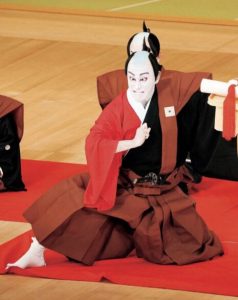
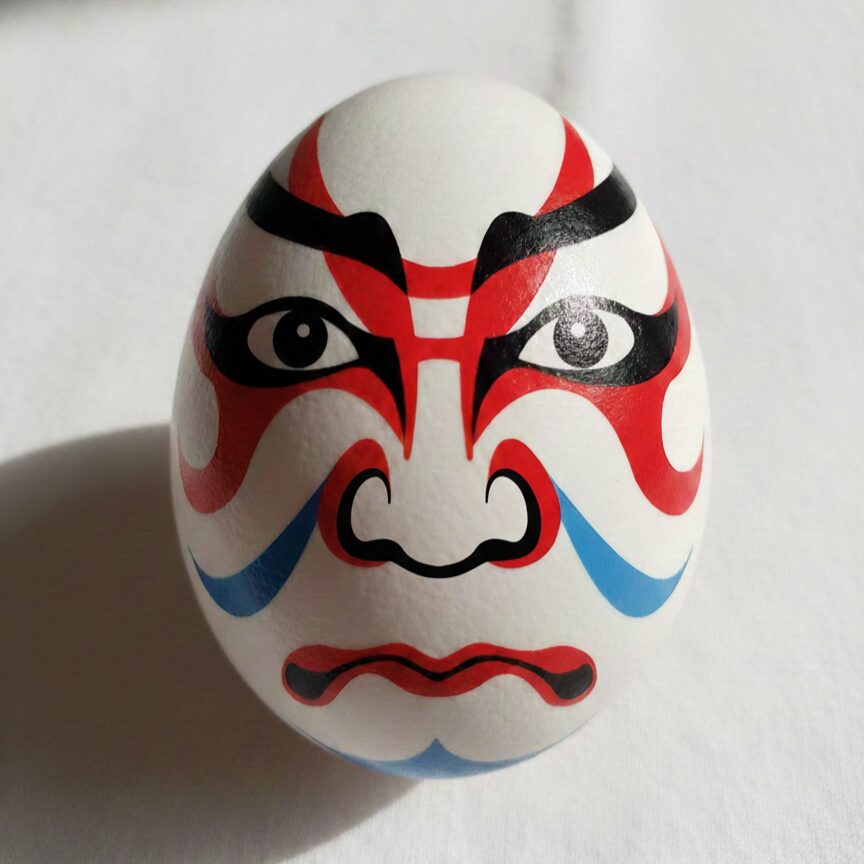
Kabuki’s bold aragoto acting style — exaggerated, powerful, larger-than-life — is traditionally traced to imagery of guardian deities like the fierce Niō statues and Fudō Myōō, not to sumo directly. Still, the two traditions invite an obvious comparison: the dramatic pause-and-freeze of a mie pose carries some of the same weighted, grounded power as a wrestler’s ritual stomping (shiko) before a bout, and kumadori’s exaggerated proportions can evoke a similar sense of physical mass. Both share the same basic theatrical instinct — that stillness charged with contained power reads as more intimidating than constant motion — even if aragoto’s own artistic roots lie elsewhere.
Ranked Hierarchies and Star Systems
Both traditions organize their world around strict, publicly tracked hierarchies. Sumo has its banzuke ranking sheet, listing every wrestler’s current standing for all to see. Kabuki has its own layered hierarchy of family names, formal name-succession ceremonies, and generational status — an actor’s family lineage functions almost like a wrestler’s rank, instantly signaling standing to anyone familiar with the tradition. Both systems reward a mix of raw talent and inherited pedigree, and both give audiences a rich, ongoing narrative to follow well beyond any single performance or bout.
Similar Seating, Similar Rituals
Traditional sumo venues and kabuki theaters both preserve versions of box-style seating rooted in the same Edo-period viewing culture — sumo’s masu-seki box seats and kabuki’s sajiki boxes both trace back to a shared history of theatergoing as a communal, semi-private experience shared among a small group, rather than rows of individual seats facing a stage. Both traditions have also preserved elaborate ceremonial openings — sumo’s ring-entering ceremonies (dohyō-iri) share the same sense of stately, ritualized anticipation as kabuki’s opening announcements before a major scene.
If You Enjoy One, Will You Enjoy the Other?
Very likely, yes. Both reward an appreciation for ritual, physical presence, and the tension of a held moment before release — whether that’s a mie pose or the charge at the center of the ring. If you’re planning a trip built around one, it’s worth carving out time for the other; the two traditions make each other easier to appreciate once you’ve seen both firsthand.
Frequently Asked Questions
- Are there kabuki plays specifically about sumo wrestlers?
-
Yes — Megumi no Kenka dramatizes a real historical rivalry between Edo firefighters and sumo wrestlers, and the dance piece Oshidori Fusuma Koi no Mutsugoto opens with a full sequence built around classical sumo techniques.
- Did sumo influence kabuki’s acting style?
-
Indirectly, yes — kabuki’s bold aragoto style, with its exaggerated physicality and dramatic frozen mie poses, shares visual and tonal DNA with the imposing physical presence and ritual stillness of sumo wrestling.
- Do sumo and kabuki use similar seating styles?
-
Yes — both preserve traditional box-style seating (masu-seki in sumo, sajiki in kabuki) rooted in the same Edo-period tradition of shared, semi-private group viewing.
Summary
Sumo and kabuki grew up together in Edo-period Japan, and that shared history still echoes through kabuki today — in plays built directly around sumo wrestlers, in the physical language of aragoto, and in the ranked hierarchies both traditions still use to structure their world. Neither is simply a footnote to the other; they’re two parallel expressions of the same era’s appetite for spectacle, ritual, and larger-than-life heroes.
🎭 Want to See Kabuki Live?
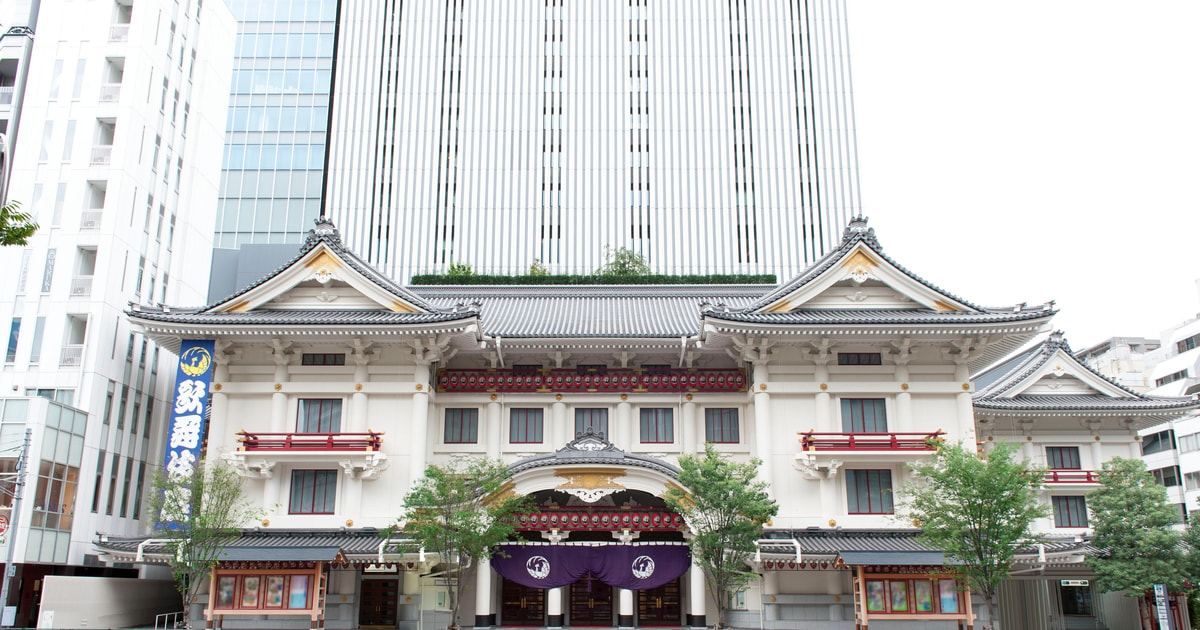
If you’re planning a trip to Tokyo, Kabuki-za is one of the most memorable ways to experience Japanese culture firsthand. GetYourGuide offers English-friendly Kabuki-za tickets and guided experiences, including options with headset translation and pre-show introductions for first-time viewers.
👉 Check Kabuki-za Tickets on GetYourGuide
This section may contain affiliate links. Booking through them costs you nothing extra and helps support this site.
コメント