Few kabuki plays carry as much cultural weight as Chūshingura — a sprawling revenge drama so central to Japanese theater it’s often described as the country’s national legend. But before it was one of the most performed works in kabuki history, it was something else entirely: a real act of vengeance carried out by dozens of masterless samurai in the winter of 1702. Here’s the true story behind the legend, how it became a kabuki classic, and why it’s still being remade in Hollywood three centuries later.
What Does Chūshingura Mean?
Chūshingura (忠臣蔵) translates roughly to “the treasury of loyal retainers” — a title that names the theme outright rather than hinting at it. The word covers two overlapping things at once: the real historical event known as the Akō incident, and the wider body of kabuki, bunraku, and film adaptations built around it, of which the 1748 puppet-and-kabuki play Kanadehon Chūshingura is by far the most famous.
The Real History: The Akō Incident
On April 21, 1701, Asano Naganori, the young lord of the Akō domain, drew his short sword and attacked a shogunal official named Kira Yoshinaka inside Edo Castle, wounding him during preparations for a court ceremony. Drawing a blade inside the castle was a serious offense regardless of the provocation, and the shogunate ordered Asano to commit seppuku that same day. His domain was confiscated, and roughly 300 of his retainers became rōnin — samurai without a lord.
Chief retainer Ōishi Kuranosuke quietly organized a plot for revenge, holding his fellow rōnin back for nearly two years to avoid arousing suspicion. On the night of the 14th day of the twelfth month of Genroku 15 — December 1702 by the traditional lunar calendar the plotters themselves used — Ōishi and 46 other rōnin stormed Kira’s Edo mansion, killed him, and carried his head to Asano’s grave at Sengaku-ji temple. Rather than executing them as common criminals, the shogunate allowed all 47 to die by their own hand, honoring the code of loyalty they had acted on. They’re buried beside Asano at Sengaku-ji to this day, where a memorial festival is still held every December 14.
From True Crime to Kabuki Classic: Kanadehon Chūshingura
The story was too dramatic, and too politically sensitive, to stay off the stage for long. When the puppet play Kanadehon Chūshingura premiered in Osaka in 1748, written by the trio Takeda Izumo II, Miyoshi Shōraku, and Namiki Senryū, it was an immediate sensation — and within months it had crossed over to the kabuki stage as well, where it has remained a staple of the repertoire ever since. Across its eleven acts, it’s widely described as the single most performed play in the history of Japanese theater.
Because the shogunate strictly banned dramatizing real, recent political affairs involving actual samurai by name, the playwrights disguised the story by relocating it to the 14th-century setting of the historical chronicle Taiheiki and swapping in period-appropriate names: Asano became Enya Hangan, Kira became Kō no Moronao, and Ōishi became Ōboshi Yuranosuke. Audiences of the time understood exactly who was who despite the disguise. Even the title is a quiet piece of wordplay — kanadehon means “kana copybook,” a nod to the 47 characters of the Japanese kana syllabary standing in for the 47 loyal retainers.
Not the Only Chūshingura: A Shared Fictional World
Kanadehon Chūshingura isn’t the only major work to come out of the Akō incident, and it isn’t the only Chūshingura still performed today. In the 20th century, playwright Mayama Seika went the opposite direction with Genroku Chūshingura, a modern, more historically grounded play cycle that restores the real names and treats the events as serious history rather than disguised fiction. One of its most acclaimed scenes, Ōhamagoten Tsunatoyo-kyō, is built entirely around a tense debate over whether revenge can ever really be called justice.
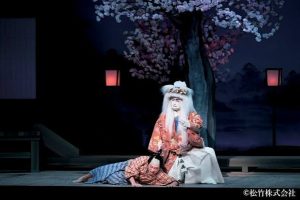
The disguised “Enya” world Kanadehon Chūshingura created also became a shared setting kabuki writers kept returning to for entirely new, unrelated stories — a device known in kabuki as sekai (世界), literally “world.” Tsuruya Nanboku’s dark, unrelated revenge tale Kamikakete Sango Taisetsu, for instance, borrows the same fictional Enya clan as a backdrop for a completely different plot, decades after the original play made that world famous.
Why the Story Still Travels Outside Japan
Chūshingura’s afterlife hasn’t stayed confined to the kabuki stage. The underlying story has been adapted for film more than 80 times over the past century, most notably in the sprawling 1962 epic Chūshingura and, far more loosely, in Hollywood’s 2013 fantasy film 47 Ronin starring Keanu Reeves. Historians have described the legend as something close to Japan’s national story — a tale of loyalty, patience, and sacrifice popular enough to survive nearly every kind of retelling, from serious historical drama to Western action fantasy.
For readers coming to kabuki for the first time through Chūshingura, it’s worth remembering that the play is also a useful entry point into the wider tradition — a jidaimono (period drama) built on the same conventions of loyalty, disguise, and formal stagecraft that run through kabuki more broadly.
Summary
Strip away three centuries of retellings, and Chūshingura still comes back to the same core: a lord’s death, a two-year wait, and 47 men who chose loyalty over their own survival. Kanadehon Chūshingura turned that story into kabuki’s defining epic, but it’s really just the most famous branch of a much larger tree — one that still keeps growing new versions, on stage and on screen, almost 300 years later.
Frequently Asked Questions
- What does “Chūshingura” literally mean?
-
It translates to “the treasury of loyal retainers.” The term refers both to the real 1701–1703 Akō incident and to the many kabuki, bunraku, and film adaptations built around it, most famously the 1748 play Kanadehon Chūshingura.
- Is Chūshingura a true story?
-
It’s based on a real event, the Akō incident of 1701–1703, in which 47 masterless samurai avenged their lord’s forced suicide. The famous kabuki play Kanadehon Chūshingura, however, is a fictionalized dramatization with changed names and a disguised setting, not a direct historical account.
- Why do the characters in the play have different names from the real people?
-
Edo-period censorship rules banned dramatizing recent political affairs involving real samurai by name. Playwrights got around this by disguising the story as a 14th-century tale, renaming Asano as Enya Hangan, Kira as Kō no Moronao, and Ōishi as Ōboshi Yuranosuke — names audiences of the time still recognized instantly.
- Is the 2013 Hollywood movie 47 Ronin related to this kabuki play?
-
They share the same underlying historical legend, but the 2013 film is a loose, fantasy-inflected adaptation rather than a direct retelling of Kanadehon Chūshingura. It’s one of more than 80 film versions of the story made over the past century.
🎭 Want to See Kabuki Live?
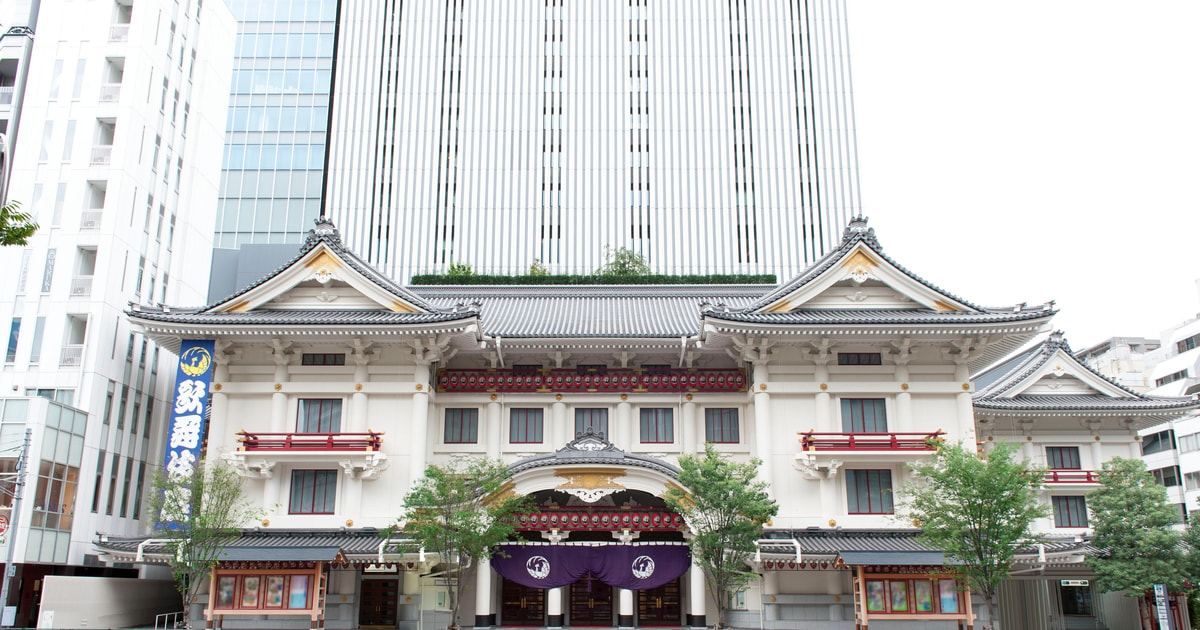
If you’re planning a trip to Tokyo, Kabuki-za is one of the most memorable ways to experience Japanese culture firsthand. GetYourGuide offers English-friendly Kabuki-za tickets and guided experiences, including options with headset translation and pre-show introductions for first-time viewers.
👉 Check Kabuki-za Tickets on GetYourGuide
This section may contain affiliate links. Booking through them costs you nothing extra and helps support this site.


コメント