Look closely at a kabuki actor’s costume, or at the curtain hanging in a theater lobby, and you’ll often spot a small, stylized symbol repeated across the fabric. That’s a mon — a family crest — and for a seasoned kabuki fan, recognizing one at a glance is as automatic as recognizing a sports team’s logo.
What Is a Mon?
Mon are stylized heraldic symbols with a history in Japan stretching back centuries, long predating kabuki itself — originally used by samurai clans and merchant houses to mark identity, allegiance, and lineage on everything from battle banners to clothing. When kabuki’s great acting families rose to prominence, they adopted this same visual tradition, each family selecting or inheriting its own distinctive crest as a kind of theatrical coat of arms.
The Ichikawa Family’s Mimasu Crest
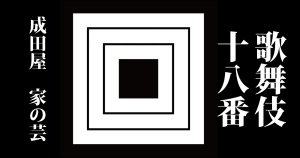
The most famous example in all of kabuki is the Ichikawa family’s mimasu crest — three nested square shapes, based on the traditional wooden measuring boxes (masu) once used in Japan. It’s one of the most recognizable symbols in the entire art form, appearing on Danjūrō’s costumes, ceremonial curtains, and merchandise, instantly signaling the Ichikawa lineage and everything it represents: aragoto’s bold, powerful performance style and centuries of the Kabuki Jūhachiban’s signature plays.

Beyond Ichikawa: Other Family Crests
The Ichikawa family’s mimasu is the most famous, but every major acting house carries its own. The Nakamura family, for instance, uses a ginkgo leaf as its crest — a simple, elegant natural motif quite different in character from the geometric mimasu, and just as instantly recognizable to a longtime fan. Each family’s crest tends to reflect something of its own artistic identity, whether that’s boldness, elegance, or refinement, making the crests themselves a kind of visual introduction to a family’s character before you’ve even seen them perform.
Formal Crests vs. Personal Actor Patterns
Alongside a family’s official mon, individual actors also often adopt their own favored decorative patterns, sometimes called actor patterns, used more informally across costume design, personal items, and merchandise tied specifically to that performer rather than their whole family line. These aren’t a replacement for the formal crest — think of them more as a personal signature layered on top of the family’s official identity, giving an individual performer their own distinct visual flourish even while still representing their broader lineage.
Where You’ll Actually See Them
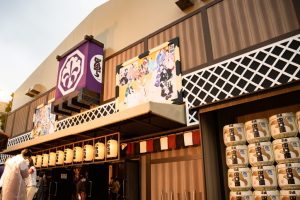
A family’s mon shows up in far more places than just costume fabric. Ceremonial curtains gifted to an actor for a special occasion, similar to the ornate dontyō curtains seen at milestone performances, often prominently display a family crest. So do tenugui hand towels, paper lanterns outside a theater during a special run, and countless pieces of official merchandise — the crest functions as a consistent visual signature across every format it appears in.

Reading a Crest Like a Longtime Fan
For experienced kabuki audiences, a family crest carries the same instant recognition as a national flag or a corporate logo — a glance at a costume’s pattern reveals which family a performer belongs to before a single line is spoken, layering in all the context that comes with that lineage’s specific artistic reputation and history. It’s a small design detail that rewards attention: once you can recognize even one or two major family crests, an entire extra layer of meaning opens up on stage.
Part of a Much Older Tradition
It’s worth remembering that mon aren’t unique to kabuki — they’re a broader Japanese design tradition, still recognizable today on everything from kimono to corporate branding, with thousands of distinct crest designs developed across Japanese history. Kabuki’s adoption of the tradition simply extended an existing, deeply rooted visual language onto the stage, giving each acting family a symbol as historically weighted as the art form itself.
Frequently Asked Questions
- What is the Ichikawa family’s crest called?
-
It’s called mimasu — three nested square shapes based on traditional wooden measuring boxes, one of the most recognizable symbols in all of kabuki.
- Did kabuki invent the mon tradition?
-
No — mon predate kabuki by centuries, originating as a broader Japanese heraldic tradition used by samurai clans and merchant houses. Kabuki’s acting families simply adopted the same system for their own lineages.
- Where can I spot a family crest at a kabuki performance?
-
On costume fabric, ceremonial curtains, tenugui, lanterns outside the theater, and official merchandise — family crests appear consistently across nearly everything associated with a specific acting lineage.
- What is the Nakamura family’s crest?
-
A ginkgo leaf — a simple, elegant natural motif distinct from the Ichikawa family’s geometric mimasu, reflecting the Nakamura family’s own artistic identity.
Summary
A kabuki family’s mon is far more than decoration — it’s a centuries-old visual shorthand for lineage, artistic tradition, and reputation, instantly readable to anyone who knows what to look for. Learning to spot even a handful of these crests, starting with the Ichikawa family’s iconic mimasu, is a small but genuinely rewarding way to see more of what’s happening on a kabuki stage.
🎭 Want to See Kabuki Live?
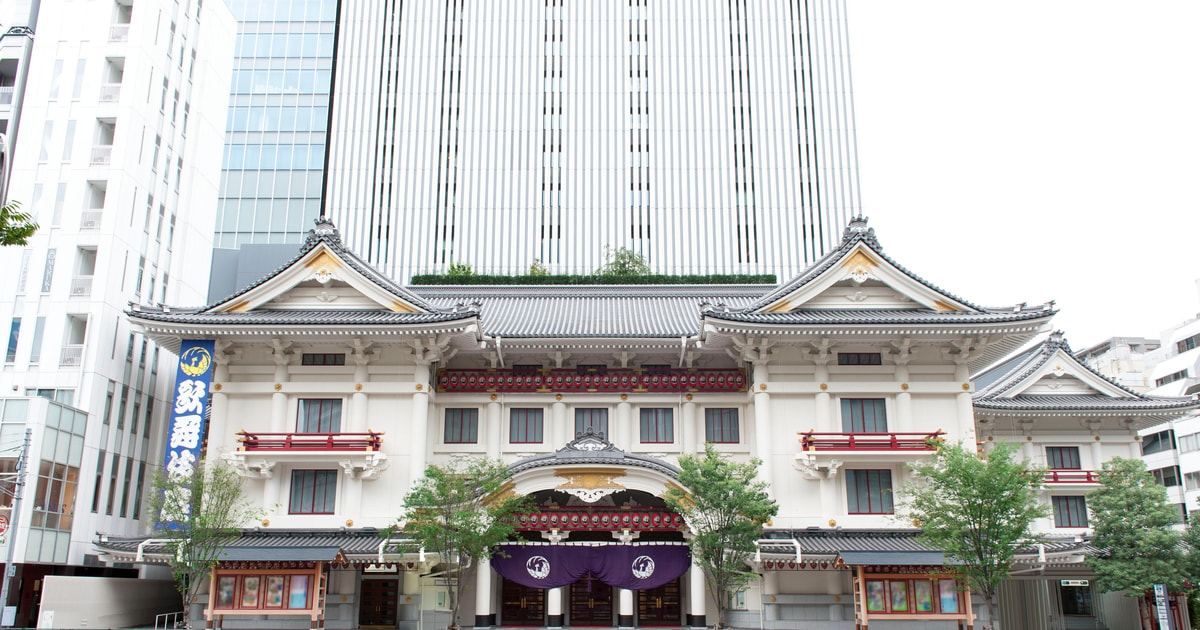
If you’re planning a trip to Tokyo, Kabuki-za is one of the most memorable ways to experience Japanese culture firsthand. GetYourGuide offers English-friendly Kabuki-za tickets and guided experiences, including options with headset translation and pre-show introductions for first-time viewers.
👉 Check Kabuki-za Tickets on GetYourGuide
This section may contain affiliate links. Booking through them costs you nothing extra and helps support this site.


コメント