
If you’ve ever sat through an opera or a Shakespeare play, kabuki will feel oddly familiar in places — and completely alien in others. Comparing kabuki to Western theatrical traditions is actually one of the fastest ways to understand what makes it distinctive, since the similarities and differences both turn out to be genuinely instructive.
Where Kabuki and Opera Overlap
Kabuki and opera share more structural DNA than you might expect. Both are built around live music performed alongside the actors rather than as background — in opera’s case, a full orchestra; in kabuki’s, an ensemble of shamisen, drums, and flutes performing styles like nagauta. Both favor heightened, non-naturalistic performance over everyday realism: nobody in an opera talks the way people actually talk, and nobody in kabuki moves the way people actually move. Both also lean on established, repeated works rather than constant new material — audiences return to see a beloved actor’s interpretation of a role they already know, the same way opera fans return again and again to La Bohème or Carmen.
Where They Diverge
Who’s Allowed to Interrupt
Western theater etiquette generally demands silence until the curtain call. Kabuki flips that entirely: audience members — often seasoned fans belonging to informal ōmukō associations — shout out an actor’s family name at precisely the right dramatic beat, and it’s considered a mark of respect and genuine engagement rather than a disruption.
The Stage Itself
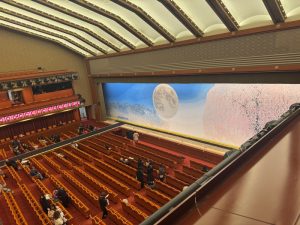
A traditional opera house is built around the proscenium arch — a single frame the audience looks through, like a picture in motion. Kabuki theaters instead extend a runway (the hanamichi) directly through the audience, letting actors enter, exit, and even perform major dramatic beats while standing among the crowd rather than at a distance from it. Add a revolving stage and trapdoor lifts, and kabuki’s stagecraft is doing things most opera houses simply aren’t built for.
Gender on Stage
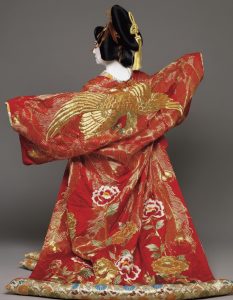
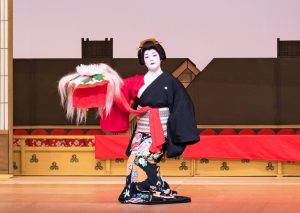
This one’s a closer parallel than people often assume. Kabuki has performed female roles exclusively through male actors (onnagata) since 1629, when women were banned from the stage. But Western theater has its own history here too — Shakespeare’s plays were originally performed with boys and young men in all the female roles, since women were barred from the English stage until the Restoration era. The difference is that kabuki never abandoned the convention: onnagata remains a living, actively studied specialty today, while Western theater moved on from all-male casting centuries ago.
Family Dynasties
Opera has its share of famous musical families, but nothing quite like kabuki’s system of inherited stage names. In kabuki, a name like “Danjūrō” or “Kikugorō” is passed down through generations of the same acting family in a formal succession ceremony (shūmei), and audiences track an actor’s lineage the way sports fans track a legacy franchise. Casting isn’t just about who’s talented — it’s often about which family a role has traditionally belonged to.

Makeup as Language
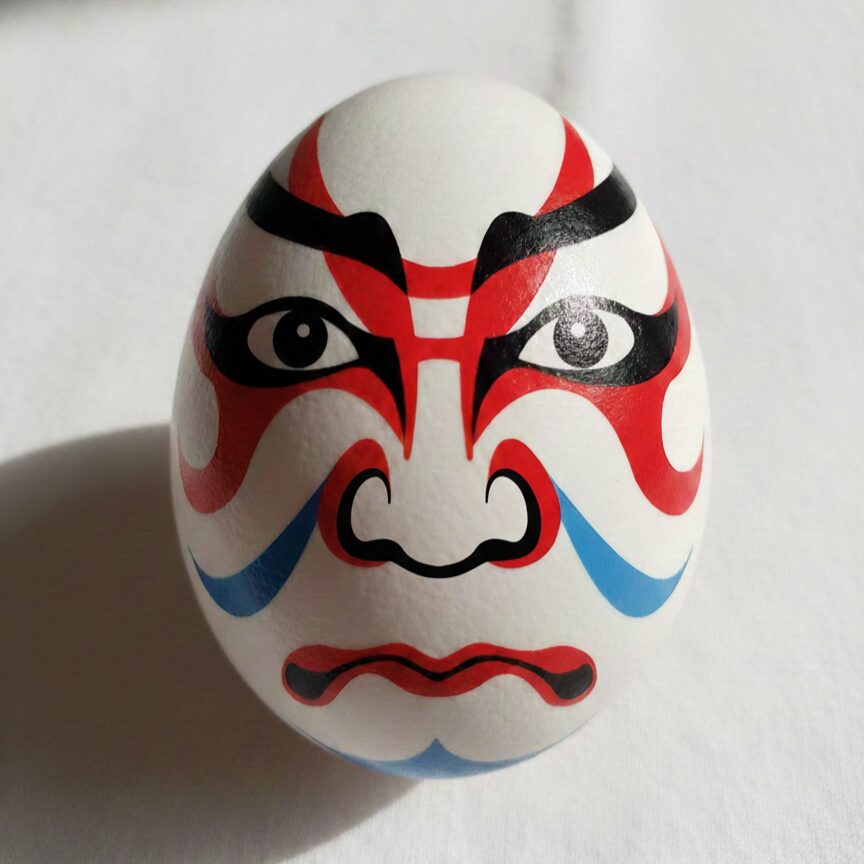
Opera occasionally uses stylized makeup, but rarely as a coded visual system. Kabuki’s kumadori makeup functions almost like a costume department’s shorthand: specific colors and patterns painted onto an actor’s face communicate a character’s morality and nature before they’ve said a word — red for righteous heroism, blue for villainy, and so on.

What About Musical Theater?
If opera feels like too formal a comparison, Broadway-style musical theater might actually be closer in spirit to kabuki’s original appeal. Both were, at their inception, entertainment for a broad general public rather than an elite — kabuki began as popular entertainment for Edo-period townspeople, not the ruling class. Both mix spectacle, music, and star power freely, and both have historically prized a charismatic lead performer as much as the material itself. The stiff, reverent atmosphere many people associate with “traditional theater” is a much better match for Noh than it is for kabuki, which was rowdy, crowd-pleasing entertainment from day one.
The Takeaway for a First-Time Viewer
If you enjoy opera for its blend of music, spectacle, and heightened emotion, kabuki will feel like a natural extension of that taste — just with a runway through the crowd, audience call-outs, and family dynasties spanning centuries. Come in expecting something closer to a night at the opera than a hushed museum exhibit, and kabuki tends to land far better.
Frequently Asked Questions
- Is kabuki more like opera or more like a play?
-
It has elements of both — kabuki is built around live traditional music the way opera is, but it also includes spoken dialogue and stylized combat scenes closer to spoken drama. It doesn’t map perfectly onto either Western category.
- Did Western theater ever use all-male casts like kabuki still does?
-
Yes — Shakespeare’s original productions used boys and young men in female roles, since women were banned from the English stage at the time. The difference is that kabuki has preserved and continued developing this practice as a living art form, while Western theater moved away from it centuries ago.
- Is it okay to make noise during a kabuki performance like you would at a concert?
-
Audience call-outs (kakegoe) do happen and are a welcomed tradition, but they follow specific timing and are usually done by experienced fans — first-timers are generally better off watching and listening rather than trying to join in right away.
Summary
Kabuki shares real structural common ground with opera and musical theater — live music, heightened performance, beloved recurring works — while diverging sharply in its audience participation, stagecraft, and centuries-deep family dynasties. Understanding it through that lens makes kabuki feel less like a foreign curiosity and more like a distant cousin of theatrical traditions you may already love.
🎭 Want to See Kabuki Live?
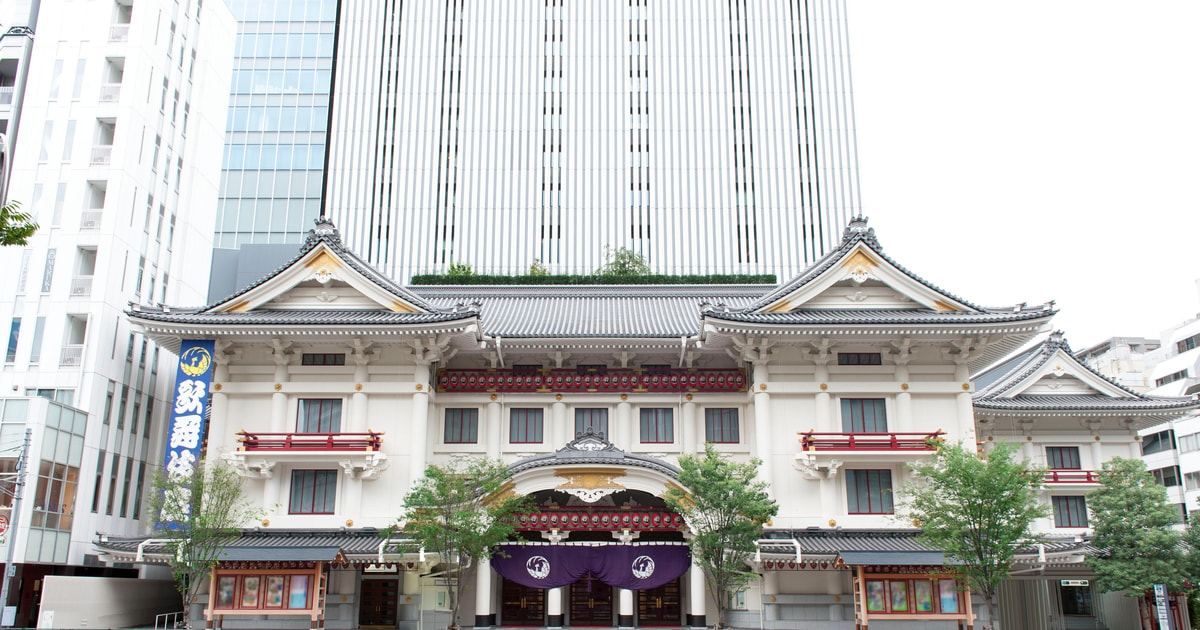
If you’re planning a trip to Tokyo, Kabuki-za is one of the most memorable ways to experience Japanese culture firsthand. GetYourGuide offers English-friendly Kabuki-za tickets and guided experiences, including options with headset translation and pre-show introductions for first-time viewers.
👉 Check Kabuki-za Tickets on GetYourGuide
This section may contain affiliate links. Booking through them costs you nothing extra and helps support this site.


コメント