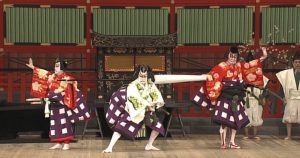
Watch enough kabuki, and the moment an actor locks into a dramatic mie pose, you’ll hear it: a shout from somewhere in the audience — “Naritaya!” “Otowaya!” It sounds almost like a cheer at a sports match, and if you’re new to kabuki, it can be genuinely confusing.
This is ōmukō (大向う) — kabuki’s tradition of audience call-outs. Here’s what it means, where the names come from, when it happens, and — importantly — whether you’re expected to join in.
What Is Ōmukō?
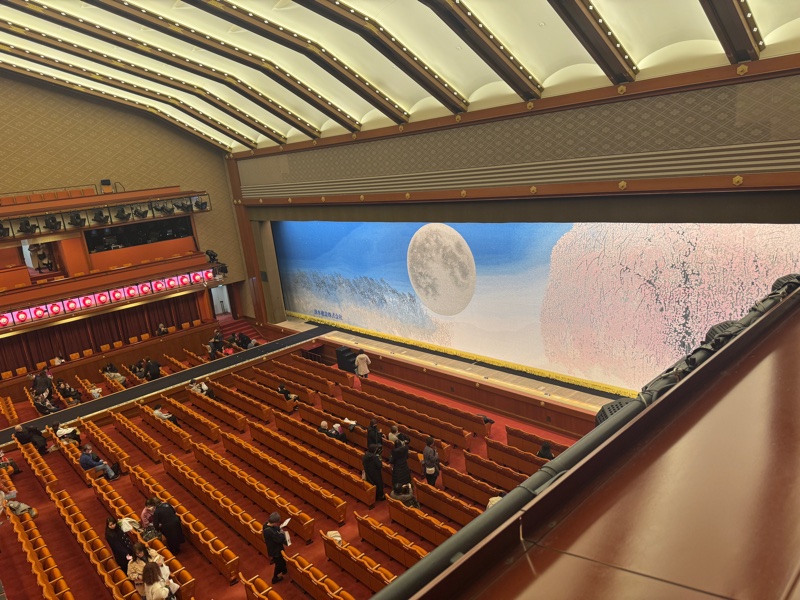
Ōmukō originally referred to the seats at the very back of the theater. Historically, kabuki connoisseurs seated there would call out to actors on stage, and over time that grew into today’s tradition: a way for the audience and the actors to build the energy of a performance together.
This custom dates back to the Edo period, and at theaters like Kabukiza, shouts like “Naritaya!” or “Nakamuraya!” at a key moment can lift the energy of the entire room in an instant. In modern practice, ōmukō is often handled by experienced kabuki fans or members of dedicated ōmukō associations — it’s not something every audience member is expected to do.
The Heart of a Call-Out: The Yago
The most common thing shouted during ōmukō is an actor’s yago (屋号) — a special name tied to that actor’s family and artistic lineage. Unlike an ordinary surname, actors are traditionally addressed on stage by their yago rather than their legal name.
For example:
- Ichikawa Danjūrō → Naritaya
- Onoe Kikugorō → Otowaya
- Matsumoto Kōshirō → Kōraiya
Each yago carries that family’s history and artistic tradition within it.
Major Yago and Their Actors
| Yago | Reading | Associated Actors |
| Naritaya | なりたや | Ichikawa Danjūrō |
| Otowaya | おとわや | Onoe Kikugorō, Onoe Kikunosuke |
| Kōraiya | こうらいや | Matsumoto Kōshirō, Ichikawa Somegorō |
| Harimaya | はりまや | Nakamura Karoku, the late Nakamura Kichiemon |
| Nakamuraya | なかむらや | Nakamura Kankurō, Nakamura Shichinosuke |
| Narikomaya | なりこまや | Nakamura Shikan, Nakamura Hashinosuke |
| Yamatoya | やまとや | Bandō Tamasaburō |
| Omodakaya | おもだかや | Ichikawa Ennosuke, Ichikawa Chūsha |
| Kyōya | きょうや | Nakamura Jakuemon |
| Kagaya | かがや | Nakamura Baigyoku |
| Kinokuniya | きのくにや | Bandō Yajūrō |
Beyond the Yago: “Go-Ryōnin”
There are special calls beyond individual yago too. “Go-ryōnin” (“the two of you”) is used when two actors strike a mie together at the same moment, addressing both at once.
When Does Ōmukō Happen?
Ōmukō isn’t shouted at random — timing matters, and the goal is always to enhance the moment, never to interrupt it.
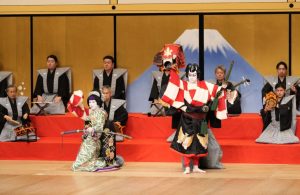
Right After a Mie
The most classic timing of all. As an actor freezes in a mie, expressing emotion through stillness, a call rings out to match the resonance of that exact instant.
Entrances and Exits on the Hanamichi
Calls also come when a lead character enters or makes a final exit via the hanamichi runway — especially at the shichi-san point, where an actor often pauses for a defining moment.
After a Famous Line or Scene
A call can also follow a beloved line of dialogue or a scene the audience has been anticipating. That said, there’s no need to force the timing if you don’t know the play or actor well.
First-Timers: You Don’t Need to Shout Anything
Some first-time visitors worry: “Am I missing out if I don’t call anything out?” You’re not. Kabuki’s appeal lives in plenty of other places — an actor’s expression, the power of a mie, the timing of a pause in dialogue, the costumes and stage mechanisms, the music and shamisen.
In fact, calling out without knowing the actor or play well can easily backfire — shouting the wrong yago at the wrong actor. The best approach for a first visit is simply to enjoy the stage and listen to the calls happening around you.
Etiquette If You Do Want to Try It
Once you’re more familiar with kabuki and want to give it a try, keep these in mind:
- Never call out during dialogue — it interrupts an actor’s important line. Only call during a clear pause.
- Don’t shout repeatedly — ōmukō exists to lift the stage, not to draw attention to yourself. One well-placed call at the right moment is considered the height of style.
- Confirm the actor’s yago beforehand — checking the program (suji-gaki) for the cast list ahead of time will save you from an awkward mistake.
Frequently Asked Questions
- Do I have to shout a yago to enjoy kabuki properly?
-
Not at all. Ōmukō is one tradition among many ways to enjoy kabuki, and it’s often left to experienced fans. Simply watching and listening is a completely valid way to experience a performance.
- What exactly is a yago?
-
A yago is a special stage name tied to an actor’s family and artistic lineage, used instead of their legal surname — for example, Ichikawa Danjūrō is called “Naritaya” on stage.
- What happens if I call out the wrong yago?
-
It’s an easy mistake if you don’t know the cast well, and it can feel awkward since the call is meant specifically for that performer. This is exactly why first-timers are encouraged to just listen rather than call out themselves.
Summary
- Ōmukō is the traditional call-out shouted toward the stage during kabuki
- Its core is the actor’s yago, a name tied to family and artistic lineage
- Classic timing: right after a mie, or during a hanamichi entrance/exit
- First-timers don’t need to force themselves to call out
- Enjoying the atmosphere and the actors’ performance is what matters most
Ōmukō is a beautiful tradition connecting the stage and the audience — but there’s no single correct way to enjoy kabuki. Whether you call out or watch quietly, both are valid ways to take part in the performance.
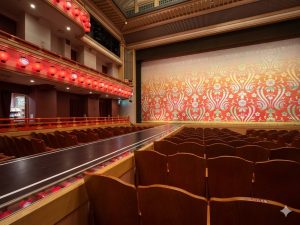
🎭 Want to See Kabuki Live?
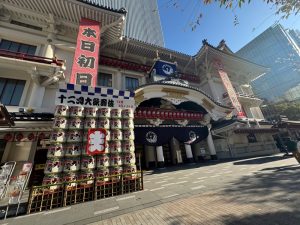
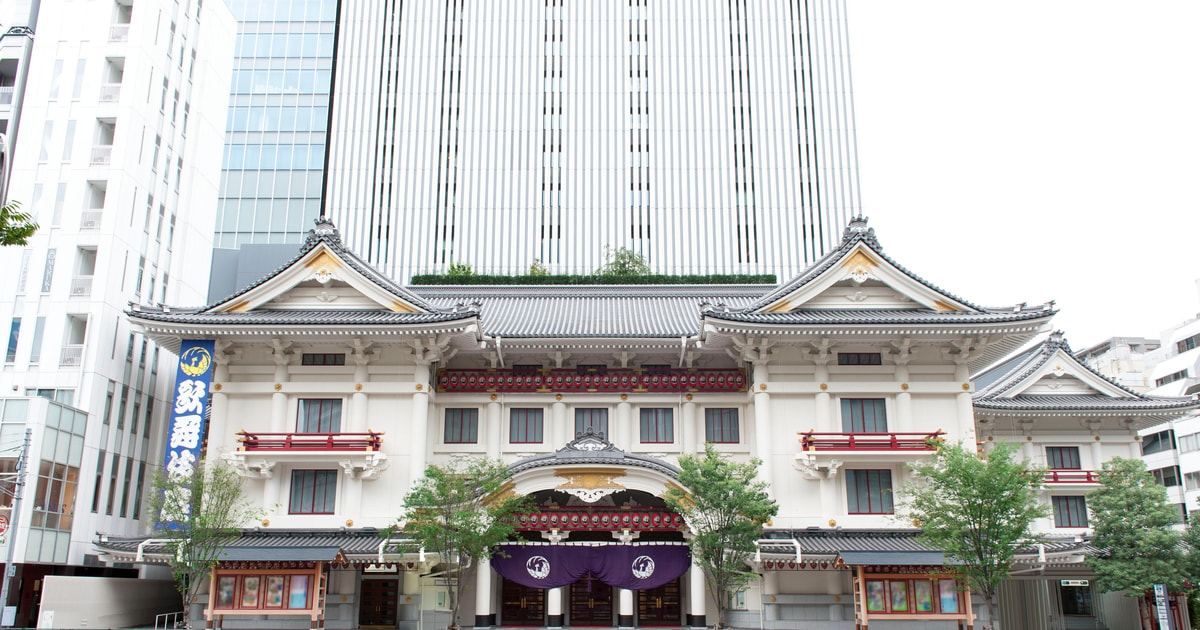
If you’re planning a trip to Tokyo, Kabuki-za is one of the most memorable ways to experience Japanese culture firsthand. GetYourGuide offers English-friendly Kabuki-za tickets and guided experiences, including options with headset translation and pre-show introductions for first-time viewers.
👉 Check Kabuki-za Tickets on GetYourGuide
This section may contain affiliate links. Booking through them costs you nothing extra and helps support this site.



コメント
コメント一覧 (3件)
[…] あわせて読みたい What Is Ōmukō? Yago Names and Kakegoe Call-Outs Explained Ōmukō is kabuki’s tradition of shouting an actor’s yago from the audience. Learn what it means, major yago names, timing, and etiquette. […]
[…] あわせて読みたい What Is Ōmukō? Yago Names and Kakegoe Call-Outs Explained Ōmukō is kabuki’s tradition of shouting an actor’s yago from the audience. Learn what it means, major yago names, timing, and etiquette. […]
[…] あわせて読みたい What Is Ōmukō? Yago Names and Kakegoe Call-Outs Explained Ōmukō is kabuki’s tradition of shouting an actor’s yago from the audience. Learn what it means, major yago names, timing, and etiquette. […]