
Watch an onnagata performer transform into a convincing, graceful female character on stage, and it’s natural to wonder: does that carry over once the curtain falls? The short answer is no — but the longer answer involves a genuinely fascinating piece of kabuki history that makes the question worth asking in the first place.
The Modern Reality: A Specialized Role, Not a Lifestyle
Today, onnagata is understood purely as a professional acting specialization — a role type an actor trains in and performs, not an identity they carry into daily life. Offstage, onnagata performers live as themselves: many are married with families, hold the same everyday routines as any other professional, and simply happen to have devoted their careers to mastering female-role technique the same way a tachiyaku actor masters male roles. It’s closer to how a dramatic actor doesn’t remain “in character” after a performance ends, just applied to a role type spanning an entire career rather than a single part.
Where the Question Actually Comes From
The confusion isn’t baseless, though — it has real roots in kabuki’s own history. In the Edo period, one of the most influential texts on onnagata technique, a collection of teachings attributed to the actor Yoshizawa Ayame (often referred to as the “Words of Ayame,” or Ayamegusa), argued that a truly convincing onnagata needed to embody femininity in daily life as well as on stage — advising performers to think, speak, and even dress as women offstage in order to make their stage performance feel authentic rather than performed.
Some Edo-period onnagata reportedly did take this quite seriously, maintaining feminine mannerisms and dress in their daily lives specifically to deepen their artistic craft. It’s a genuinely striking piece of theatrical philosophy — the idea that authenticity on stage requires a kind of lived authenticity off it — and it’s very likely the origin of the popular assumption that onnagata “live as women” even today.
Why the Practice Faded
That philosophy reflected a specific historical moment, not a permanent requirement of the craft. As onnagata technique matured into a highly codified system of gesture, posture, and stagecraft — passed down through formal training within acting families — the art form no longer depended on an actor’s daily life outside the theater to achieve convincing results on stage. What Ayame framed as lived necessity, later generations reframed as a matter of studied technique: the abstracted, stylized language of femininity that defines onnagata performance is something learned and rehearsed, not something an actor needs to inhabit around the clock to master.
What Does Carry Over: A Certain Refinement
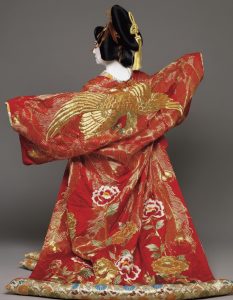
That said, longtime onnagata performers are sometimes described as carrying a certain refinement or grace into their everyday bearing — not because they’re deliberately performing femininity offstage, but simply as a natural residue of decades spent training the body toward controlled, deliberate movement. It’s a similar phenomenon to how any highly trained performer, dancer, or martial artist tends to carry some trace of their discipline into ordinary posture and movement, rather than evidence that the craft and the person’s daily identity have blurred together.
Not the Same as Gender Identity or Cross-Dressing
It’s worth being clear about what onnagata is and isn’t. It’s a performance specialty and craft tradition, not a statement about an actor’s personal gender identity, and it shouldn’t be conflated with cross-dressing as a personal practice. An onnagata performer is, first and foremost, an actor who has trained for years — often since childhood — in a specific set of techniques for portraying female characters within a highly stylized theatrical form. What happens on stage is a deliberate, studied art; what happens offstage is simply an actor’s own life.
Frequently Asked Questions
- Did any onnagata actors actually live as women offstage historically?
-
Some did, according to historical accounts, following Edo-period teachings that argued authentic stage performance required embodying femininity in daily life too. This wasn’t universal, and the practice largely faded as onnagata technique became more formally codified.
- Do modern onnagata performers dress as women in daily life?
-
No — today’s onnagata performers live ordinary lives offstage. The role is treated purely as a professional acting specialization, learned through training rather than lived offstage identity.
- Is onnagata related to being transgender?
-
No — onnagata is a theatrical role specialization and craft tradition, not a statement about personal gender identity. It shouldn’t be conflated with cross-dressing or gender identity as a personal practice.
Summary
Modern onnagata actors don’t live as women offstage — the art form today is a studied, codified performance craft, not a lifestyle. The idea persists mainly because of a genuinely striking piece of Edo-period theatrical philosophy that once argued otherwise, a fascinating footnote in kabuki’s history rather than a description of how the tradition actually works today.
Related Reading
🎭 Want to See Kabuki Live?
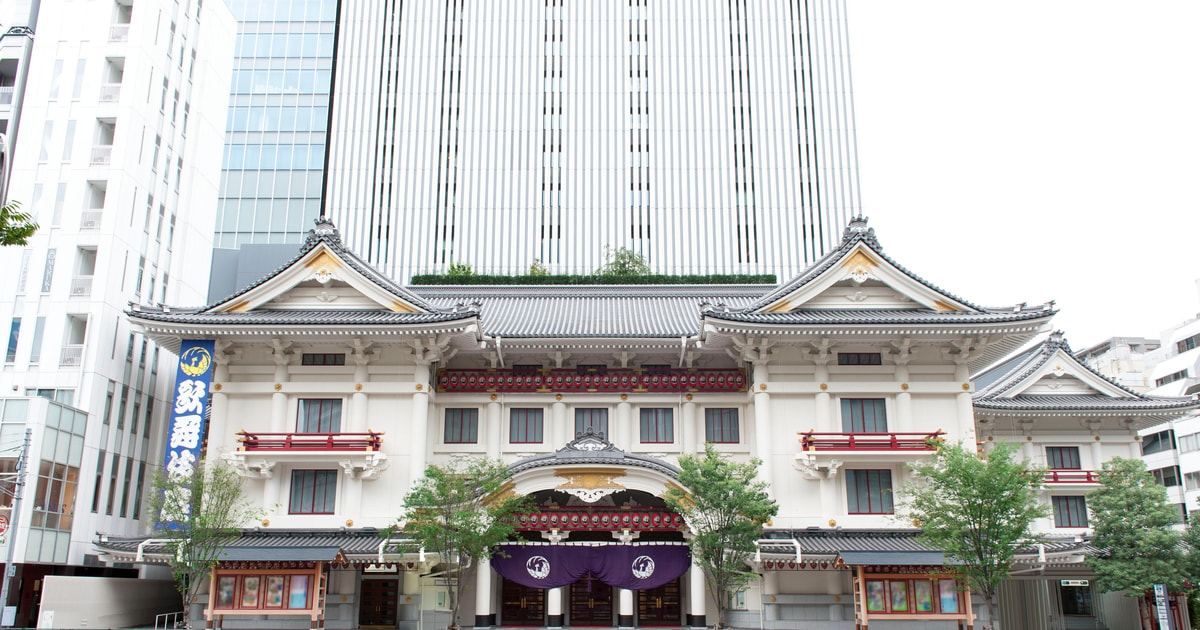
If you’re planning a trip to Tokyo, Kabuki-za is one of the most memorable ways to experience Japanese culture firsthand. GetYourGuide offers English-friendly Kabuki-za tickets and guided experiences, including options with headset translation and pre-show introductions for first-time viewers.
👉 Check Kabuki-za Tickets on GetYourGuide
This section may contain affiliate links. Booking through them costs you nothing extra and helps support this site.






コメント