

Kabuki’s influence has quietly spread well beyond the theater. A handful of everyday Japanese words trace directly back to backstage kabuki practice, and even English has borrowed the word “kabuki” itself as shorthand for a particular kind of empty political theater. Here’s where these words actually come from.
Kuromaku (黒幕): “The Man Behind the Curtain”
In kabuki, a kuromaku is literally a black curtain, used on stage to represent darkness, concealment, or a scene change happening out of view. In everyday Japanese today, the word has taken on a second life entirely: a kuromaku now refers to a “mastermind” or someone secretly pulling the strings behind a situation — a hidden power broker operating out of public view, much like the literal curtain the term originally described.
The stage curtain itself carries its own layer of meaning, too — see our guide to what kabuki’s different curtain colors signify.

Kuroko (黒子): The Invisible Helper
Closely related is kuroko — the black-clad stage assistants who move props, adjust costumes, and support actors mid-scene, dressed specifically so that audiences visually “ignore” their presence and treat them as invisible. In modern usage, calling someone a kuroko is a genuine compliment: it describes a person working selflessly behind the scenes to support others’ success, without seeking credit or recognition themselves — an editor, a behind-the-scenes producer, a support staffer making everyone else look good.
Mie wo Kiru (見得を切る): Showing Off
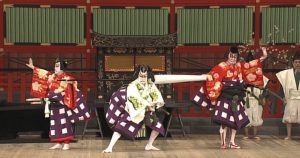
Kabuki’s signature dramatic freeze-pose, the mie, has lent its name and spirit to a common everyday expression: mie wo kiru, meaning to strike a dramatic pose or make a show of oneself. It’s used today to describe someone showing off, posturing, or making an exaggerated display — a direct nod to the theatrical, attention-grabbing nature of the original stage technique.
Nimaime and Sanmaime: Handsome Lead, Comic Relief
These two terms come from a very specific piece of Edo-period theater marketing: kabuki playbills listing a cast were traditionally displayed on a series of wooden boards outside the theater, with each role type assigned a conventional position in the lineup. The handsome romantic lead occupied the second board — nimaime — while the comic, buffoonish character occupied the third — sanmaime. Both terms are still in everyday use in Japanese today: nimaime describes a conventionally handsome, charming man, while sanmaime describes someone playing the clown or comic relief in a given situation.
“Kabuki Theater” as English Political Shorthand
English has borrowed something too — just at the level of the whole art form’s name rather than an individual term. In American political journalism and commentary in particular, “kabuki theater” (or simply “kabuki”) is sometimes used as a critical shorthand for political posturing that looks dramatic and consequential but is, in reality, entirely scripted and predetermined — action without genuine substance, performed for an audience rather than to accomplish anything real. It’s not a flattering use of the word, and it doesn’t reflect kabuki’s actual artistic depth, but it’s become a genuinely established piece of English media vocabulary, precisely because kabuki’s reputation for stylized, non-naturalistic performance made it an easy shorthand for “staged” behavior.
A Quiet, Ongoing Influence
None of these words require any familiarity with kabuki to use correctly in daily conversation — which is exactly what makes them such a striking testament to the art form’s cultural reach. Four centuries after Izumo no Okuni’s first performances, kabuki’s vocabulary has slipped quietly into language people use every day, whether or not they’ve ever set foot in a theater.

Frequently Asked Questions
- What does “kuromaku” mean in everyday Japanese?
-
It means a “mastermind” or someone secretly pulling the strings behind a situation, derived from the literal black curtain used on the kabuki stage to represent concealment.
- Why is a handsome man called “nimaime” in Japanese?
-
The term comes from Edo-period kabuki playbills, where cast lists were displayed on a series of wooden boards, and the handsome leading man traditionally occupied the second board (nimai).
- Does English actually use the word “kabuki” outside of theater discussion?
-
Yes — “kabuki theater” is sometimes used in English political commentary to describe scripted, performative political posturing that looks dramatic but lacks real substance.
Summary
From “kuromaku” and “kuroko” to “nimaime” and “sanmaime,” kabuki’s backstage vocabulary has quietly worked its way into everyday Japanese, while English has picked up “kabuki theater” itself as political shorthand. Once you know where these words come from, they’re a small, delightful reminder of just how deeply kabuki has shaped the language around it, far beyond the theater walls.
🎭 Want to See Kabuki Live?
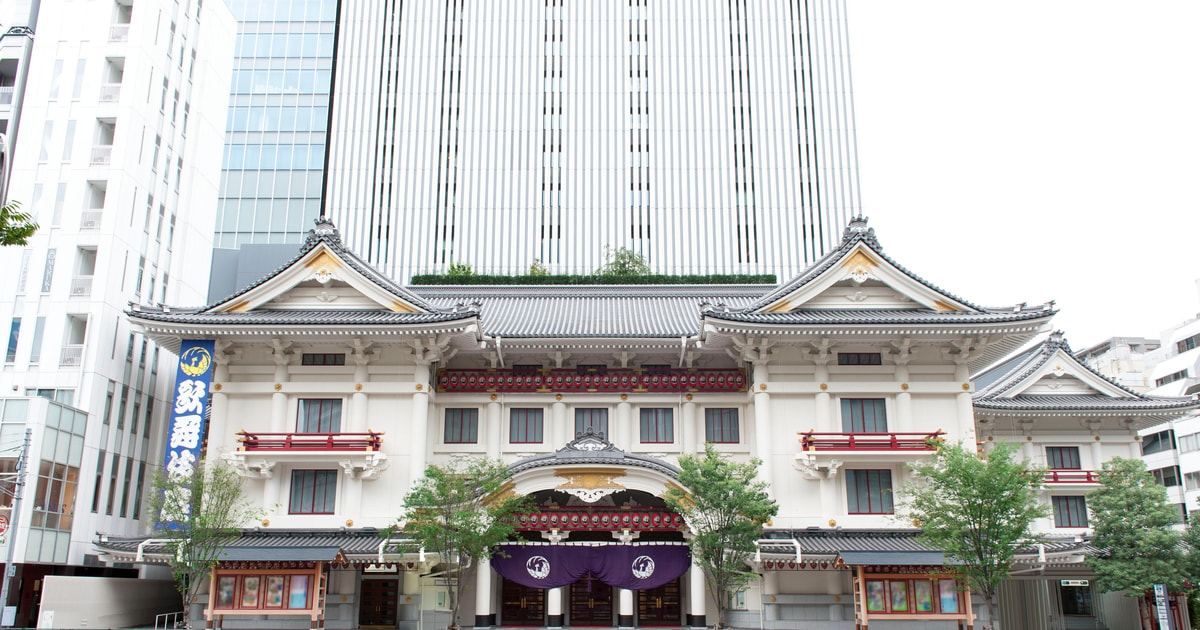
If you’re planning a trip to Tokyo, Kabuki-za is one of the most memorable ways to experience Japanese culture firsthand. GetYourGuide offers English-friendly Kabuki-za tickets and guided experiences, including options with headset translation and pre-show introductions for first-time viewers.
👉 Check Kabuki-za Tickets on GetYourGuide
This section may contain affiliate links. Booking through them costs you nothing extra and helps support this site.



コメント