
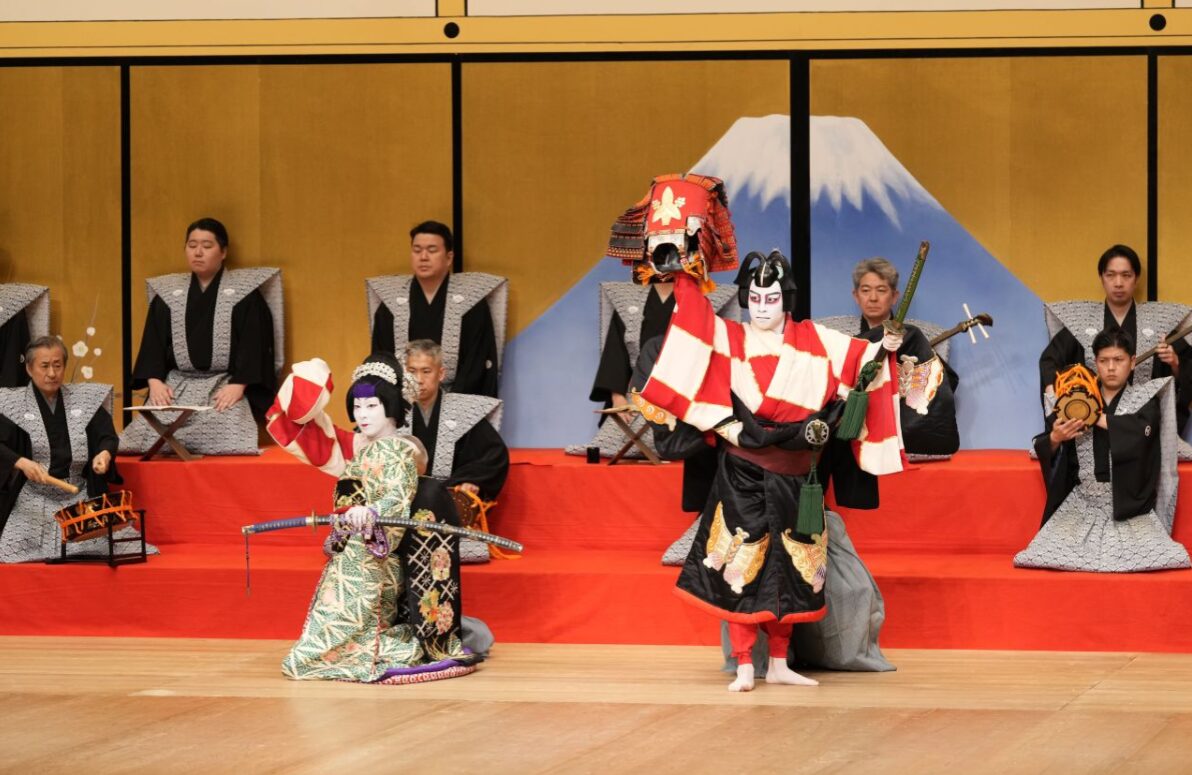
Bookmark this one. Twenty essential kabuki terms, each defined in a single line, so you can look something up quickly before or during a performance without wading through a long article. For deeper dives on any of these, follow the linked guides.
The Quick-Reference List
- Mie (見得) — A dramatic frozen pose an actor holds at a scene’s emotional peak.
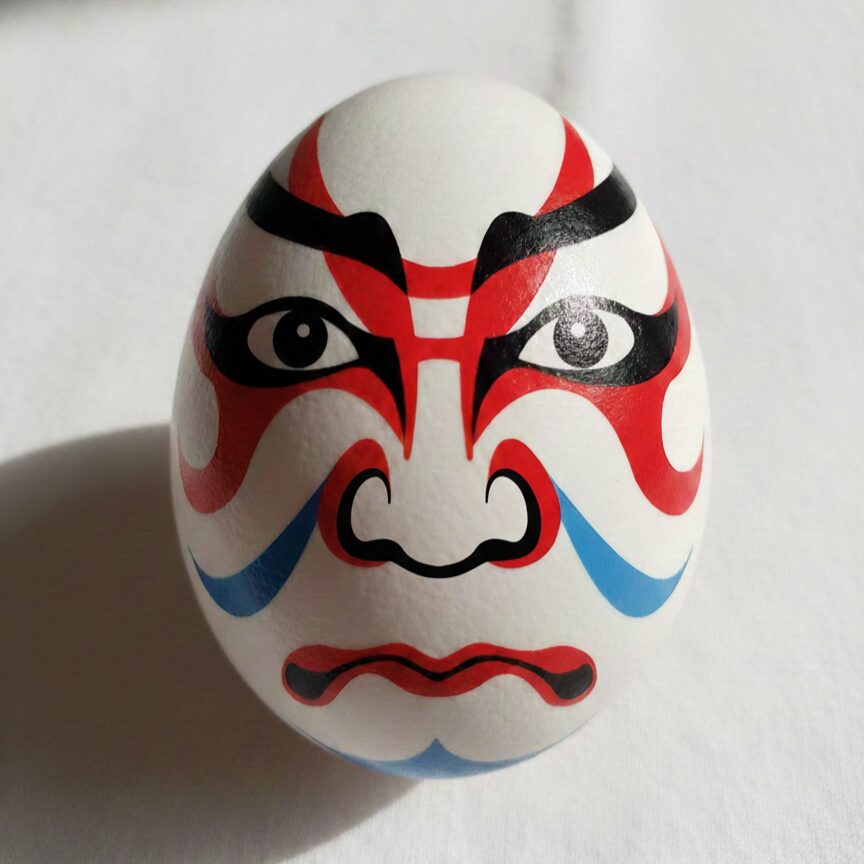
- Kumadori (隈取) — Bold, symbolic face makeup that signals a character’s morality and nature through color.
- Onnagata (女方) — Male actors who specialize permanently in female roles.
- Tachiyaku (立役) — Male actors who specialize in male roles, the counterpart to onnagata.
- Aragoto (荒事) — A bold, exaggerated performance style built around superhuman heroes, pioneered by the Ichikawa family.
- Wagoto (和事) — A soft, romantic performance style built around gentle, refined male characters, developed in the Kamigata region.
- Hanamichi (花道) — The elevated runway extending through the audience, used for major entrances and exits.
- Kata (型) — The codified, inherited forms of movement, gesture, and delivery passed down within acting families.
- Yagō (屋号) — An acting family’s house name, distinct from their surname, shouted out during kakegoe call-outs.
- Kakegoe (掛け声) — Audience call-outs shouting an actor’s yagō at a dramatic peak, a welcomed tradition rather than a disruption.
- Shūmei (襲名) — The formal ceremony marking an actor’s succession to a larger, more senior stage name.
- Kōjō (口上) — A formal on-stage speech delivered during major ceremonies like a name succession, spoken as the actor rather than a character.
- Danmari (だんまり) — A wordless scene where multiple characters search for each other silently in darkness.
- Hikinuki (引き抜き) — A quick-change technique where a basted outer costume layer is pulled away in an instant to reveal a new look.
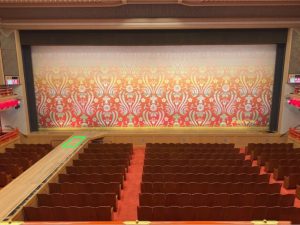
- Jōshiki-maku (定式幕) — The traditional striped curtain, pulled by hand, that opens and closes a full act.
- Mon (紋) — A family crest identifying which acting lineage a performer belongs to.
- Buyō (舞踊) — Kabuki dance, built around music and movement rather than spoken dialogue.
- Tsūshi Kyōgen (通し狂言) — A full, start-to-finish staging of a play, as opposed to a single popular excerpt.
- Makumi (幕見) — Single-act seating at Kabukiza, sold at a fraction of the price of a full-program ticket.
- Kabuki Jūhachiban (歌舞伎十八番) — The Ichikawa family’s collection of eighteen signature plays.
Where to Go Deeper
Each of these terms has its own full explainer elsewhere on this site, covering history, technique, and what to actually watch for during a performance:

Frequently Asked Questions
- What’s the single most important term to know before my first kabuki performance?
-
Mie — the dramatic frozen pose that marks the emotional high point of nearly every kabuki scene. Recognizing it instantly makes any performance easier to follow.
- What’s the difference between aragoto and wagoto?
-
Aragoto is bold, exaggerated, and heroic, developed by the Ichikawa family; wagoto is soft, romantic, and refined, developed in the Kamigata region — the two represent opposite ends of kabuki’s male-role performance spectrum.
- Is it okay to look up terms on my phone during a performance?
-
Phone screens and photography are generally prohibited once a performance begins, so it’s best to review a glossary like this one beforehand rather than during the show itself.
Summary
Twenty terms won’t make you a kabuki scholar overnight, but they’ll get you through your first performance without feeling lost — recognizing a mie, understanding why the audience is shouting a name, and knowing what that runway through the crowd is actually for. Save this page, glance through it before your next visit, and follow the links whenever you want to go deeper on any single term.
🎭 Want to See Kabuki Live?
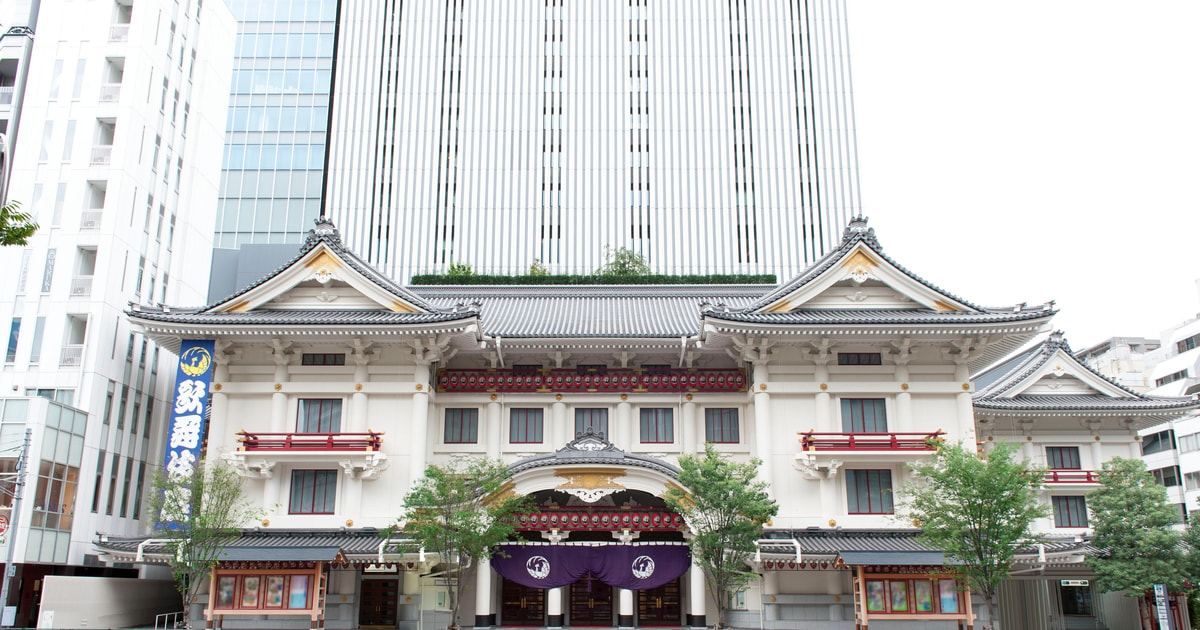
If you’re planning a trip to Tokyo, Kabuki-za is one of the most memorable ways to experience Japanese culture firsthand. GetYourGuide offers English-friendly Kabuki-za tickets and guided experiences, including options with headset translation and pre-show introductions for first-time viewers.
👉 Check Kabuki-za Tickets on GetYourGuide
This section may contain affiliate links. Booking through them costs you nothing extra and helps support this site.

コメント