One of the first things that surprises new kabuki audiences: every female role is played by a man. Why? What makes an onnagata’s movement so distinctive? And how is it different from the male-role acting we’ve covered elsewhere on this site?
This guide explains onnagata (女方) — kabuki’s tradition of female-role specialists — covering its history, techniques, sub-categories, and the actors who define it today.
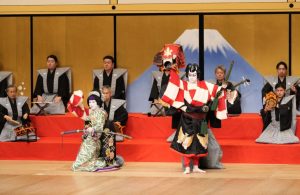
Tachiyaku vs. Onnagata: Kabuki’s Two Great Role Types
Kabuki roles fall broadly into two categories:
| Role Type | Plays | Characteristic |
| Tachiyaku (立ち役) | Male roles | Bold, powerful performance |
| Onnagata (女方) | Female roles | Elegant, refined movement |
Tachiyaku actors play everything from samurai and townsmen to young heroes and villains — think of Kamakura Gongorō bursting onto the hanamichi shouting “Shibaraku!” in the play of the same name, a perfect example of tachiyaku’s bold heroic appeal.
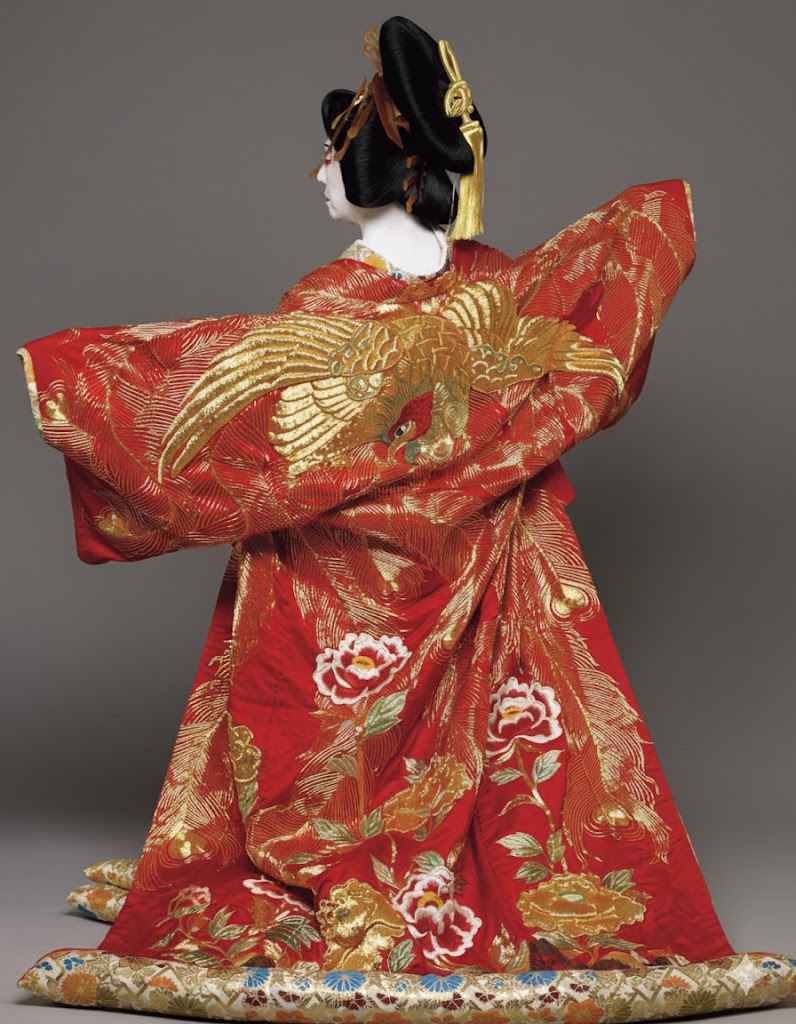
Onnagata sits at the opposite end of the spectrum entirely: an art form built around expressing feminine elegance, delicacy, and fragility — refined by men to an extraordinary degree of precision.
Where Onnagata Came From
Onnagata’s origins trace back to the Edo period. Kabuki’s earliest form, pioneered by Izumo no Okuni, actually included women performing on stage. But in 1629, the shogunate banned women from performing kabuki over concerns about public morals. That ban is exactly what led to the creation of onnagata — a specialized role for male actors trained to perform female characters.
Crucially, onnagata was never meant to simply imitate real women. Rather than mimicking reality, onnagata expresses an idealized vision of femininity within kabuki’s own stylized aesthetic — meaning what you see on stage is a deliberately heightened, almost dreamlike beauty, distinct from how any real woman moves or speaks.
The Craft of Onnagata: Movement, Voice, and Makeup
The beauty of onnagata is the product of years of rigorous training in three areas:
Movement (Shosa)
- Walk — a quiet, sliding gait (suriashi) with knees turned slightly inward
- Hand movement — fingers held together, moving in soft, curved lines
- Gaze — eyes cast slightly downward, expressing emotion through subtle eye movement rather than direct stares
Each of these small details, refined over years, is what builds an onnagata’s sense of femininity on stage.
Voice
Onnagata speak in a voice pitched higher than their natural speaking voice — but it’s far more than simply raising pitch. It requires advanced technique to express emotional nuance through vocal inflection within that register.
Makeup
Onnagata makeup is built on a white base, with red and black used to accentuate the eyes and lips — calculated specifically to look striking under stage lighting and to read as beautifully as possible from the audience’s seats.
Onnagata Sub-Categories
Tate-oyama — The Leading Onnagata
The highest-ranking onnagata in a company, who serves as the romantic or dramatic counterpart to the lead actor, taking on heroines and other major female roles. In the modern era, Bandō Tamasaburō is widely recognized as having defined this position — despite not being born into a traditional kabuki acting family, he became one of the art form’s defining onnagata through sheer artistic mastery, earning acclaim both in Japan and internationally.
A quick note: “tate-oyama” is often mistaken for “an actor who plays both male and female roles.” It actually just means “the top onnagata” — worth knowing if you want to sound like a seasoned kabuki fan.
Waka-oyama — Young Female Roles
Onnagata who primarily play young women — princesses, merchant daughters, and similar roles requiring innocence and youthful charm. This is often where an onnagata’s career begins.
Kashagata — Older Female Roles
Onnagata who specialize in older women, nursemaids, and elderly female characters (sometimes also called fuke-oyama, though “kashagata” is the more common term in kabuki). These roles demand depth and a calm, weighty stage presence.
Leading Onnagata Actors Today
Bandō Tamasaburō
An essential name in any discussion of modern onnagata. Known for his refined movement and delicate emotional expression, he’s often described as embodying “an ideal of femininity beyond reality itself.” He has been designated a Living National Treasure (Ningen Kokuhō) and has brought his art to a wide audience through film and video as well as the stage.
Nakamura Shichinosuke
A popular onnagata known for youthful, vivid performances, specializing in charming princess and young-woman roles, and widely praised for the beauty of his dance.
Nakamura Tokizō
Known for a composed, dignified quality, specializing in mature female roles and carrying classical onnagata beauty into the present day.
Plays That Showcase Onnagata at Their Best
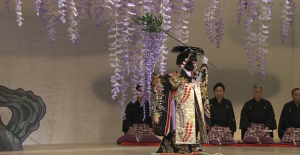
- Fuji Musume (The Wisteria Maiden) — a dance piece performed by the spirit of a wisteria blossom, showcasing a young onnagata’s beauty at its peak
- Musume Dōjōji — a masterpiece portraying a woman driven mad by jealousy, testing the full range of an onnagata’s expressive power
- Yowa Nasake Ukina no Yokogushi — a popular play expressing the ache of doomed love through delicate, restrained movement
- Sagi Musume (The Heron Maiden) — the spirit of a white heron falls into hell after an unrequited love, in a dance widely considered one of kabuki’s greatest masterpieces, balancing stillness and madness

Frequently Asked Questions
- Why are all female roles in kabuki played by men?
-
Women originally did perform in kabuki, but the shogunate banned them from the stage in 1629 over concerns about public morals. Male actors trained specifically to perform female roles filled that gap, and the specialized art of onnagata developed from there.
- Is onnagata meant to look exactly like a real woman?
-
No — onnagata expresses an idealized, stylized vision of femininity within kabuki’s own aesthetic, rather than a realistic imitation. That’s part of why it can feel almost dreamlike rather than simply “acting like a woman.”
- What does “tate-oyama” mean?
-
It means the top-ranking onnagata in a company, not an actor who plays both male and female roles (a common misconception). Bandō Tamasaburō is the actor most associated with this position today.
Summary
Onnagata is one of kabuki’s most distinctive and demanding art forms: a centuries-old tradition of male actors building an idealized image of feminine beauty through movement, voice, and makeup refined to an extraordinary degree.
Once you know what to watch for — the quiet walk, the soft hand movement, the downcast gaze — an onnagata performance stops looking like “a man playing a woman” and starts looking like exactly what it is: one of the most sophisticated performance arts in the world.
🎭 Want to See Kabuki Live?
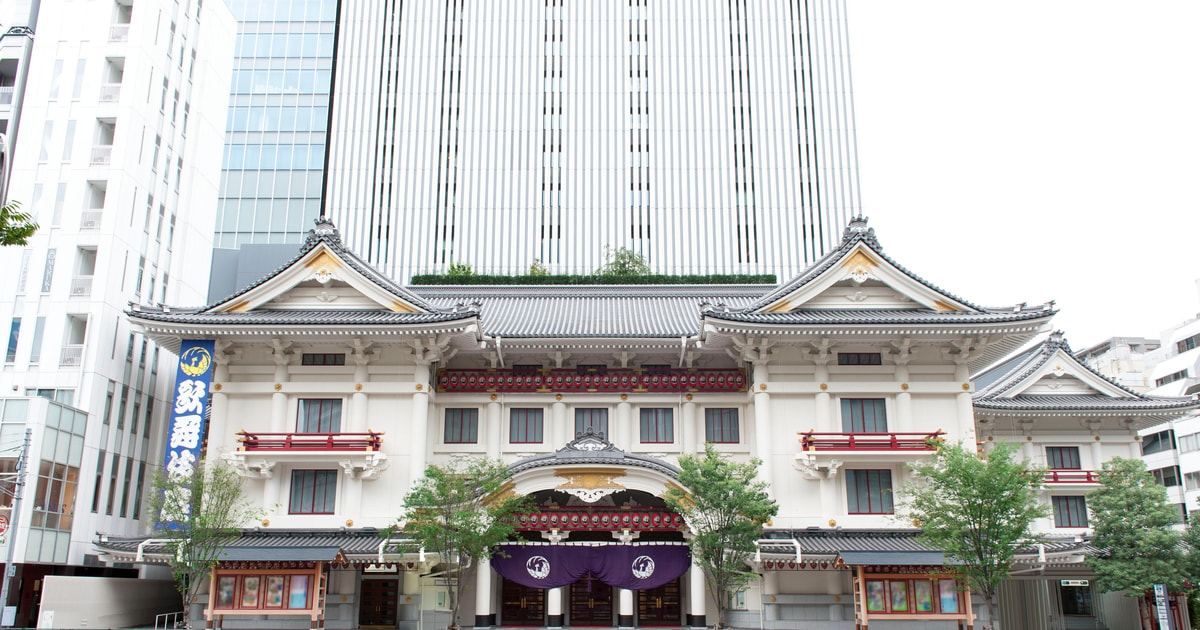
If you’re planning a trip to Tokyo, Kabuki-za is one of the most memorable ways to experience Japanese culture firsthand. GetYourGuide offers English-friendly Kabuki-za tickets and guided experiences, including options with headset translation and pre-show introductions for first-time viewers.
👉 Check Kabuki-za Tickets on GetYourGuide
This section may contain affiliate links. Booking through them costs you nothing extra and helps support this site.





コメント
コメント一覧 (3件)
[…] あわせて読みたい What Is Onnagata? The Art of Kabuki’s Female-Role Actors Explained Onnagata is kabuki’s tradition of male actors specializing in female roles. Learn its history, techniques, sub-types, and the actors who def […]
[…] あわせて読みたい What Is Onnagata? The Art of Kabuki’s Female-Role Actors Explained Onnagata is kabuki’s tradition of male actors specializing in female roles. Learn its history, techniques, sub-types, and the actors who def […]
[…] dance pieces to start with, from Musume Dōjōji to Renjishi. あわせて読みたい What Is Onnagata? The Art of Kabuki’s Female-Role Actors Explained Onnagata is kabuki’s tradition of male actors specializing in female roles. Learn its […]