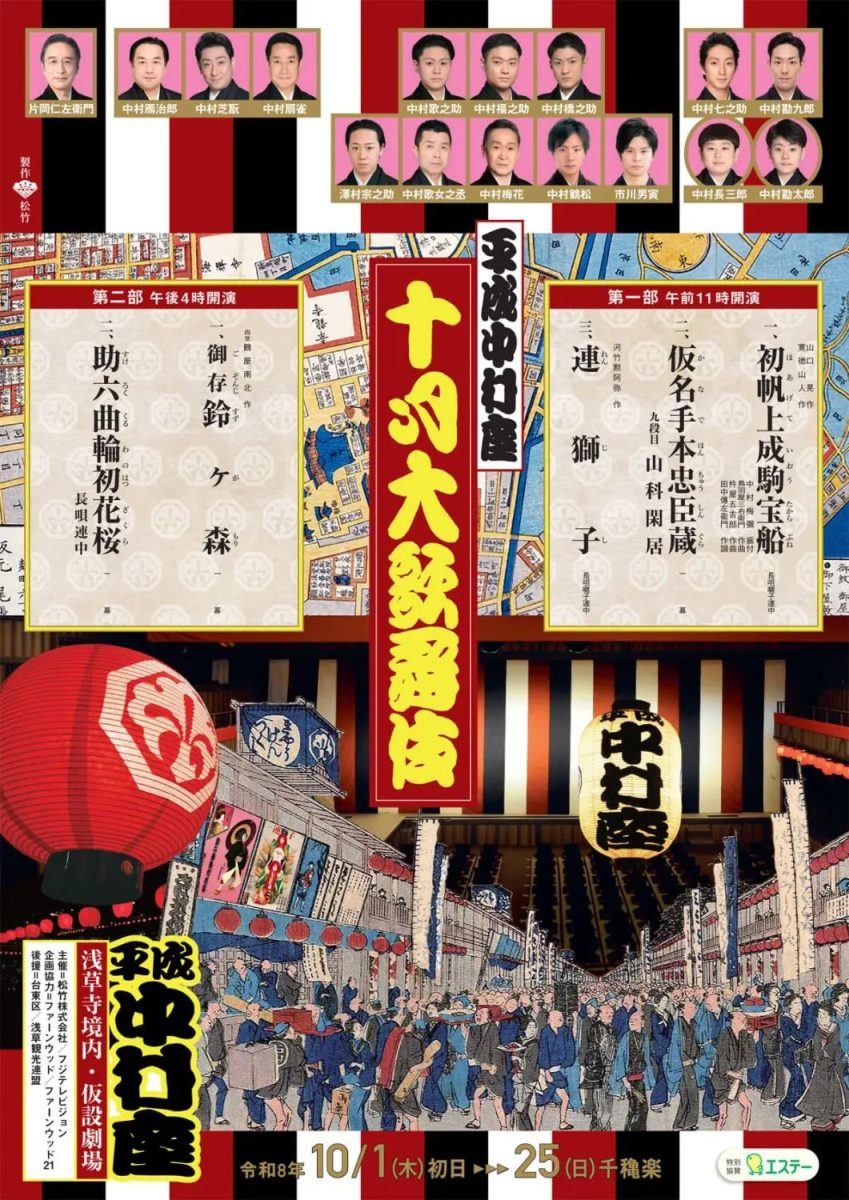
Nakamura Kankuro VI and Nakamura Shichinosuke II are heading back to Asakusa. Heisei Nakamuraza’s October Grand Kabuki has been confirmed for a run behind Sensoji Temple in Tokyo this October, and the full lineup of plays, casting, schedule, and ticket information is now out. Here’s everything you need to know.
Update (August 3): Multiple Japanese news outlets have reported that Nakamura Tsurumatsu will return to the stage for this run. Tsurumatsu had been off the stage since January after an incident at a restaurant (later settled without prosecution), and will return playing Konami in Act 9 of Kanadehon Chushingura in Part One, and Keisei Kochō in Sukeroku Kuruwa no Hatsuzakura in Part Two. The name-succession ceremony and promotion originally planned for this run remain undecided at this time. Casting details below reflect this update.
What Is Heisei Nakamuraza?
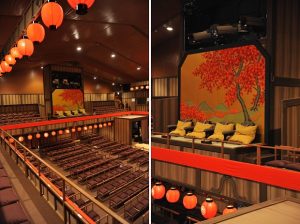
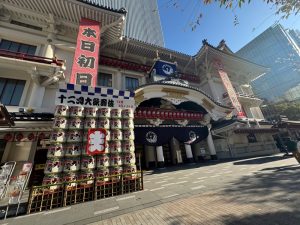
Heisei Nakamuraza is a temporary theater built to resemble an Edo-period playhouse, founded by kabuki actor Nakamura Kanzaburo XVIII together with theater director Kazuyoshi Kushida. A new structure goes up from scratch at each performance site and comes down again after roughly a month, with U-shaped seating that wraps around three sides of the stage — an intimate setup very different from a large modern theater like Kabukiza.
The name traces back to Nakamuraza, one of Edo’s three officially licensed kabuki theaters, and small touches like the theater’s striped curtain, family crest, and opening-day drum ceremony all echo that Edo-era heritage. Since its debut in Asakusa in November 2000, the theater has toured across Japan and abroad; after Kanzaburo XVIII’s death in 2012, his sons Nakamura Kankuro VI and Nakamura Shichinosuke II took over and have carried it forward since 2014.
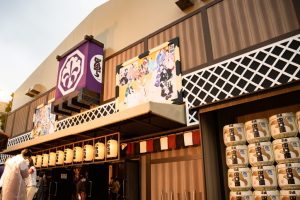

October 2026: Heisei Nakamuraza Returns to Asakusa After Four Years
This will be the company’s first Asakusa run since October–November 2022 — about four years ago.
The announcement itself was made on January 18, a date chosen deliberately: it’s the year’s first “Hatsu-Kannon” festival day at Sensoji Temple honoring its principal deity, Kannon, and the number 18 also nods to Kanzaburo XVIII, the founder whose spirit still shapes the theater — as does Asakusa itself, the birthplace of Edo kabuki.
The Programs: October Grand Kabuki at Heisei Nakamuraza
The full lineup has now been announced. Part One features three pieces and Part Two features two, making for a substantial afternoon and evening of theater.
Part One
1. Hoage Teiō Takarabune
Cast:
| Actor |
|---|
| Nakamura Hashinosuke |
| Nakamura Fukunosuke |
| Nakamura Utanosuke |
A bright, celebratory dance piece performed by the company’s younger actors — a fitting reminder of Heisei Nakamuraza’s ongoing commitment to the next generation.
2. Kanadehon Chushingura, Act 9: “Yamashina Kankyo”
Cast:
| Role | Actor |
|---|---|
| Tonase | Nakamura Shichinosuke |
| Oboshi Yuranosuke | Nakamura Kankuro |
| Oishi | Nakamura Senjaku |
| Kakogawa Honzo | Nakamura Ganjiro |
| Konami | Nakamura Tsurumatsu |
One of the pivotal scenes in kabuki’s most famous revenge drama, Kanadehon Chushingura, this act centers on family loyalty and duty rather than swordplay.
It’s a quieter, more emotionally dense piece than the play’s famous battle scenes — one to watch for the characters’ inner conflict rather than spectacle.
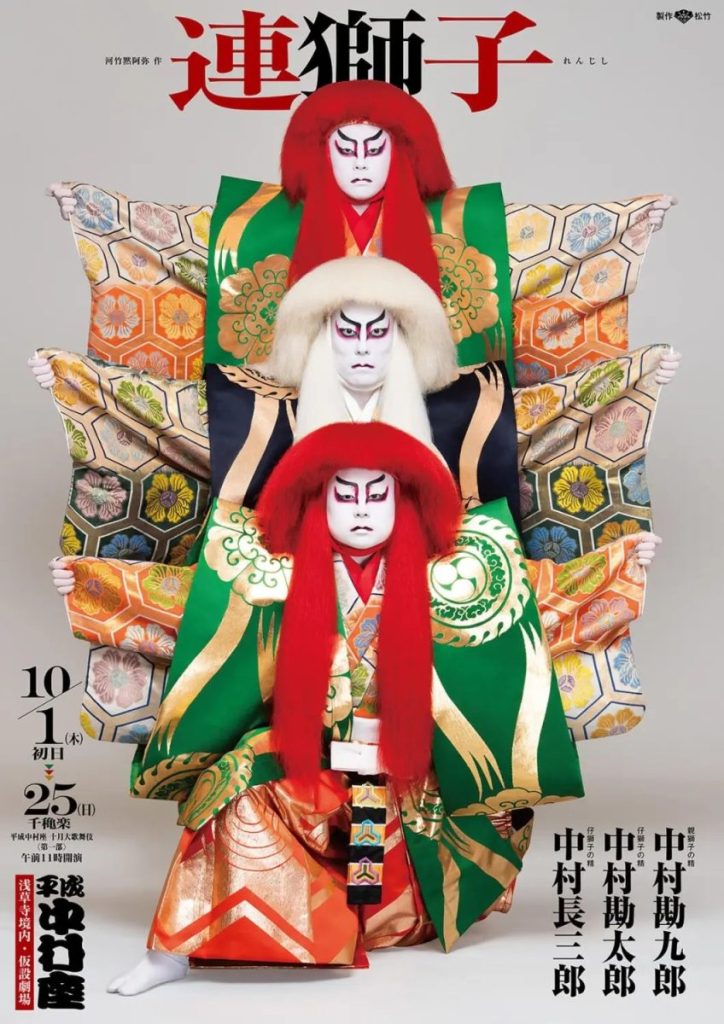
3. Renjishi
Cast:
| Role | Actor |
|---|---|
| Kyōgen Master Ukon / Spirit of the Parent Lion | Nakamura Kankuro |
| Kyōgen Master Sakon / Spirit of the Cub Lion | Nakamura Kantaro |
| Kyōgen Master Sakon / Spirit of the Cub Lion | Nakamura Chozaburo |
This is the single most-anticipated piece of the run.
It marks the first time Kankuro, his son Kantaro, and his younger son Chozaburo have performed Renjishi together on the same stage, all three generations at once.
Watching an art passed directly from parent to child is exactly the kind of moment Nakamura-ya is known for, and this promises to be a genuinely special performance.
Part Two
1. Gozonji Suzugamori
Cast:
| Role | Actor |
|---|---|
| Banzuiin Chobei | Nakamura Shikan |
| Shirai Gonpachi | Nakamura Kantaro |
Suzugamori is a crowd-pleaser built around two figures from Edo’s underworld and high society: the streetwise chivalrous outlaw Banzuiin Chobei, and the strikingly handsome young samurai Shirai Gonpachi.
It’s also worth watching as a coming-of-age piece — a chance to see a younger actor stepping up into a major role.
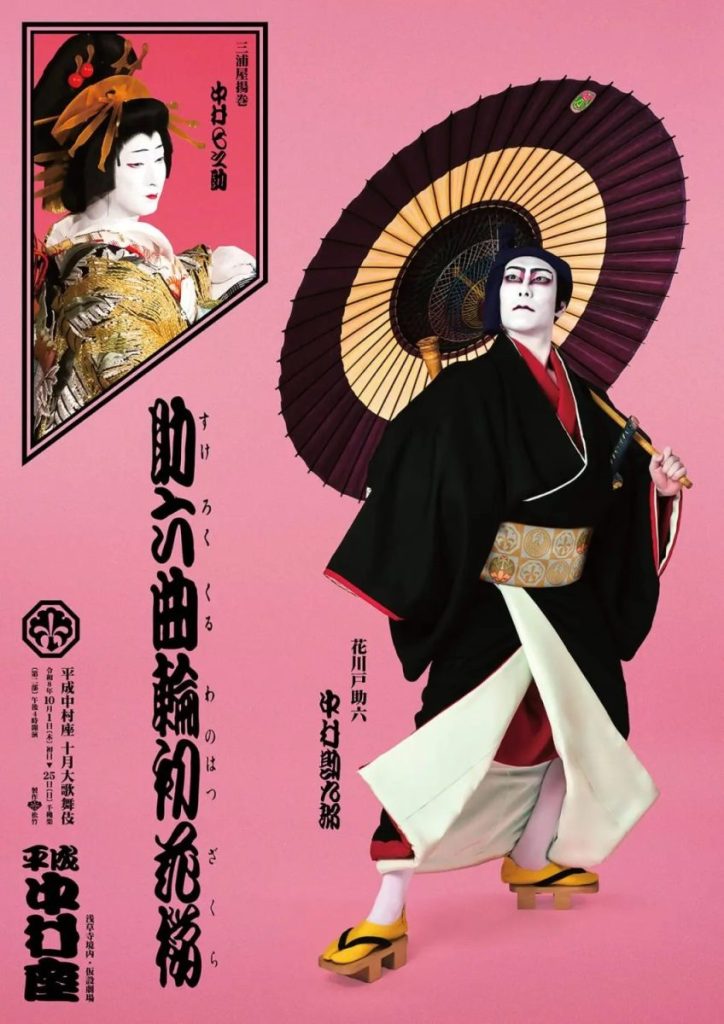
2. Sukeroku Kuruwa no Hatsuzakura
Cast:
| Role | Actor |
|---|---|
| Hanakawado Sukeroku | Nakamura Kankuro |
| Miuraya Agemaki | Nakamura Shichinosuke |
| Hige no Ikyu | Nakamura Shikan |
| Tsujin Satoakira | Nakamura Ganjiro |
| Keisei Kocho | Nakamura Tsurumatsu |
| Shirozake-uri Shinbei (special appearance) | Kataoka Nizaemon (Oct 23–25 only; Nakamura Senjaku on all other dates, Oct 1–22) |
Sukeroku is one of the signature plays of Edo kabuki.
Kankuro takes on the title role of Sukeroku with his brother Shichinosuke as Agemaki, and toward the end of the run, veteran actor Kataoka Nizaemon joins for a special guest appearance.
Watching Sukeroku in the charged, close-quarters atmosphere of Heisei Nakamuraza is a very different experience from seeing it at a conventional theater.
Curious how this version differs from the more commonly staged Sukeroku Yukari no Edozakura? We break down the different titles and family traditions behind them below.
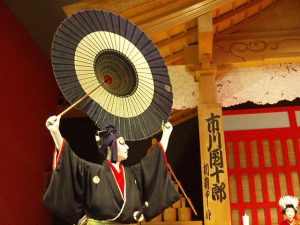

Special Key Visuals for October Grand Kabuki
Performance Dates, Times, and Dark Days
Run: October 1 (Thu) – October 25 (Sun), 2026
Curtain times: Part One at 11:00 AM / Part Two at 4:00 PM
Dark days and other schedule notes:
- Oct 8 (Thu): No performances (both Part One and Part Two)
- Oct 13 (Tue): Part Two only is dark
- Oct 19 (Mon): No performances (both Part One and Part Two)
- Oct 23 (Fri): Treated as a private/chartered performance through Shochiku’s regular ticket channels (see below)
Kataoka Nizaemon’s special guest appearance runs October 23–25. Of those, October 23 is blocked off from general sale through Shochiku’s usual ticket windows, treated as a private chartered performance.
In practice, though, tickets for that date were sold to the public through the ticket agency e-plus, as part of a chartered-performance event co-organized with Fuji Television and sponsored by Esteé. So October 23 isn’t entirely out of reach — if you want that date specifically, it’s worth checking e-plus and other ticket agencies rather than assuming it’s sold out through official channels alone.
Performance times and schedule are subject to change. Always check the official Heisei Nakamuraza / Shochiku site for the latest information.
Tickets
On-Sale Dates
Tickets are released in stages to “Shochiku Kabuki-kai” (Shochiku Kabuki Club) members before going on general sale.
| Audience | On-sale date |
|---|---|
| Shochiku Kabuki-kai Gold members | From Aug 4 (Tue) |
| Shochiku Kabuki-kai Special members | From Aug 5 (Wed) |
| Shochiku Kabuki-kai members | From Aug 6 (Thu) |
| General sale | From Aug 7 (Fri) |
| Box office sales / will-call | From Aug 9 (Sun) |
General sale is handled through Ticket Web Shochiku (open 24 hours; opens at 10:00 AM on the first sale day) and Ticket Phone Shochiku (Japanese only). Every attendee age 4 and up needs their own ticket — even children who haven’t started school yet require a ticket once they turn 4. For an overview of how ticket-buying works for overseas visitors in general, see our full guide below.
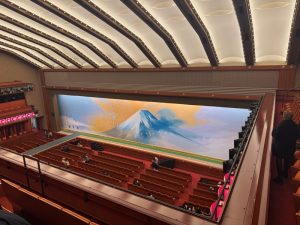
Seating Chart
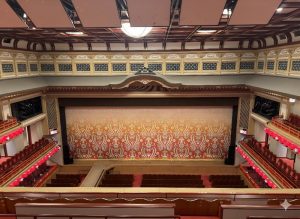
Heisei Nakamuraza’s defining feature is its seating: a U-shaped layout that wraps around three sides of the stage.
The Matsu (Pine) seats occupy the center of the ground floor; Take (Bamboo) seats run along both the ground and upper floors; Sakura (Cherry Blossom) seats sit at the very front on each side of the upper floor; Ume (Plum) seats sit toward the back on each side of the upper floor; and a special Odaijin (Grand Patron) section sits front and center on the upper floor.
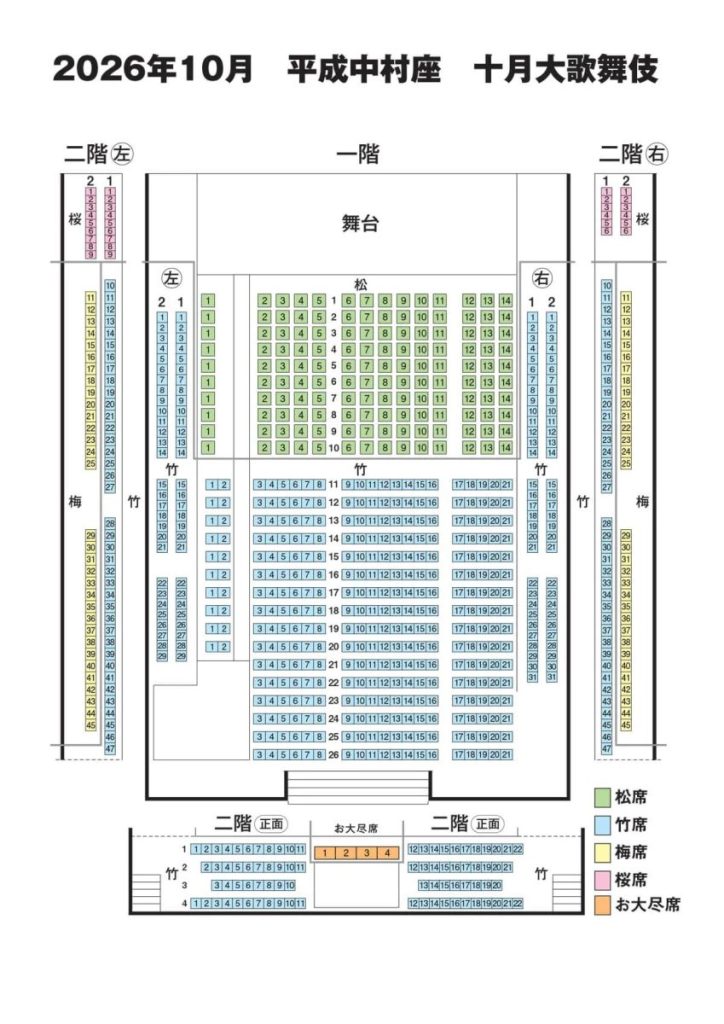
Seat Types and Prices
| Seat type | Location | Price (tax included) |
|---|---|---|
| Matsu (Pine) | Ground floor, center, facing the stage | ¥16,500 |
| Take (Bamboo) | Bench seating, 1st & 2nd floor | ¥16,500 |
| Ume (Plum) | Bench seating, 2nd floor sides, rear | ¥13,000 |
| Sakura (Cherry Blossom) | Bench seating, 2nd floor sides, front row | ¥11,000 |
| Odaijin (Grand Patron) | 2nd floor, center, special seating | ¥36,000 |
Not Sure Which Seat to Pick?
Between the U-shaped layout and the shoes-off Matsu seating on the floor, Heisei Nakamuraza’s seating is structured very differently from Kabukiza’s. If you’d like more detail on what each seat type actually looks and feels like, or dress recommendations for the venue, it’s worth reading further before you book.
Venue
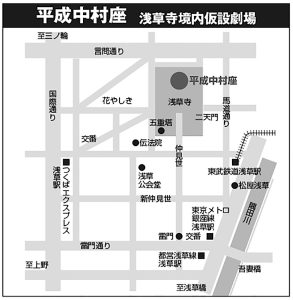
Heisei Nakamuraza (temporary theater, Sensoji Temple grounds, behind the Main Hall)
- 7-minute walk from Asakusa Station (Tokyo Metro Ginza Line / Toei Asakusa Line / Tobu Line)
- 10-minute walk from Asakusa Station (Tsukuba Express)
If you’re new to kabuki altogether and want a primer on how to watch and what to expect before your visit, or if you’d simply like to know whether it’s worth it as a visitor, these guides are a good place to start.
In Short: 2026 Is Shaping Up to Be a “Passing the Torch” Year for Nakamura-ya
This year’s Heisei Nakamuraza run brings together:
· A three-generation family Renjishi, performed together for the first time
· Kankuro’s first-ever turn as Sukeroku
· Rising younger actors stepping into bigger roles
Taken together, it’s a program that captures both where Nakamura-ya stands today and where it’s headed next.
Add in the setting — Asakusa itself, a theater built to recreate an Edo-era playhouse, and a genuinely stacked lineup of plays — and this looks set to be a memorable month, for first-time visitors and longtime kabuki fans alike.
Frequently Asked Questions
- When does Heisei Nakamuraza’s October Grand Kabuki 2026 run?
-
From Thursday, October 1 to Sunday, October 25, 2026.
The venue is a temporary theater built on the grounds of Sensoji Temple, behind the Main Hall, in Asakusa, Tokyo. - When can I buy tickets?
-
Shochiku Kabuki-kai Gold members can buy from August 4, Special members from August 5, and regular members from August 6. General sale opens August 7. Box office sales and will-call begin August 9.
- Does Heisei Nakamuraza have single-act (makumi) tickets like Kabukiza?
-
No. Heisei Nakamuraza has no equivalent to Kabukiza’s makumi system for watching a single act at a lower price.
You’ll need to buy a full-program ticket in one of the five seat categories — Matsu, Take, Ume, Sakura, or Odaijin. - How do I get to the venue?
-
It’s a 7-minute walk from Asakusa Station on the Tokyo Metro Ginza Line, Toei Asakusa Line, or Tobu Line, or a 10-minute walk from Asakusa Station on the Tsukuba Express.
The venue is a temporary theater on the grounds of Sensoji Temple, behind the Main Hall. - Is this a good show for first-time kabuki viewers?
-
Yes.
Renjishi and Sukeroku are both highly visual, easy-to-follow pieces that work well even if you’ve never seen kabuki before.
The close, immersive atmosphere unique to Heisei Nakamuraza — with the stage much nearer to the audience than at a conventional theater — is also a real plus for newcomers. - Where does the name “Heisei Nakamuraza” come from?
-
Nakamuraza was the name of the playhouse founded in Edo in 1624 by the original Nakamura Kanzaburo — the very birthplace of Edo kabuki.
Nakamura Kanzaburo XVIII, head of the Nakamura-ya house that carries that name forward, revived it for the Heisei era, naming this modern theater Heisei Nakamuraza in tribute. - Does Heisei Nakamuraza perform outside Asakusa?
-
Yes.
It has toured across Japan — including Osaka, Nagoya, and the historic Uchikoza theater in Ehime Prefecture — as well as overseas, with performances at Lincoln Center in New York and in Berlin.
Building an actual temporary theater at each tour stop is one of Heisei Nakamuraza’s defining traits.
🎭 Want to See Kabuki Live?
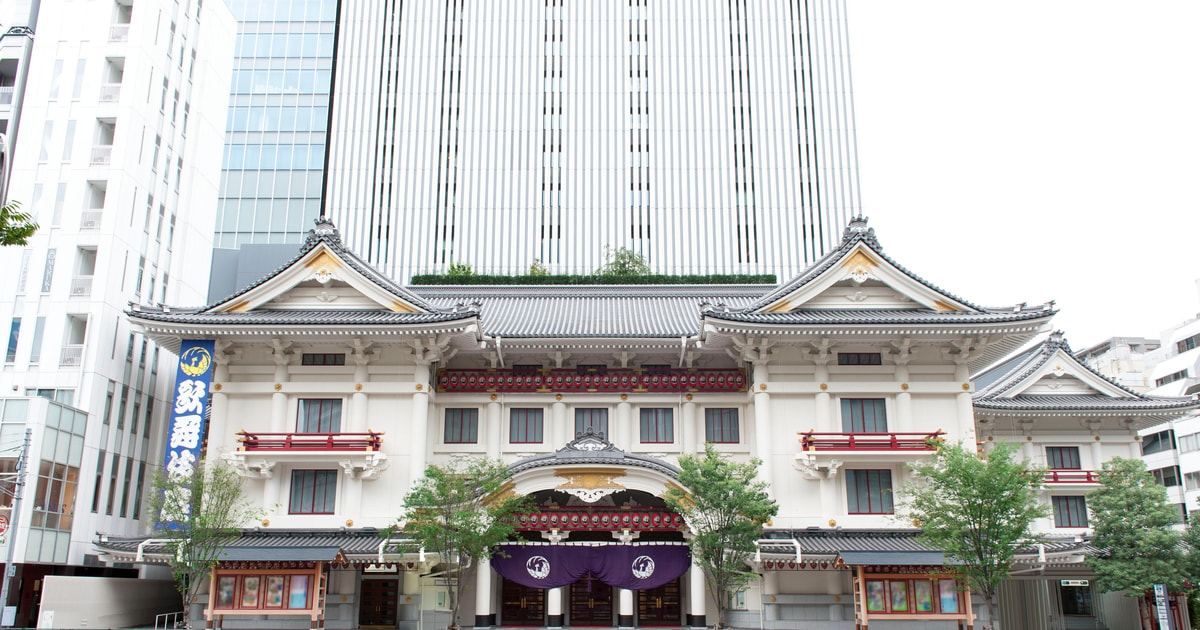
If you’re planning a trip to Tokyo, Kabuki-za is one of the most memorable ways to experience Japanese culture firsthand. GetYourGuide offers English-friendly Kabuki-za tickets and guided experiences, including options with headset translation and pre-show introductions for first-time viewers.
👉 Check Kabuki-za Tickets on GetYourGuide
This section may contain affiliate links. Booking through them costs you nothing extra and helps support this site.




コメント