

Most kabuki actors never had a moment where they “decided” to become one — the training starts so early in life that it’s less a career choice than the water they grew up swimming in. Here’s what that path actually looks like, from a toddler’s first steps on stage to a lifetime of continuous refinement.
It Starts Before Formal Training Even Begins
For children born into kabuki’s acting families, training effectively starts in infancy — not through formal lessons, but through constant, ambient exposure. Growing up backstage, watching parents and relatives rehearse and perform, absorbing the rhythm of a theatrical household from birth: by the time formal instruction begins, a child has already internalized far more than they’d get from lessons alone.
Hatsubutai: The First Stage Appearance
A child’s formal debut, known as hatsubutai, often happens astonishingly young — sometimes as early as five, six, or seven years old, typically in a small supporting role appropriate to a child performer. It’s treated as a genuine milestone for the family, not merely a cute novelty, and marks the beginning of a public performance career that, in many cases, will continue for the rest of that person’s life.
Formal Training: Dance, Voice, and Kata
Alongside regular schooling, young kabuki actors undergo rigorous formal training in several disciplines simultaneously:
- Nihon buyō (classical Japanese dance) — the physical foundation nearly all kabuki movement builds on, regardless of role type.
- Voice and vocal delivery — kabuki’s distinctive rhythmic speech patterns and projection, trained separately from ordinary theatrical acting.
- Kata (codified forms) — the specific poses, gestures, and movement patterns tied to individual roles, often taught by direct, hands-on correction from a parent or senior family member rather than from a general curriculum.

Learning by Watching, Not Just by Instruction
A huge portion of kabuki training happens through direct observation and repetition rather than explicit verbal teaching — a young actor watches a parent perform a role dozens or hundreds of times, gradually absorbing its rhythm and detail long before they’re old enough to perform it themselves. This is also how family-specific interpretations of famous roles get passed down: not written in a manual, but transmitted body to body, generation to generation.
Climbing Through Roles and Names
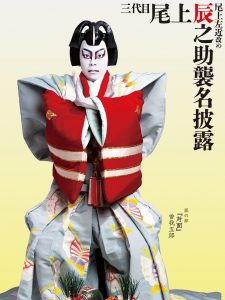
As a young actor’s skill develops, they progress through gradually larger and more prominent roles, typically starting with a smaller, junior stage name. Career milestones are formally marked by shūmei — name-succession ceremonies in which an actor takes on a larger, more senior name, often one previously carried by their own father or grandfather. These ceremonies are major public events in their own right, celebrated with specially chosen plays and formal on-stage speeches.


What If You Weren’t Born Into a Kabuki Family?
There is one notable exception to kabuki’s otherwise closed hereditary pipeline: the National Theatre of Japan runs a dedicated training program for aspiring actors without family connections to the profession. Admission is competitive and the program is intensive, covering the same core disciplines — dance, voice, kata — condensed into a demanding multi-year course for students starting as young adults rather than as small children. Graduates of this program have gone on to real professional careers, though typically in supporting roles rather than the leading parts reserved for actors from established families. It’s a narrow path, and a late start compared to lifelong immersion from birth, but it remains the closest thing kabuki has to an open door.
This same question comes up constantly from a different angle, too: whether someone without any Japanese family background at all could realistically take this path.

A Lifetime of Continued Refinement
Even after decades of experience, established kabuki actors continue refining their craft under direction from senior family members and mentors — there’s no real point at which formal training simply ends. Some of the most celebrated performances in kabuki come from actors well into their 70s or 80s, still actively developing their interpretation of roles they’ve performed hundreds of times before. It’s a career built on continuous, lifelong study rather than a fixed period of training followed by a finished professional.
Frequently Asked Questions
- At what age do kabuki actors typically start training?
-
Effectively from birth for children in acting families, through ambient exposure, with formal stage debuts (hatsubutai) often happening as early as age five to seven.
- Is there any way to become a kabuki actor without being born into a family?
-
Yes, though it’s rare — the National Theatre of Japan runs a competitive training program for aspiring actors without family connections, though graduates typically take supporting roles rather than leading parts.
- Does kabuki training ever really end?
-
Not really — even veteran actors in their 70s and 80s continue refining roles under guidance from senior family members, treating the craft as a lifelong, ongoing study rather than something mastered once and finished.
Summary
Becoming a kabuki actor is less a career decision than a lifelong immersion — starting with childhood exposure, moving through a stage debut often before grade school, and continuing through decades of dance, voice, and kata training passed down directly within a family. For the rare exception without family ties, the National Theatre’s training program offers a narrow but real path in. Either way, the training never really stops — it simply deepens with every performance.
🎭 Want to See Kabuki Live?
If you’re planning a trip to Tokyo, Kabuki-za is one of the most memorable ways to experience Japanese culture firsthand. GetYourGuide offers English-friendly Kabuki-za tickets and guided experiences, including options with headset translation and pre-show introductions for first-time viewers.
👉 Check Kabuki-za Tickets on GetYourGuide

This section may contain affiliate links. Booking through them costs you nothing extra and helps support this site.



コメント