Follow kabuki for any length of time and you’ll notice the same handful of family names surfacing again and again — not as a coincidence, but because kabuki has been organized around hereditary acting houses for roughly four centuries. Understanding these families is one of the fastest ways to make sense of who’s who on a kabuki program.
What Is a Yagō (House Name)?
Every major kabuki acting family carries a yagō — a house name, distinct from both their surname and their individual stage name, shouted out by audience members as a call-out (kakegoe) at dramatic peaks in a performance. A yagō functions something like a brand or a coat of arms: it identifies which artistic lineage a performer belongs to, what specialties that lineage is known for, and which historical reputation they’re carrying forward every time they step on stage.
Ichikawa (Naritaya)
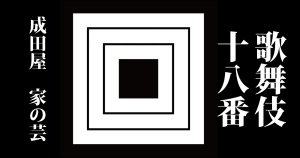
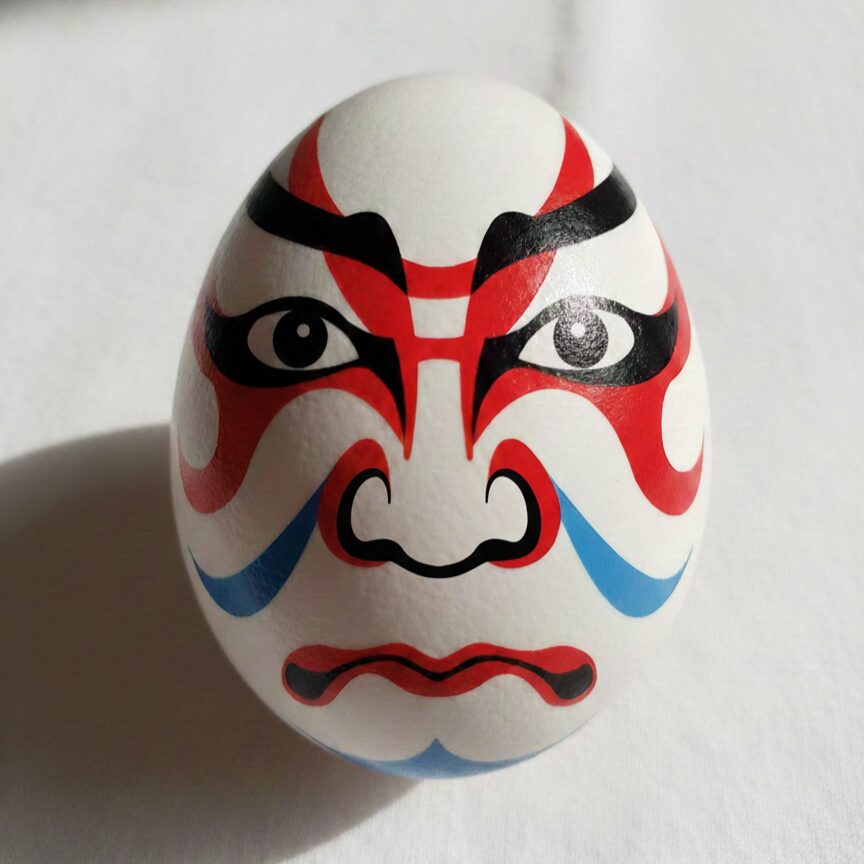
The Ichikawa family, carrying the house name Naritaya, is arguably kabuki’s most storied lineage. It’s the family behind the name Danjūrō — one of kabuki’s single most prestigious stage names — and the originators of aragoto, the bold, exaggerated performance style built around superhuman heroes, striking kumadori makeup, and powerful mie poses. The Kabuki Jūhachiban, a collection of eighteen signature plays, is the Ichikawa family’s own curated artistic legacy, passed down and refined across generations.
Onoe (Otowaya)
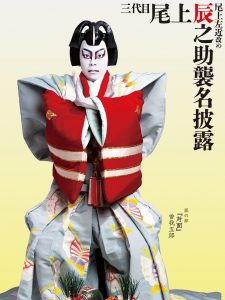
The Onoe family, house name Otowaya, has long specialized in ghost and supernatural drama, alongside a broad artistic range spanning both bold male roles and refined onnagata performance. Their own signature collection, the Shinkō Engeki Jusshu (“Ten New and Old Plays”), was assembled specifically as a counterpart to the Ichikawa family’s Kabuki Jūhachiban. Within the Onoe family, the Shōroku line has carried the name Tatsunosuke across three generations, most recently passed on in a 2026 succession ceremony.
Nakamura
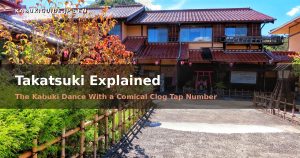
The Nakamura surname actually spans more than one distinct lineage, each carrying its own separate yagō — a good early lesson that a shared surname doesn’t always mean a shared house. One prominent Nakamura branch carries the house name Nakamuraya, historically associated with the beloved actor Nakamura Kanzaburō and his successors, known for versatility across both classical drama and playful, contemporary-feeling works like the comic dance Takatsuki.
Bandō (Yamatoya)
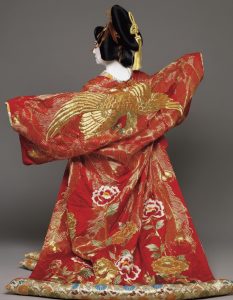
The Bandō family, house name Yamatoya, is home to Bandō Tamasaburō — widely regarded as the defining onnagata performer of his generation, and a Living National Treasure recognized well beyond kabuki circles for his artistry in dance pieces like Sagi Musume and Kyōganoko Musume Dōjōji.
A Surname Isn’t Always a Reliable Guide
One genuinely confusing wrinkle for newcomers: performers sharing the same surname aren’t necessarily from the same house. Different branches of families like Ichikawa or Nakamura can carry entirely different yagō, different artistic specialties, and no close blood relation to one another at all. The house name — not the surname — is the real marker of lineage, so it’s worth listening for the yagō shouted out during a performance rather than relying on the surname alone.
Why This Matters for Watching Kabuki
Knowing a performer’s house gives you a genuine head start on understanding what you’re about to see. An Ichikawa in a bold, physical role is likely drawing on generations of refined aragoto technique. An Onoe tackling a ghost story is working within a specialty their family has cultivated for generations. None of this is required to enjoy a performance — but recognizing the family names shouted out during kakegoe call-outs turns kabuki from a single evening’s entertainment into a small window onto a much longer, ongoing story.
Frequently Asked Questions
- What’s the difference between a surname and a yagō?
-
A surname like “Ichikawa” or “Nakamura” can be shared across multiple, unrelated branches of performers. The yagō (house name), such as Naritaya or Otowaya, is the more precise marker of which specific artistic lineage and specialty a performer actually belongs to.
- Why do audience members shout out these house names during performances?
-
It’s a tradition called kakegoe — experienced fans call out an actor’s yagō at a dramatic peak, such as a mie pose, as a mark of respect and to build the energy of the room together with the performer.
- Does every kabuki actor belong to one of these major families?
-
The vast majority of professional kabuki actors do belong to an established acting house, though roughly 30% of active kabuki actors today are performers without family ties who joined the profession through the National Theatre of Japan’s dedicated training program — though name-bearing lead roles remain reserved for the hereditary lines.
Summary
Kabuki’s great acting houses — Ichikawa, Onoe, Nakamura, Bandō, and others — aren’t just family trees; they’re living artistic traditions, each carrying its own specialties, signature plays, and centuries of refined technique forward into the present. Learning to recognize a few of these names is one of the most rewarding shortcuts to appreciating what’s actually happening on a kabuki stage.
🎭 Want to See Kabuki Live?
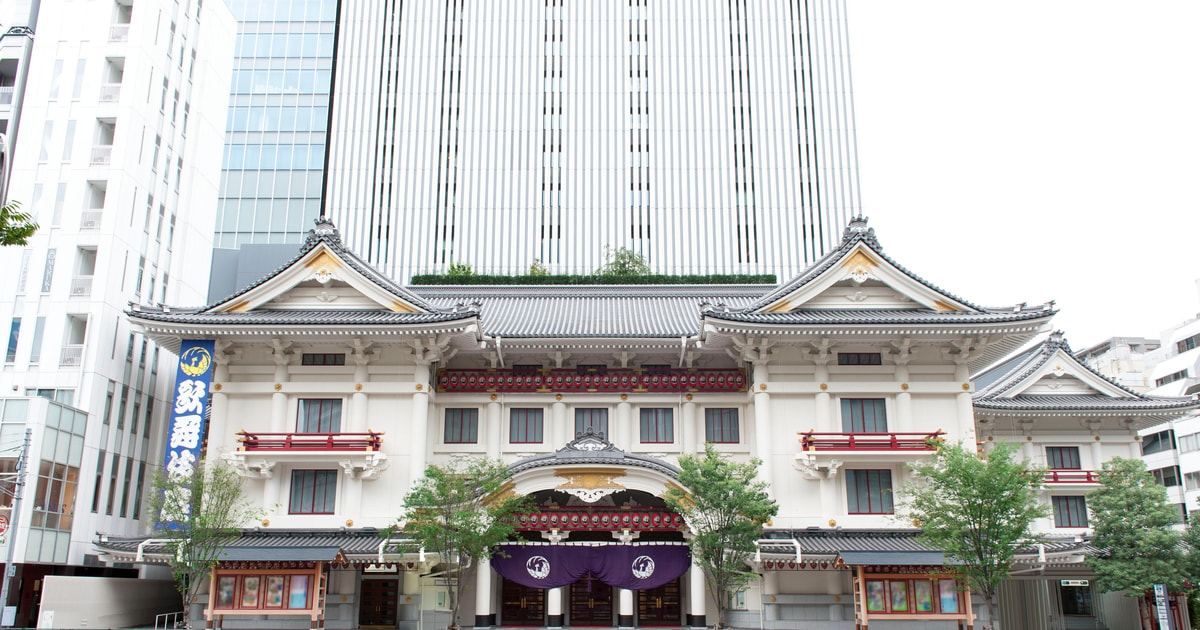
If you’re planning a trip to Tokyo, Kabuki-za is one of the most memorable ways to experience Japanese culture firsthand. GetYourGuide offers English-friendly Kabuki-za tickets and guided experiences, including options with headset translation and pre-show introductions for first-time viewers.
👉 Check Kabuki-za Tickets on GetYourGuide
This section may contain affiliate links. Booking through them costs you nothing extra and helps support this site.





コメント