

Every art form has an origin story, but kabuki’s is genuinely striking: an entire 400-year theatrical tradition, still thriving today, traces back to one woman performing bold, unconventional dances on a dry riverbed in Kyoto. Her name was Izumo no Okuni, and the art form’s very name comes from a word people used to describe her.
Who Was Izumo no Okuni?
Historical records from early 17th-century Japan are thin enough that much of Okuni’s life sits somewhere between documented fact and legend. What’s generally accepted is that she was associated with Izumo Taisha, one of Japan’s most important Shinto shrines, likely serving in a role connected to the shrine as a performer or attendant before striking out to perform publicly on her own terms.
The Birth of Kabuki Odori
Around 1603, Okuni began staging performances in Kyoto — most famously on the dry bed of the Kamo River — featuring bold, energetic dance unlike anything audiences had seen before. Her style became known as kabuki odori, and it was deliberately, provocatively unconventional: flashy costume, exaggerated movement, and a general sense of theatrical daring that broke sharply from established performing arts of the time.
That word, kabuki, comes from the verb kabuku — meaning to lean, tilt, or deviate from the norm — used at the time to describe eccentric, flamboyant behavior and style. Okuni’s performances were considered exactly that: a delightful, crowd-pulling departure from convention, and the name stuck to the entire art form that grew out of her work.
What Kabuki Odori Actually Looked Like
Okuni’s performances didn’t emerge from nowhere. They’re generally understood to have grown out of nenbutsu odori, a Buddhist devotional dance tradition originally meant to accompany chanted prayer, which Okuni reworked into something far more theatrical and secular. Rather than solemn religious performance, her version incorporated comic sketches, playful skits set in teahouses and pleasure districts, and a looser, more improvisational sense of showmanship — closer to popular variety entertainment than to anything resembling formal, aristocratic performing arts of the period. That willingness to blend the sacred with the playful, the traditional with the openly commercial, is part of what made her work feel so genuinely new.
An Early Master of Gender Play
One of the more fascinating details passed down about Okuni’s performances is that she sometimes performed in men’s clothing, taking on male roles herself — playing, in one popular routine, a dashing male patron visiting a teahouse. It’s a striking historical echo, in reverse, of what would eventually become onnagata: kabuki’s origin story includes a woman deliberately playing across gender lines for dramatic effect, decades before men would be doing the exact same thing in the opposite direction, out of legal necessity rather than choice.

The Legend of Nagoya Sanzaburō
One of the most persistent stories connected to Okuni involves a samurai named Nagoya Sanzaburō, said to have performed alongside her and, in some versions of the story, to have been her lover. Popular tradition credits him with helping shape and refine her performances, lending his own status and stylish sensibility to the act. It’s worth treating this story for what it is: a beloved piece of folklore rather than solidly documented history, the kind of romantic embellishment that tends to accumulate around any figure whose real biography is only thinly recorded. True or not, its endurance says something about how quickly Okuni’s story became legend even in her own era — an origin myth forming almost as fast as the art form itself.
Immediate, Overwhelming Popularity
Okuni’s performances were an instant sensation. Crowds flocked to see her troupe, and imitators sprang up rapidly across Kyoto and beyond, with rival troupes of women performers staging their own versions of kabuki odori within just a few years. What started as one performer’s bold personal style had, within a remarkably short window, become a genuine popular entertainment movement.
That movement soon evolved further into what’s known as yūjo kabuki (“courtesan kabuki”), in which troupes affiliated with the pleasure districts staged their own increasingly elaborate performances, blending dance with an openly promotional, commercial edge tied to the courtesans performing in them. It was a natural evolution of Okuni’s own commercially minded showmanship, but it’s also precisely what drew the shogunate’s attention — and, ultimately, its disapproval.
A Bittersweet Legacy
There’s a real irony at the heart of Okuni’s story. The art form she founded, and the wave of women’s kabuki performers who followed in her footsteps, would be banned entirely by the shogunate just over two decades later, in 1629, over concerns about public morality tied to some troupes’ connections to the pleasure districts. The very gender that created kabuki was effectively written out of it within a single generation — a loss that, ironically, gave rise to onnagata, one of the art form’s most celebrated and enduring specialties, as male performers stepped in to fill the roles women could no longer play.
Remembered as Kabuki’s Founder
Despite the thinness of the historical record around her personal life, Okuni is universally credited as kabuki’s founding figure, and she’s remembered and honored in Japan today, including at a memorial associated with her in Kyoto. Every mie pose, every kumadori pattern, every centuries-old acting dynasty performing today ultimately traces its lineage back to a single woman’s decision to dance, unconventionally and unapologetically, on a riverbed more than four hundred years ago.
Frequently Asked Questions
- Where does the word “kabuki” actually come from?
-
From the verb kabuku, meaning to lean, tilt, or behave in an eccentric, unconventional way — a term used to describe Izumo no Okuni’s bold, flamboyant performance style in the early 1600s.
- Is everything known about Izumo no Okuni historically confirmed?
-
Not entirely — historical records from the period are limited, and parts of her biography blend documented fact with legend passed down over centuries. Her role as kabuki’s founder, however, is universally accepted.
- Did Okuni perform male roles herself?
-
Yes — accounts describe her performing in men’s clothing, including a popular routine playing a male teahouse patron, an early instance of cross-gender performance that predates onnagata by decades.
- What is “yūjo kabuki”?
-
Yūjo kabuki (“courtesan kabuki”) was the wave of performance that followed Okuni’s original success, staged by troupes affiliated with the pleasure districts — a movement that directly contributed to the shogunate’s decision to ban women from the kabuki stage in 1629.
Summary
Izumo no Okuni’s bold, unconventional riverbed performances in 1603 didn’t just launch a trend — they gave birth to an entire art form, and even its name. That her own gender would be banned from the stage she created within a generation is one of kabuki’s most poignant historical footnotes, but her legacy as its founder has never been in doubt, four centuries on.
🎭 Want to See Kabuki Live?
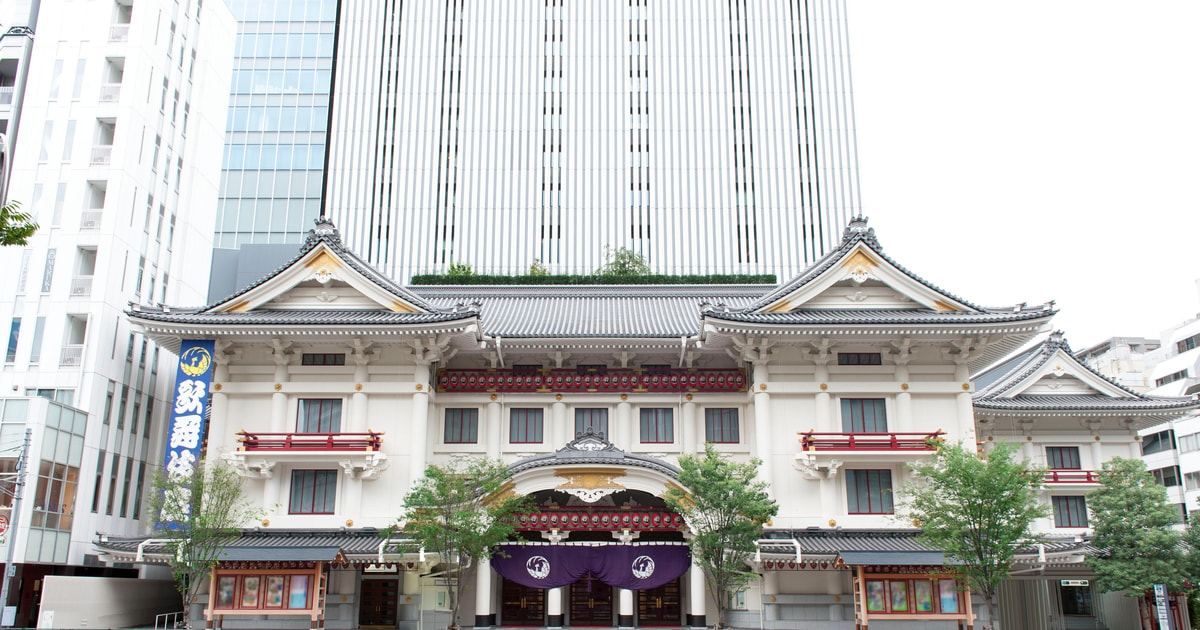
If you’re planning a trip to Tokyo, Kabuki-za is one of the most memorable ways to experience Japanese culture firsthand. GetYourGuide offers English-friendly Kabuki-za tickets and guided experiences, including options with headset translation and pre-show introductions for first-time viewers.
👉 Check Kabuki-za Tickets on GetYourGuide
This section may contain affiliate links. Booking through them costs you nothing extra and helps support this site.
Related Reading






コメント
コメント一覧 (1件)
[…] あわせて読みたい Izumo no Okuni: The Woman Who Invented Kabuki Kabuki’s entire 400-year tradition, and its name, traces back to one woman’s bold, unconventional riverbed performances in 1603. The story of Izumo no Okuni, kab […]