
Few words carry as much weight in kabuki’s tragic love stories as shinju — and few plot devices are as consistently misunderstood by audiences encountering it for the first time. Here’s what the term actually means, where it comes from, and why it became one of kabuki’s most enduring and controversial subjects.
What Does Shinju Mean?
Shinju (心中) refers to a double suicide, most often committed by two lovers who see no way to be together in life and choose to die together instead. The word itself literally suggests something closer to “the heart within” or “true feeling made visible” — the idea being that the act itself proves the sincerity of a love that social circumstances refuse to allow. In kabuki and bunraku, plays built around this theme are often grouped under the term shinjūmono (“double suicide pieces”), a distinct and hugely influential genre within the broader category of sewamono, kabuki’s contemporary-set dramas.
Why Death Together, Rather Than Simply Parting?
The logic behind shinju is rooted in Buddhist belief about death and rebirth. Lovers who die together, hand in hand, were believed to become michizure — traveling companions into the next life — with the hope of being reborn together, or reunited on a shared lotus in paradise, in a way this world had denied them. Rather than reading as simple despair, shinju was framed within these plays as an act of devotion: proof that a love strong enough to defy the constraints of society could also defy the boundary between life and death itself.
The Social Trap Behind Nearly Every Shinju Story
Shinju plays almost always hinge on the same basic conflict: giri (social duty and obligation) crushing ninjō (genuine human feeling) until death seems like the only remaining option. A courtesan bound by debt and contractual obligation to her house, a merchant’s clerk bound by loyalty to his employer or family, an arranged marriage neither party can refuse — these are the walls that repeatedly close in on kabuki’s shinju lovers, turning what looks like a personal tragedy into a pointed commentary on the rigid social hierarchy of Edo-period Japan.
Chikamatsu Monzaemon and the Birth of a Genre
The playwright Chikamatsu Monzaemon effectively created the shinjūmono genre in 1703 with Sonezaki Shinju (known in English as The Love Suicides at Sonezaki), based on an actual double suicide that had taken place in Osaka just weeks earlier. The play was a sensation, and Chikamatsu went on to write numerous further shinju plays, cementing the genre as one of the defining pillars of Japanese theater.
When Fiction Became Too Powerful
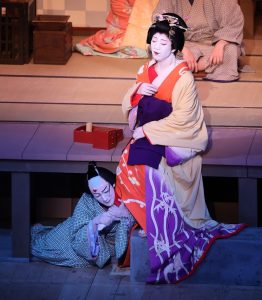
Shinju plays became so popular, and so effective at romanticizing double suicide, that they’re widely believed to have inspired a real wave of copycat suicides among the public in the 18th century. The Edo shogunate eventually responded with genuine alarm — at various points banning the staging of new shinju plays and even the publication of shinju-themed puppet ballads, and imposing harsh, deliberately undignified treatment for the bodies and families of real shinju victims specifically to discourage the practice. It’s a striking historical example of fiction and reality feeding directly into each other, and it’s part of why these plays carried such serious cultural weight in their own era, well beyond simple entertainment.
Not the Same as Junshi
Shinju is sometimes confused with junshi (殉死), a separate and distinct practice in which a samurai retainer took their own life following the death of their lord, out of loyalty rather than romantic love. While both involve ritualized death within a framework of duty, junshi is rooted in feudal loyalty between lord and vassal, while shinju is specifically about lovers seeking union in death — two different traditions that happen to share a similar dramatic weight, but very different motivations.
Famous Shinju Plays Beyond Sonezaki Shinju
Chikamatsu’s success sparked a wave of shinju dramas that remain part of the repertoire today. Shinjū Ten no Amijima (staged today as Kawashō) follows a paper merchant torn between his wife and a courtesan he loves, driven toward the same tragic conclusion. Other plays borrow the shinju framework for very different tones entirely — Shinjū Tsukiyo Hoshinoya, for instance, takes the double-suicide premise and turns it into something closer to a comic battle of wits, proof that even this heaviest of genres could be bent toward humor in the right hands.

A Word Still in Use Today
Shinju isn’t purely a historical or theatrical term — it’s still used in contemporary Japanese to refer to real double suicides and murder-suicides reported in the news, a sobering reminder that the word carries weight well beyond the stage. Understanding its theatrical history doesn’t erase that weight, but it does explain why these centuries-old plays continue to be staged and taken seriously rather than dismissed as simple melodrama.
Frequently Asked Questions
- What does “shinju” literally mean?
-
It refers to a double suicide, typically committed by two lovers together, and carries a connotation closer to “true feeling made visible” — the act itself serving as proof of sincere devotion.
- Who wrote the first major shinju play?
-
The playwright Chikamatsu Monzaemon effectively founded the genre in 1703 with Sonezaki Shinju (The Love Suicides at Sonezaki), based on a real incident that had occurred just weeks before the play premiered.
- Is shinju the same thing as junshi?
-
No — junshi refers to a retainer taking their own life following their lord’s death out of feudal loyalty, while shinju specifically involves lovers choosing to die together. The two are separate traditions with different motivations.
Summary
Shinju gave kabuki some of its most enduring tragedies — lovers choosing death together as the only escape from an unyielding social order, framed through Buddhist belief as a path to union rather than simple despair. The genre proved so powerful it reshaped real behavior in its own era, and centuries later, plays like Sonezaki Shinju still carry that same weight, turning a specific piece of Edo-period vocabulary into one of theater’s most enduring meditations on love and duty.
🎭 Want to See Kabuki Live?
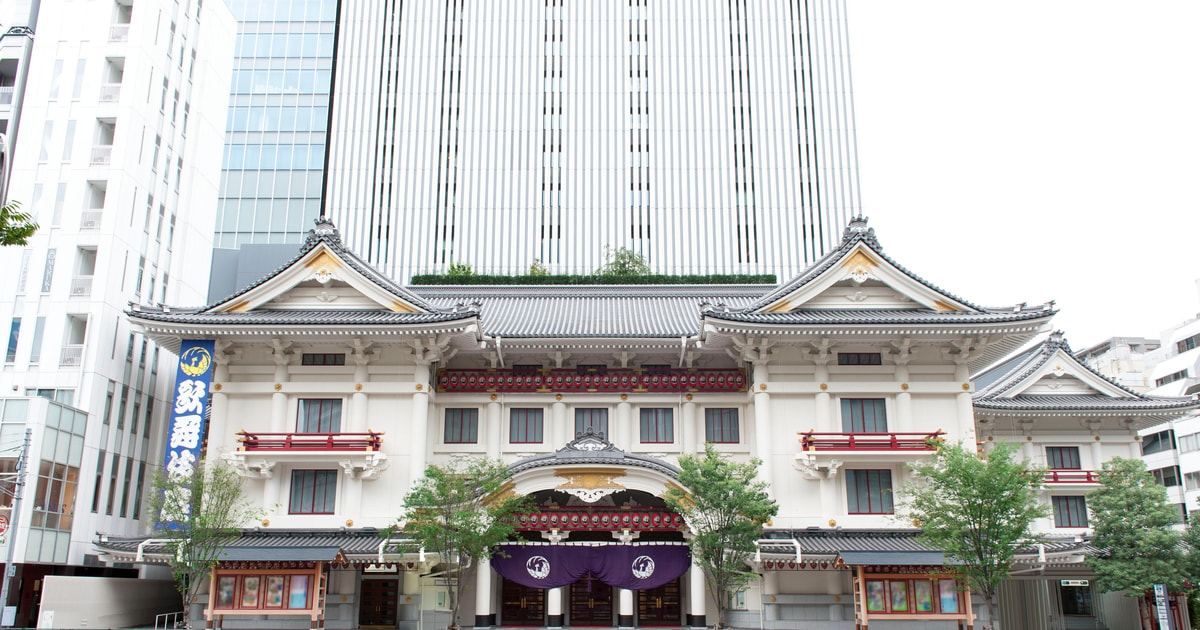
If you’re planning a trip to Tokyo, Kabuki-za is one of the most memorable ways to experience Japanese culture firsthand. GetYourGuide offers English-friendly Kabuki-za tickets and guided experiences, including options with headset translation and pre-show introductions for first-time viewers.
👉 Check Kabuki-za Tickets on GetYourGuide
This section may contain affiliate links. Booking through them costs you nothing extra and helps support this site.




コメント