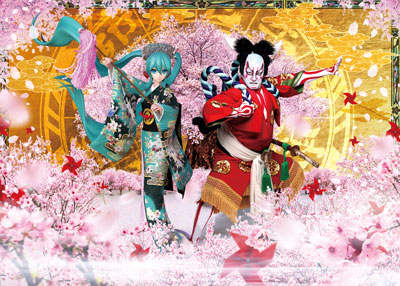
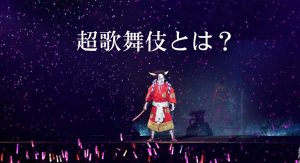
Hanakurabe Senbon Zakura (今昔饗宴千本桜) is a spectacular Cho-Kabuki production that combines the world of the classical Kabuki masterpiece Yoshitsune Senbon Zakura with the famous Vocaloid song Senbonzakura, featuring Hatsune Miku.
Cho-Kabuki is a modern form of Kabuki that blends traditional performance with digital technology, virtual characters, and live audience participation.
With fox spirits, dragons, cherry blossoms, reincarnation, projection mapping, and interactive staging, Hanakurabe Senbon Zakura is one of the most exciting entry points for newcomers to Kabuki.
Quick Plot Summary
A thousand years ago, the sacred tree Senbon Zakura was protected by the White Fox and Princess Mikuhime.
But the evil Blue Dragon attacked, plunging the world into darkness.
A thousand years later, the two guardians are reincarnated and reunited to confront their ancient enemy in a battle that will determine the fate of the world.
It is a story of cherry blossoms, fox spirits, destiny, and miracles across time.
What Is Hanakurabe Senbon Zakura?
This is a major Cho-Kabuki production that fuses:
- Classical Kabuki storytelling
- Hatsune Miku and Vocaloid culture
- Digital stage technology
- Live music and audience participation
Unlike traditional Kabuki, Cho-Kabuki incorporates projection mapping, network technology, and virtual performers, creating a theatrical experience that feels part opera, part concert, and part mythic fantasy.
The story begins in the age of the gods, centered around the sacred cherry tree Senbon Zakura, protector of Japan.
When the Blue Dragon appears and corrupts the world, the story leaps forward a thousand years, where reincarnated heroes must face the unfinished conflict.
Plot Summary
The Future Battle in Sakura Capital
In the imperial city of Sakura-kyo, special warrior Hatsune Miku fights shadow creatures threatening the future.
She is rescued by Captain Kaito, but he is mortally wounded.
As Miku loses consciousness, memories from a previous life begin to awaken.
Reunion of Tadanobu and Princess Mikuhime
The story shifts back to the Heian period.
Sato Tadanobu mourns the withered Senbon Zakura.
But Tadanobu is no ordinary warrior — he is the reincarnation of the White Fox.
He encounters Princess Mikuhime, who has forgotten her past.
Using a sacred drum, he tells her the story of their shared destiny.
The White Fox’s Defeat by the Blue Dragon
A thousand years earlier, the White Fox and Mikuhime guarded the sacred cherry tree.
Then the Blue Dragon attacked.
The White Fox fought bravely but was defeated, and the world fell into darkness.
He was sealed away until being reborn centuries later.
Mikuhime Recovers Her Memories
After hearing Tadanobu’s tale, Mikuhime regains her memories.
The two are joyfully reunited.
But thunder strikes.
The Blue Dragon returns.
And the final battle begins.
The Final Battle
Mikuhime and Tadanobu confront the Blue Dragon in a massive climactic struggle.
Fox spirits join the fight.
Ancient grudges are settled.
And the miracle of Senbon Zakura may restore the world itself.
Main Characters
Sato Tadanobu / White Fox
A warrior who is the reincarnation of the sacred White Fox.
He carries the burden of an ancient defeat and fights to restore Senbon Zakura.
Mikuhime
A divine princess and guardian of the sacred cherry tree.
She combines grace, spiritual power, and fierce resolve.
Blue Dragon
A false guardian driven by domination and obsession.
He seeks eternal control over the world.
Fox Spirits
Supernatural fox beings who aid the heroes and bring humor, energy, and spectacle to the stage.
Highlights of Hanakurabe Senbon Zakura
A Unique Fusion of Kabuki and Hatsune Miku
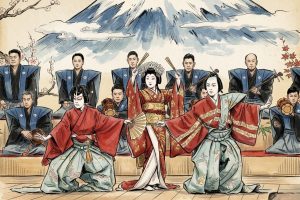
This production blends traditional Kabuki aesthetics with Vocaloid culture in a way no other theater work does.
It feels both ancient and futuristic.
A Signature Cho-Kabuki Spectacle
Projection mapping, digital effects, and virtual performance are not just decoration — they are central to the storytelling.
This is one of the defining characteristics of Cho-Kabuki.
Epic Storytelling Across a Thousand Years
The story spans gods, reincarnation, and cosmic conflict, giving the production mythic scale.
Traditional Kabuki Techniques Still Shine
Despite the digital elements, classic Kabuki remains central:
- Stylized mie poses
- Sword fights (tachimawari)
- Quick costume changes (hayagawari)
- Fox-inspired choreography
This is still unmistakably Kabuki.
For more on how kabuki pulls off instant costume changes like hayagawari, see our deep dive on wig and costume craftsmanship.

The Audience Becomes Part of the Performance
One of the most famous features of Cho-Kabuki is audience participation.
Viewers wave glow sticks, shout calls, and help transform the theater into a festival-like event.
It feels closer to a live concert than conventional theater.
Knowing Yoshitsune Senbon Zakura Makes It Even Better
The play contains many references to the classical Kabuki masterpiece Yoshitsune Senbon Zakura, especially:
- Torii Mae
- Kawatsura Hogen Yakata (The Fox Scene)
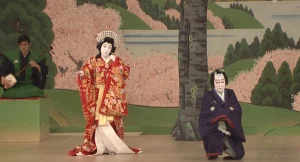
If you know those works, you can appreciate the layers of homage built into this production.
Particularly notable is the costume transformation of Tadanobu, which echoes the fox imagery of the classical play.
For experienced Kabuki viewers, these references add depth.
For newcomers, they create fresh wonder.
FAQ
How do you pronounce Hanakurabe Senbon Zakura?
Ha-na-ku-ra-be Sen-bon Za-ku-ra.
Can beginners enjoy it?
Absolutely.
In fact, this is often recommended as one of the best first Kabuki experiences for newcomers.
How long is the performance?
Usually around 60–90 minutes, depending on the production.
Do I need to know traditional Kabuki first?
No.
But knowing Yoshitsune Senbon Zakura adds depth.
Do I need a penlight?
Not required — but highly recommended for the full Cho-Kabuki experience.
Final Thoughts
Hanakurabe Senbon Zakura is one of the most exciting modern Kabuki productions ever created.
By combining:
- Classical Kabuki
- Hatsune Miku
- Digital stage technology
- Mythological storytelling
- Live audience participation
…it creates a theatrical experience unlike anything else.
If you think Kabuki looks difficult or intimidating, this may be the perfect place to start.
🎭 Want to See Kabuki Live?
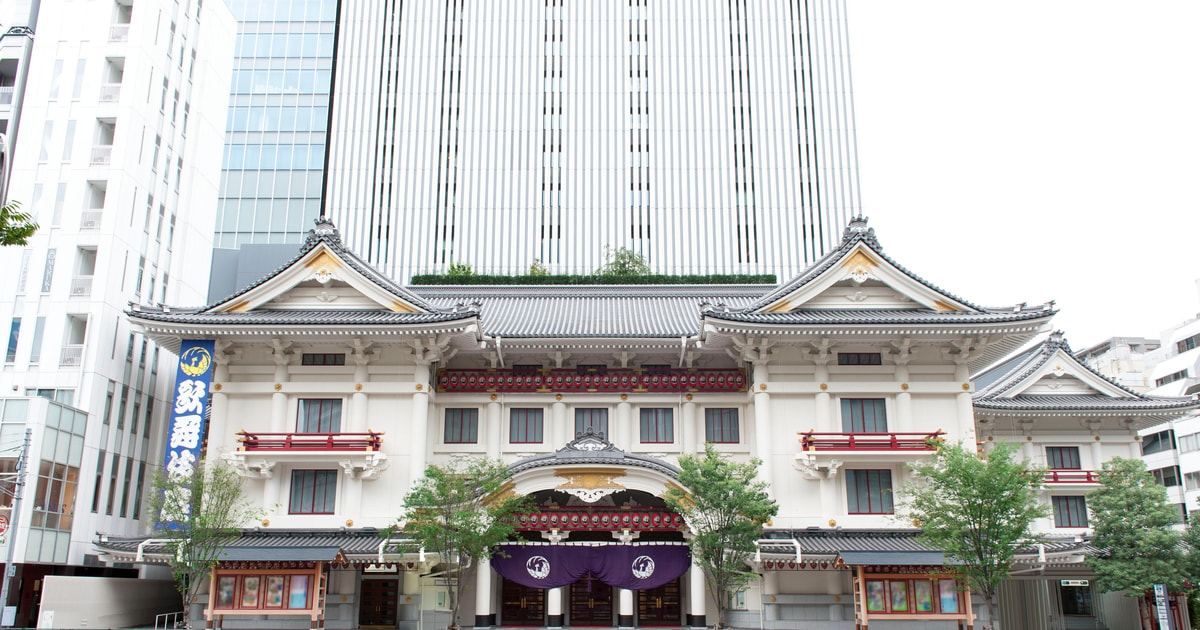
If you’re planning a trip to Tokyo, Kabuki-za is one of the most memorable ways to experience Japanese culture firsthand. GetYourGuide offers English-friendly Kabuki-za tickets and guided experiences, including options with headset translation and pre-show introductions for first-time viewers.
👉 Check Kabuki-za Tickets on GetYourGuide
This section may contain affiliate links. Booking through them costs you nothing extra and helps support this site.

コメント