
Yūgiri Nagori no Shōgatsu (夕霧名残の正月) is a dreamlike kabuki dance piece depicting a reunion with a lost lover — a quiet, aching companion piece to the Kamigata wagoto classic Kuruwa Bunshō: Yoshidaya.
What Is Yūgiri Nagori no Shōgatsu?
This dance piece is built on the same world as Kuruwa Bunshō: Yoshidaya — the courtesan Yūgiri and Fujiya Izaemon, the man who loved her deeply. Here, though, Yūgiri has already passed away, and the piece imagines a dreamlike “reunion” between her spirit and the now-ruined Izaemon. A love that could never be fulfilled in life is granted, for just a moment, on stage — and that fragile, fleeting beauty is what moves audiences so deeply.
The piece is also notable for having been revived with a newly written script by the celebrated actor Sakata Tōjūrō, performed as part of one of his own name-succession productions.
Synopsis
Yūgiri, a courtesan, has died of illness. Only on the forty-ninth day after her death does her lover, Fujiya Izaemon, finally learn the news. Once the young heir to a wealthy merchant house, Izaemon has been disowned after years lost to indulgence, and now carries heavy debts. He wasn’t even able to be at Yūgiri’s side when she died, and the regret weighs on him deeply.
Gaunt and worn down, Izaemon offers a written vow in place of incense and flowers, as a small act of memorial. And then — Yūgiri appears before him, exactly as she was in life.
Overjoyed at this impossible reunion, the two share a brief, tender moment together, their affection unchanged from before. But the happiness doesn’t last. Yūgiri quietly fades away, leaving behind only an impossible love and time that can never be reclaimed — a quiet, lingering ache settling over the piece’s close.
Characters
Fujiya Izaemon
Heir to a wealthy Osaka merchant family, once living in comfort, now disowned and in debt after years of indulgence. Deep regret over failing to be at Yūgiri’s side when she died consumes him once he learns of her death on the forty-ninth day. He appears in a gaunt, reduced state — a portrayal that captures real human fragility beneath the weight of regret and unresolved longing.
Yūgiri
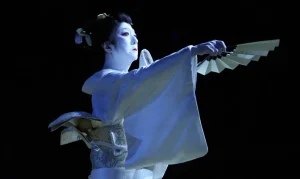
A courtesan who once loved Izaemon deeply, now deceased, appearing in the piece as a spirit. Far from anything frightening, she appears exactly as beautiful and gentle as she was in life, granting Izaemon a brief reunion. She’s portrayed less as a ghost in the conventional sense than as a warm, fleeting presence — almost as if conjured directly from Izaemon’s own longing — giving the entire piece its lasting emotional resonance.
Highlights
Fantasy and Reality Intertwined
The piece’s defining feature is its fantastical premise: a reunion with the dead. A reunion impossible in reality is granted only on stage — and it’s exactly that crossing between the real and the impossible that gives the piece its powerful emotional resonance.
Yūgiri’s Warmth and Presence
Despite appearing as a spirit, Yūgiri carries no sense of dread whatsoever. She reads instead as a tender memory made visible before the man who loved her — and that enveloping warmth colors the entire piece with both comfort and heartache.
Izaemon’s “Yatsushi” and Regret
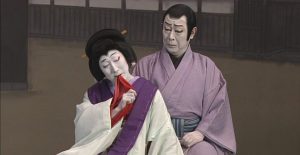
Izaemon’s ruined appearance reflects yatsushi — a distinctly kabuki aesthetic in which a once-wealthy character deliberately appears in a reduced, humble state, generating its own particular charm and sensual pathos. Layered on top of that is his inescapable regret, and it’s the combination of yatsushi and regret that gives this portrayal its emotional force.
The Ache of a Fleeting Reunion
The two are never meant to be reunited forever — which is exactly why this one brief meeting feels so beautiful and so bittersweet. The joy of “we met again,” set against the reality of “we can never meet again,” lingers quietly in the mind long after the piece ends.
Its Relationship to Kuruwa Bunshō
Yūgiri Nagori no Shōgatsu functions almost as an epilogue to Kuruwa Bunshō. Where that play depicts the love and conflict between two still-living characters, this piece takes up what comes after: loss, and the act of remembering. It’s less a straightforward romance than a meditation on the feelings we only fully recognize once they’re already gone.
Who Should Watch This Piece?
- Anyone who enjoys the quiet, understated world of wagoto
- Viewers who prefer emotional nuance over spectacle
- Anyone drawn to bittersweet love stories with a lasting emotional echo
Frequently Asked Questions
- Do I need to watch Kuruwa Bunshō first?
-
It’s not strictly necessary, but since this piece functions as an epilogue to that story, knowing Yūgiri and Izaemon’s earlier relationship adds real emotional depth to this reunion.
- Is Yūgiri portrayed as a frightening ghost?
-
No — she appears exactly as beautiful and gentle as she was in life, portrayed more as a tender, lingering memory than a conventional ghost.
- What is “yatsushi”?
-
Yatsushi is a kabuki aesthetic in which a once-wealthy or noble character appears deliberately reduced and humbled, creating a distinct sensual pathos — used here to portray Izaemon’s fall from privilege.
Summary
Yūgiri Nagori no Shōgatsu grants, for one fleeting moment, a reunion that could never happen in life — and in that fragility lies its beauty. More meditation on loss and memory than conventional romance, it’s a quiet, deeply moving piece for anyone drawn to kabuki’s subtler emotional register.

🎭 Want to See Kabuki Live?
If you’re planning a trip to Tokyo, Kabuki-za is one of the most memorable ways to experience Japanese culture firsthand. GetYourGuide offers English-friendly Kabuki-za tickets and guided experiences, including options with headset translation and pre-show introductions for first-time viewers.
👉 Check Kabuki-za Tickets on GetYourGuide

This section may contain affiliate links. Booking through them costs you nothing extra and helps support this site.







コメント