
Before a kabuki or bunraku performance begins, a voice cuts through the silence: “Tōzai, tōzaaai…” It sounds like a simple announcement, but this call carries centuries of history and deliberate craft behind it.
What Is Tōzai-goe?
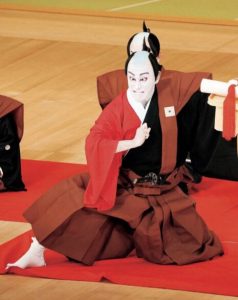
Tōzai-goe (東西声, literally “east-west voice”) is a traditional vocal announcement made just before a kabuki performance begins, calling for the audience’s attention.
Why “East and West”?
The name traces back to how traditional theaters were built. Most theaters face south, meaning that from the stage (facing north), the audience seating stretches east to the right and west to the left. Calling out “tōzai” — east and west — is essentially calling out to the entire audience, from one end of the theater to the other, much like saying “everyone, everywhere” in English.
There’s also a theory tracing the phrase to Edo-period Osaka, where the kabuki theaters of the Dōtonbori district all faced streets running east-west — meaning the call may have originally been a way of drawing in audiences from across that entire district.
Strict Form and Superstition
The delivery of tōzai-goe follows strict conventions, along with superstitions tied to a production’s success. In the opening scene of Kanadehon Chūshingura, for example, the call is repeated in a specific pattern — seven times from stage left, five times from center, three times from stage right — following the auspicious numerical pattern of “seven-five-three.” And no matter the pattern, the very last “tōzai” must always end on a rising or sustained tone — never a falling one, since a falling tone is considered bad luck, evoking the image of a production’s audience numbers “falling.”
When You’ll Hear It
Tōzai-goe isn’t used in every performance — its appearance signals something special, and audience anticipation rises the moment it begins. It’s typically heard:
- At the opening of Kanadehon Chūshingura‘s first act, one of kabuki’s most revered classics
- Before and after a formal kōjō speech, such as name-succession ceremonies
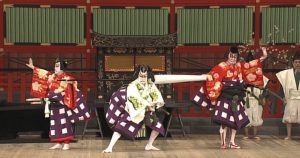
- At the start of ningyō-buri scenes, where actors move like bunraku puppets
- Even in Cho-Kabuki, the modern fusion of tradition with digital technology, where this classical convention is carefully preserved
A Signal Rooted in Court Ceremony
Performing arts have historically depended on the patronage of those in power. With authority traditionally seated facing south, a call directed “east and west” from a north-facing stage was both a gesture of respect and a way of shifting the entire room’s attention — a signal marking the crossing into a kind of sacred, set-apart space.
The Ceremonial Weight of Chūshingura’s Opening
The tōzai-goe that opens Kanadehon Chūshingura‘s first act carries an unusually formal, ceremonial weight compared to ordinary performances, built around its distinctive “seven-five-three” structure: the call repeats seven times from stage left, five times from center, and three times from stage right, with the voice itself seeming to travel across the stage as the count decreases — building tension across the entire theater as the moment approaches.
Odd numbers have long been considered auspicious in Japanese tradition, and “seven, five, three” is considered an especially fortunate combination — using this exact count is meant to elevate the dignity of the production and pray for its success.
Once the final call from stage right closes out on that sustained, never-falling tone, a wooden clapper (ki) sounds, and the curtain begins to rise — the actors already in position on stage, and the accompanying takemoto narrative music beginning to carry the story forward. That last call is, in effect, the final switch that pulls the audience out of the everyday world and into the story about to unfold.
Frequently Asked Questions
- Does every kabuki play open with tōzai-goe?
-
No — it’s reserved for specific occasions, such as the opening of Kanadehon Chūshingura’s first act, name-succession ceremonies, and ningyō-buri (puppet-style) scenes, making its appearance feel special whenever it happens.
- Why does the final call never end on a falling tone?
-
A falling tone is considered bad luck, symbolically associated with declining audience numbers — so the tradition strictly requires the last call to end on a rising or sustained note instead.
- What does the “seven-five-three” pattern mean?
-
It reflects a traditional belief that odd numbers, especially the combination of seven, five, and three, are especially auspicious — using this exact repetition count is meant to elevate a production’s dignity and invoke good fortune.
Summary
The next time you hear “Tōzai, tōzaaai!” ring out in a theater, listen closely to its rhythm and how it ends. Behind that single call lies centuries of hope for a production’s success and profound respect for the audience — a tradition stretching back to the Edo period, distilled into one carefully shaped voice.
🎭 Want to See Kabuki Live?
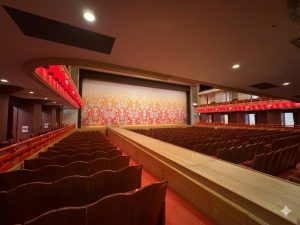
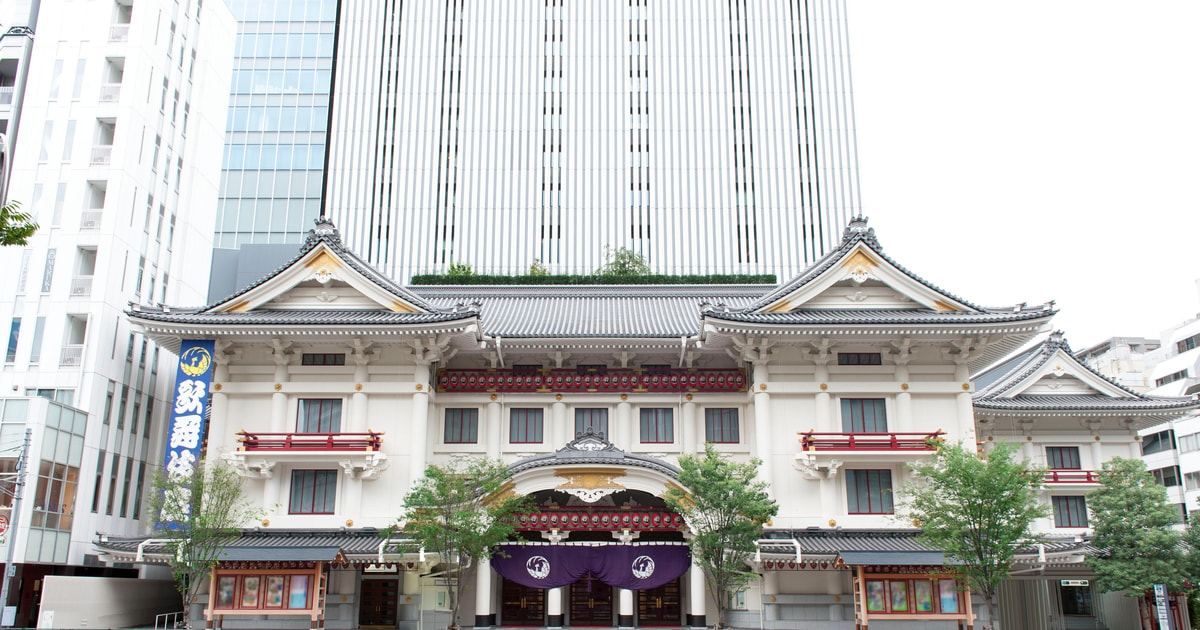
If you’re planning a trip to Tokyo, Kabuki-za is one of the most memorable ways to experience Japanese culture firsthand. GetYourGuide offers English-friendly Kabuki-za tickets and guided experiences, including options with headset translation and pre-show introductions for first-time viewers.
👉 Check Kabuki-za Tickets on GetYourGuide
This section may contain affiliate links. Booking through them costs you nothing extra and helps support this site.







コメント