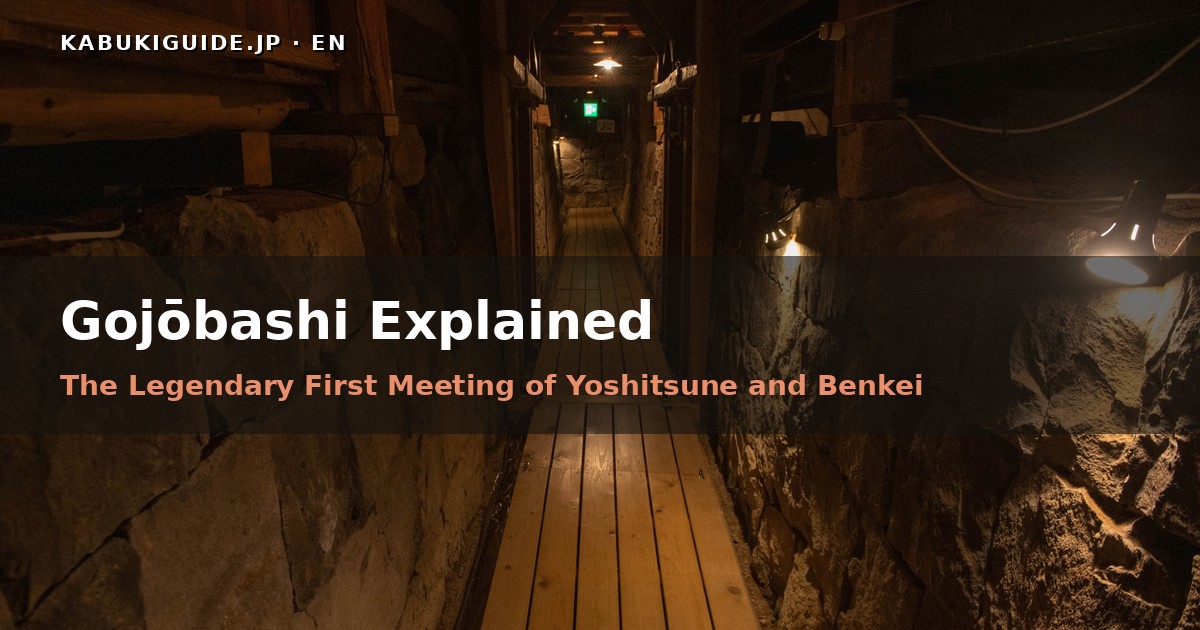
Gojōbashi (五條橋, “Gojō Bridge”) is the fifth and final act of the epic jidai-mono Kiichi Hōgen Sanryaku no Maki — the same play covered in our guide to Kikubatake. Set against a backdrop of hopes to restore the fallen Minamoto clan under Taira rule, this final act depicts one of the most famous meetings in Japanese legend: the first encounter between the young Ushiwakamaru and the warrior-monk Benkei.
A typical performance runs roughly 30 minutes to just under an hour, varying by production style and casting.
Synopsis
Ushiwakamaru (the future Minamoto no Yoshitsune) has taken to appearing on Gojō Bridge night after night, searching for allies to help restore the Minamoto clan. Rumors soon spread of a mysterious figure haunting the bridge, and word eventually reaches the fierce warrior-monk Benkei, who resolves to capture this figure and make him a retainer.
Carrying his massive naginata, Benkei heads to the bridge. Spotting a slight figure in a thin robe, he initially mistakes them for a woman and moves to let them pass — but it’s Ushiwakamaru himself, who provokes Benkei purely to test his skill.
Realizing this is the mysterious figure he’s been hunting, Benkei attacks — but Ushiwakamaru dances effortlessly along the bridge’s railing, flitting about like a bird, impossible to pin down. In the end, Ushiwakamaru knocks Benkei’s massive naginata aside with nothing but a small sword, defeating him outright.
Humbled, Benkei asks the boy’s name — and learns he has just been defeated by the future Minamoto no Yoshitsune. The two form a bond of lord and retainer on the spot, beginning a partnership that would become one of the most celebrated in Japanese legend.
Characters
Ushiwakamaru
The future Minamoto no Yoshitsune. A young warrior secretly devoted to restoring the Minamoto clan, combining an almost feminine beauty with astonishing agility as he darts freely along the bridge railing. He deliberately provokes Benkei purely to test the warrior’s skill.
Musashibō Benkei
A warrior-monk of legendary strength, who sets out to capture the “mysterious figure” haunting Gojō Bridge and make him a retainer. Armed with his massive naginata, he confronts Ushiwakamaru in classic aragoto style, only to be outmaneuvered by the boy’s speed and ultimately defeated — after which he becomes so impressed by Ushiwakamaru’s ability that he pledges his loyalty on the spot.
Highlights
Ushiwakamaru’s Playful Taunting vs. Benkei’s Bold Combat
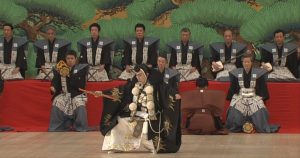
The biggest highlight of Gojōbashi is the combat between the two leads. Ushiwakamaru toys with Benkei as if it’s a game — dodging lightly, leaping nimbly along the bridge railing, even taunting his opponent with playful gestures, all with an air of effortless composure and beauty.
Benkei, meanwhile, is a warrior-monk of legendary strength, swinging his naginata with raw power — yet he can never quite catch the swift Ushiwakamaru. This vivid contrast — light versus heavy, stillness versus motion, play versus seriousness — is what gives the scene its energy.
And then comes the final moment: with a single small sword, Ushiwakamaru knocks away Benkei’s naginata. The boy who had been dancing about playfully suddenly reveals his true strength.
The Real Gojō Bridge
The setting of Gojōbashi — a scene depicted in both kabuki and Noh — is the real Gojō Ōhashi bridge spanning Kyoto’s Higashiyama and Shimogyō wards. It’s widely known as the legendary meeting place of Ushiwakamaru and Benkei, and today a statue depicting the two is installed at the bridge’s western end, on its northern side, commemorating their famous encounter.
A legendary duel fought out on a bridge, still remembered and retold across the centuries — and still very much a living part of Kyoto’s landscape today.

Frequently Asked Questions
- Who wins the fight in Gojōbashi?
-
Ushiwakamaru does — despite Benkei’s legendary strength and massive naginata, the young Ushiwakamaru’s speed and agility let him knock away Benkei’s weapon with just a small sword.
- Is Gojō Bridge a real place?
-
Yes — it’s a real bridge in Kyoto, and a statue of Ushiwakamaru and Benkei stands near its western end today, commemorating their legendary meeting.
- Is this a good play for kabuki beginners?
-
Yes — its story is short, simple, and easy to follow, built almost entirely around a single dynamic combat sequence, making it a popular and approachable starting point for newcomers.
Summary
Gojōbashi distills one of Japan’s most beloved legends into a short, fast-moving showcase: Ushiwakamaru’s playful agility against Benkei’s raw power, ending in a bond of loyalty that would become legendary. Its simple story and dynamic combat make it an excellent, approachable entry point into kabuki.
🎭 Want to See Kabuki Live?
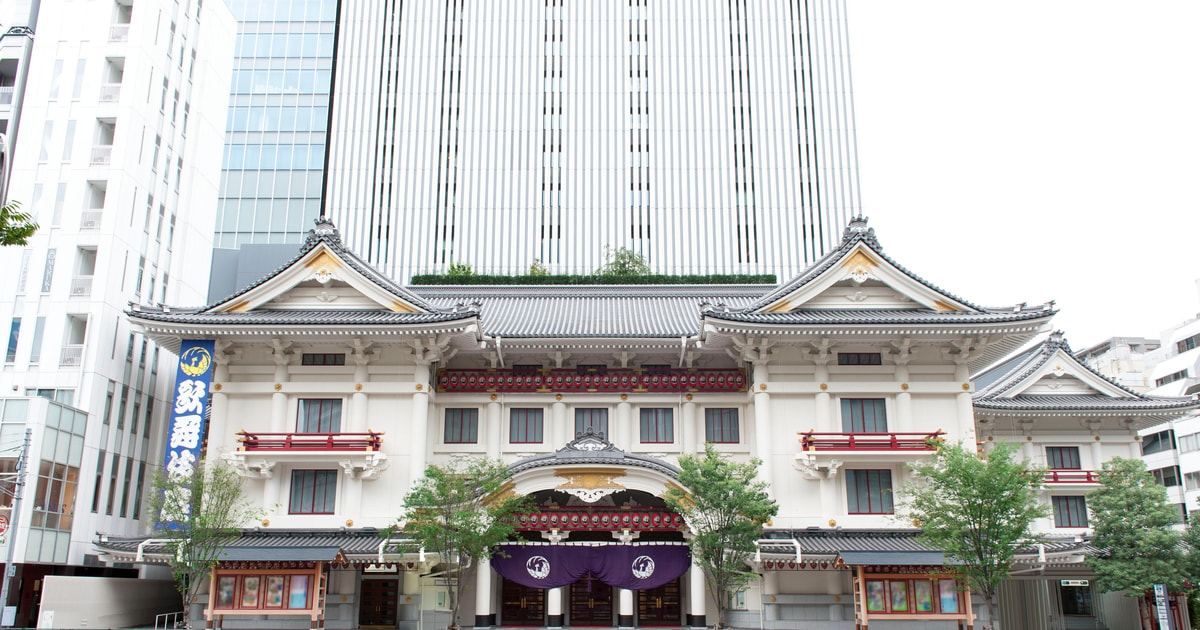
If you’re planning a trip to Tokyo, Kabuki-za is one of the most memorable ways to experience Japanese culture firsthand. GetYourGuide offers English-friendly Kabuki-za tickets and guided experiences, including options with headset translation and pre-show introductions for first-time viewers.
👉 Check Kabuki-za Tickets on GetYourGuide
This section may contain affiliate links. Booking through them costs you nothing extra and helps support this site.
Related Reading





コメント