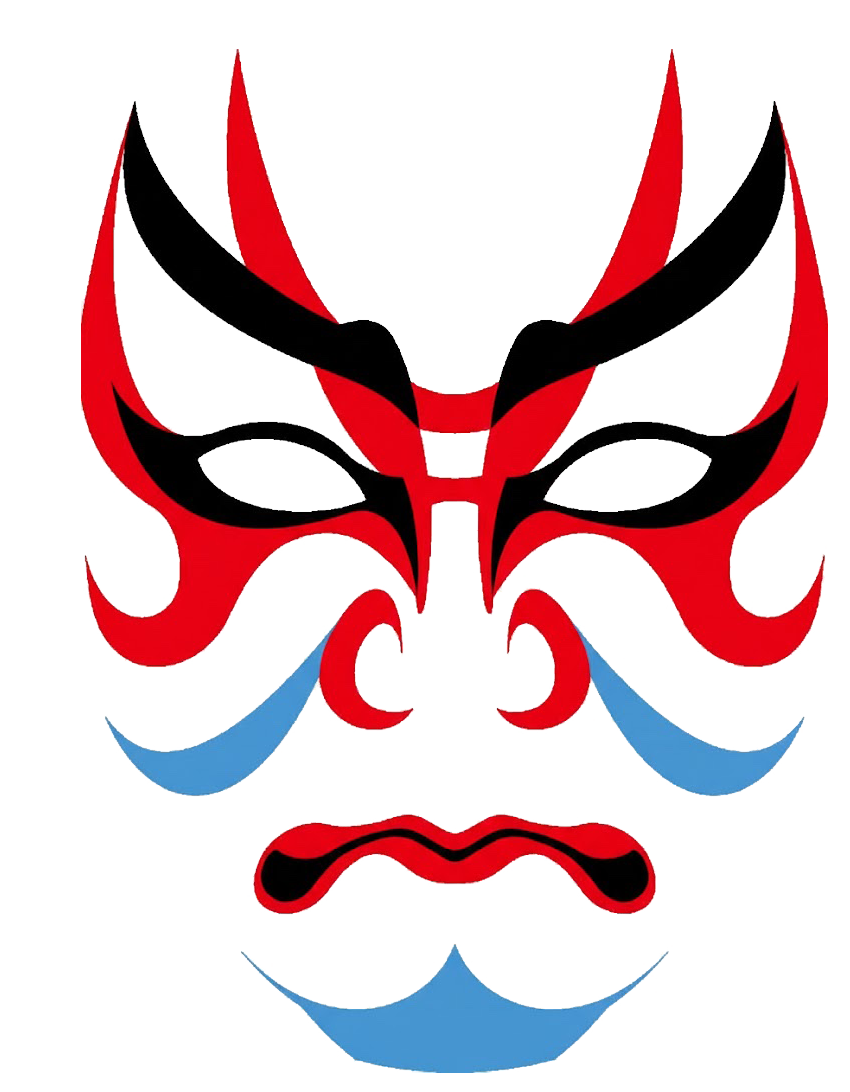
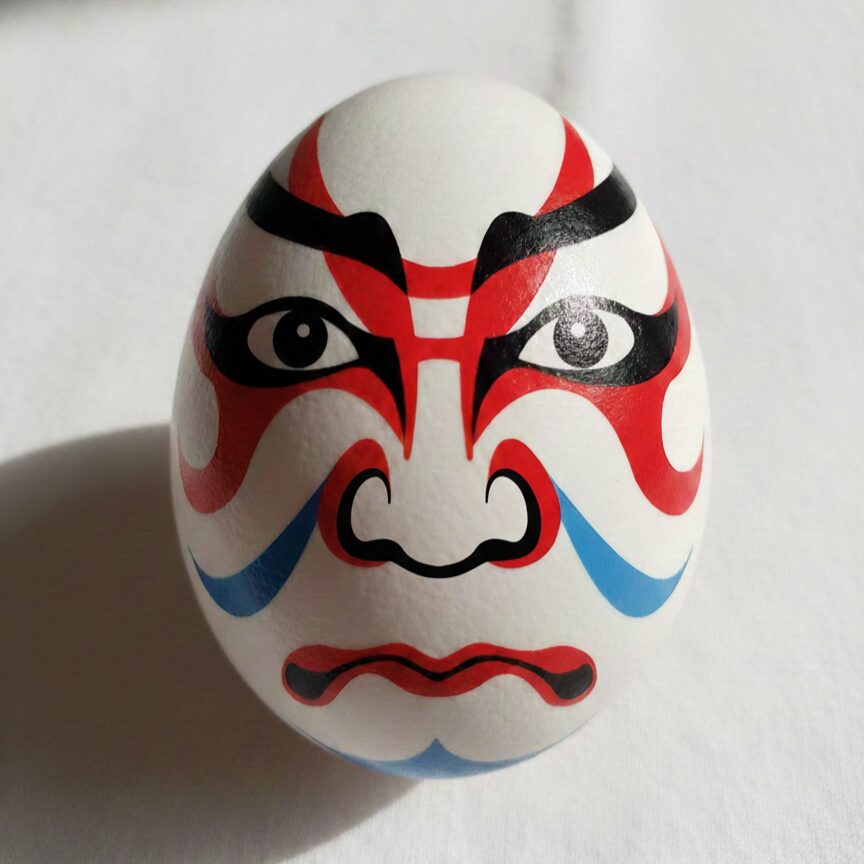
The single most recognizable image of kabuki, the one that shows up on posters and postcards around the world, is a face painted in bold red and black lines against stark white skin. That’s kumadori (隈取) — kabuki’s signature stage makeup — and it’s not just decoration. It’s a visual language that tells you exactly who a character is the instant they step on stage.
This guide walks through what kumadori means, its major types, and how to read it like a kabuki fan.
What Is Kumadori?
Kumadori is a stage makeup style used to emphasize a character’s personality and emotional state. Most people picture the bold red-lined beni-guma (“red kumadori”), but in reality there are over 100 documented variations, each used for a specific role or situation.
Because facial expressions are hard to read from the back of a large kabuki theater, kumadori exaggerates a character’s nature into bold, legible color and line — so the audience instantly understands who’s a hero, who’s a villain, and who isn’t even human, the moment that character appears.
What the Colors Mean
- Red — courage, justice, and strength; the basic color for aragoto heroes
- Blue/indigo — large-scale villains and overwhelming evil
- Brown — demons, spirits, and other non-human, unsettling beings
Skin tone matters too, separate from the painted lines:
- Red-toned face (akappa) — a minor villain’s crude, hot-headed henchman
- White face — a virtuous or noble character
- Brownish, natural skin tone — samurai, townspeople, or lower-ranking villains
Simply reading color at your first show — red for hero, blue for villain — makes the story dramatically easier to follow.
Major Types of Kumadori
Mukimi-guma
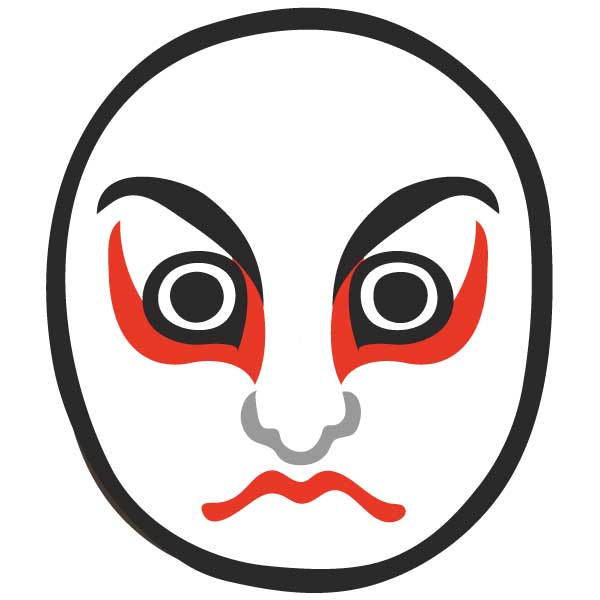
Used for young, righteous heroes, like Sukeroku in Sukeroku or Soga Gorō in Kotobuki Soga no Taimen. The face is painted white, with bold red lines running vertically from the corners of the eyes up to the eyebrows.
Ippon-guma (“One-Line” Kumadori)
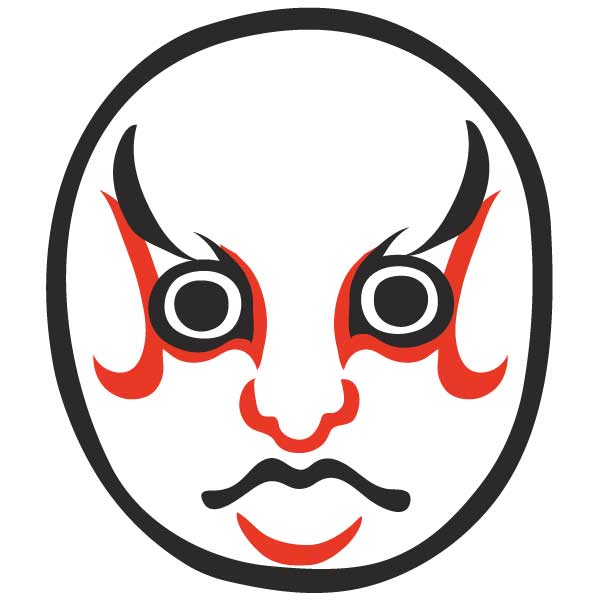
Used for aragoto roles with youthful, reckless energy — a single red line runs from both temples across the cheeks. Seen on Umeōmaru in the “Ga no Iwai” scene of Sugawara Denju Tenarai Kagami.
Nihon-guma (“Two-Line” Kumadori)
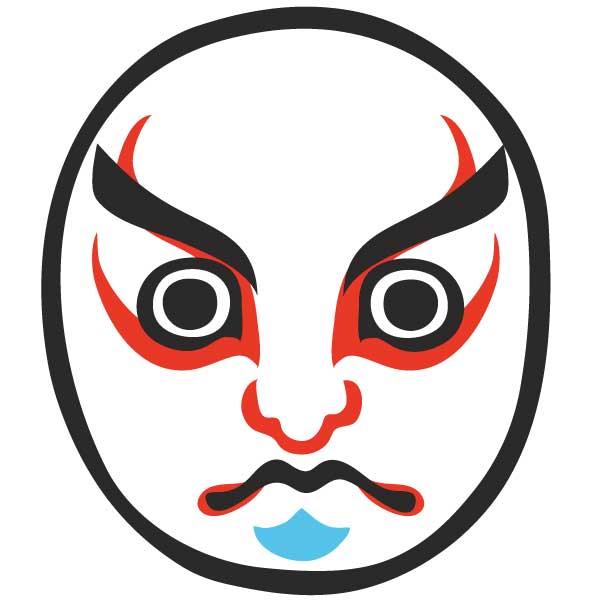
For composed, dignified, powerful adult roles — two lines sweep upward across the face. Used for Matsuōmaru in the “Kuruma-biki” scene of the same play, conveying gravity rather than youthful energy.
Suji-guma (“Muscle-Line” Kumadori)
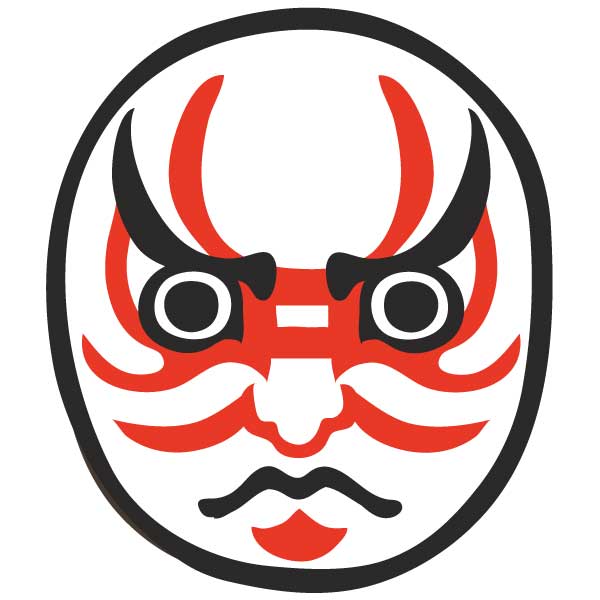
For superhuman heroes consumed by furious anger — multiple red lines sweep upward across the face, a triangle of red is added at the chin, and the corners of the mouth are shaded black. This is the kumadori of Kamakura Gongorō in Shibaraku, expressing raw emotional explosion and overwhelming power.
Kagekiyo-guma
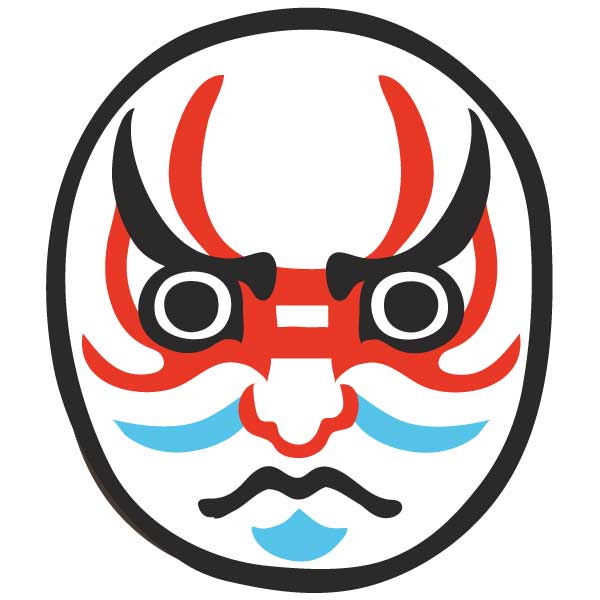
Named after the role it’s most associated with: a mighty warrior who has been captured and imprisoned so long that he’s grown pale and gaunt. The upper half of the face uses red suji-guma lines, while the lower half is painted blue — mixing red and indigo, which is why it’s also called han-guma (“half kumadori”).
Kuge-are-guma
A blue kumadori for high-ranking villains plotting to overthrow the state — cold and unsettling. The eyebrows are emphasized, and a round black mark called a kuraiboshi (“rank star”) is sometimes added to the forehead, symbolizing both high status and twisted ambition. This is Fujiwara no Shihei’s kumadori in Sugawara Denju Tenarai Kagami.
Akattura
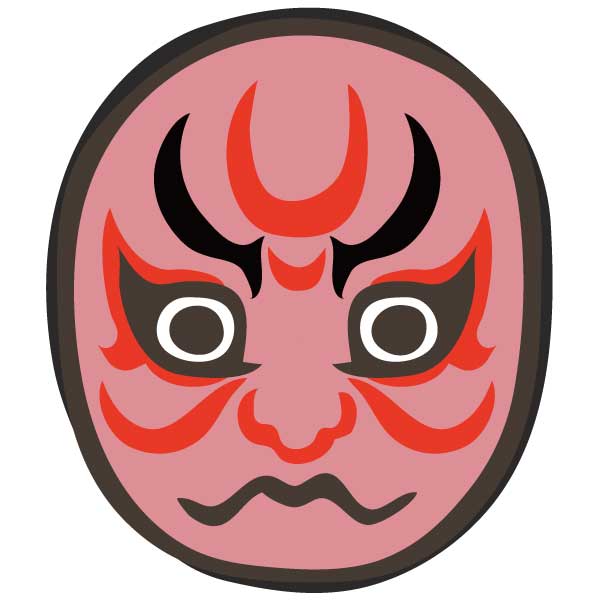
Used for a chief villain’s crude, violent underlings — the base skin tone is painted red instead of white, emphasizing low rank and reckless energy rather than menace. Seen on the “hara-dashi” henchmen in Shibaraku.
Cha-guma (“Brown” Kumadori)
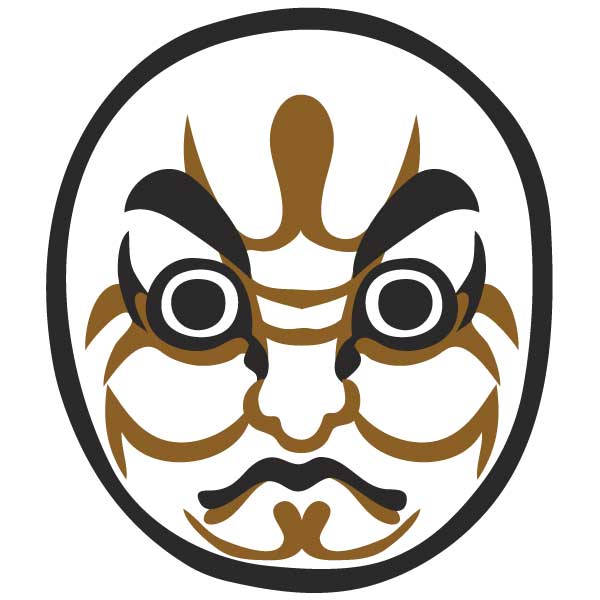
Used when a human character transforms into something otherworldly — a spirit, demon, or monster. In Tsuchigumo, the giant spider yōkai wears a brownish-white base with false eyebrows and a mouth painted to look torn wide open, emphasizing its inhuman nature.
Saru-guma (“Monkey” Kumadori)
One of the comic “zare-guma” (playful kumadori) styles, used for bold warriors who are also a little ridiculous. The signature feature is “nasubi-mayu” (eggplant eyebrows), shaped like a figure-eight, giving a sense of warmth and humor alongside bravado — worn by Kobayashi Asahina in Kotobuki Soga no Taimen.
Namazu-guma (“Catfish” Kumadori)
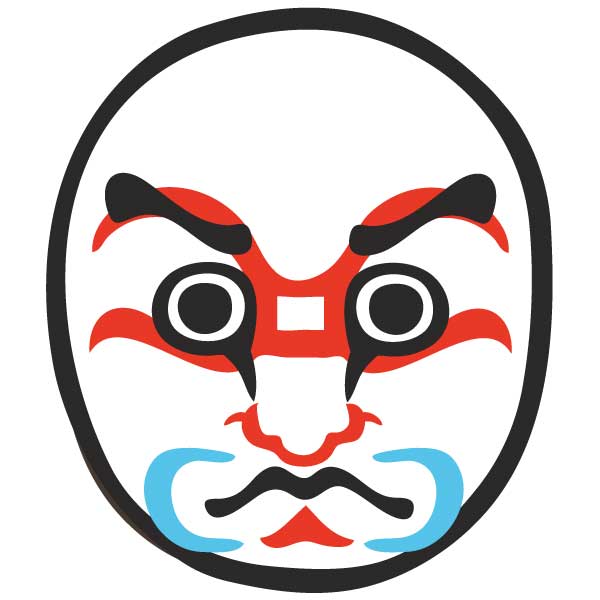
Another zare-guma style, for villains who are somehow endearing and comic rather than menacing. The top half of the face is red, the bottom half blue, with catfish-whisker-like lines drawn around the mouth — worn by the character nicknamed “Namazu Bōzu” in Shibaraku.
Kumadori and the Acting Styles Behind It
- Aragoto — the bold style of superhuman heroes; kumadori exaggerates muscle and veins with red or black lines over white base makeup
- Wagoto — refined, realistic makeup for a gentle, romantic leading man, with only the faintest touch of red at the eyes and lips
- Jitsugoto — realistic, composed makeup for grounded male leads, deliberately understated in contrast to aragoto’s exaggeration, relying on the actor’s expression rather than paint
As a general rule: the more solid white the base, the more noble and virtuous the character (though a high-ranking villain can also wear pure white). Natural, brownish skin tones mark samurai, townspeople, or lower-status villains — grounding them in the ordinary, human world rather than the heroic or supernatural one.
A Few Kumadori Facts Worth Knowing
- You “take” a kumadori, not “draw” it. After the lines are painted on with a brush, they’re blended with a finger — which is why the traditional phrase is “taking” (toru) a kumadori rather than “drawing” (kaku) one.
- It’s built to be seen from the back row. Line thickness and angle are adjusted for each actor’s face so the character reads clearly even from the very back of the theater.
- The base oil protects the skin. The bintsuke-abura oil applied before the white makeup also protects the actor’s skin from the wear of frequent, heavy makeup application and removal.
Where Kumadori Came From
Kumadori is credited to the first Ichikawa Danjūrō, who used red and black face paint in an early performance portraying the legendary hero Sakata no Kinpira. It was, from the start, a practical solution: a way to make an actor’s expression readable to audiences seated far from the stage.
Danjūrō I is said to have drawn inspiration from the exaggerated heads of bunraku puppets, using kumadori to emphasize the veins and muscles of the face. Early kumadori was bolder and rougher than what’s seen today. The soft blending technique that defines modern kumadori was reportedly developed later by the second Ichikawa Danjūrō, inspired by observing peony blossoms — after which kumadori steadily refined into the sophisticated art form seen on stage now.
The exaggerated muscles of Buddhist guardian statues and the refined expressions of Noh masks both influenced kumadori’s early development in Edo’s bold aragoto style. Later, influence from the more emotionally nuanced wagoto style of Kamigata (the Kyoto-Osaka region) brought elements of sensuality and elegance into kumadori as well — the mukimi-guma worn by Sukeroku is a direct result of that blend, since the role itself originated in Kamigata kabuki before becoming an icon of Edo style.
Much of the kumadori repertoire performed today was systematized and passed down by Ichikawa Shinjūrō III, a disciple of the ninth Ichikawa Danjūrō.
Frequently Asked Questions
- What’s the fastest way to read kumadori as a first-time viewer?
-
Start with color alone: red generally marks a heroic character, blue/indigo marks a powerful villain, and brown marks something non-human like a spirit or demon. That alone makes the story much easier to follow.
- Why do people say you “take” kumadori instead of “draw” it?
-
Because the final step of applying kumadori is blending the painted lines with a finger, not just drawing them with a brush. That blending step is why the traditional term is “taking” a kumadori.
- Is kumadori used in every kabuki play?
-
No. It’s associated mainly with the bold aragoto style. Gentler wagoto and realistic jitsugoto roles use much more subtle, natural-looking makeup instead.
- Who invented kumadori?
-
It’s credited to the first Ichikawa Danjūrō, who used bold red and black face paint to make an actor’s expression readable from far away in the theater — a tradition his descendants’ family, the Ichikawa line, continued to develop for centuries.
Summary: A Face You Can Read Like a Story
Kumadori isn’t decoration — it’s a complete visual code built over centuries, letting an audience instantly understand who a character is and what they represent, long before a single line of dialogue is spoken.
Once you know a handful of the basics — red hero, blue villain, brown monster — a kabuki stage stops looking merely colorful, and starts looking like it’s telling you the story directly.
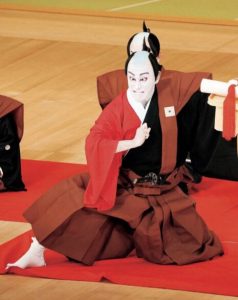
🎭 Want to See Kabuki Live?
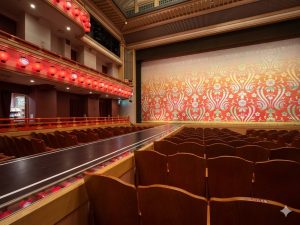
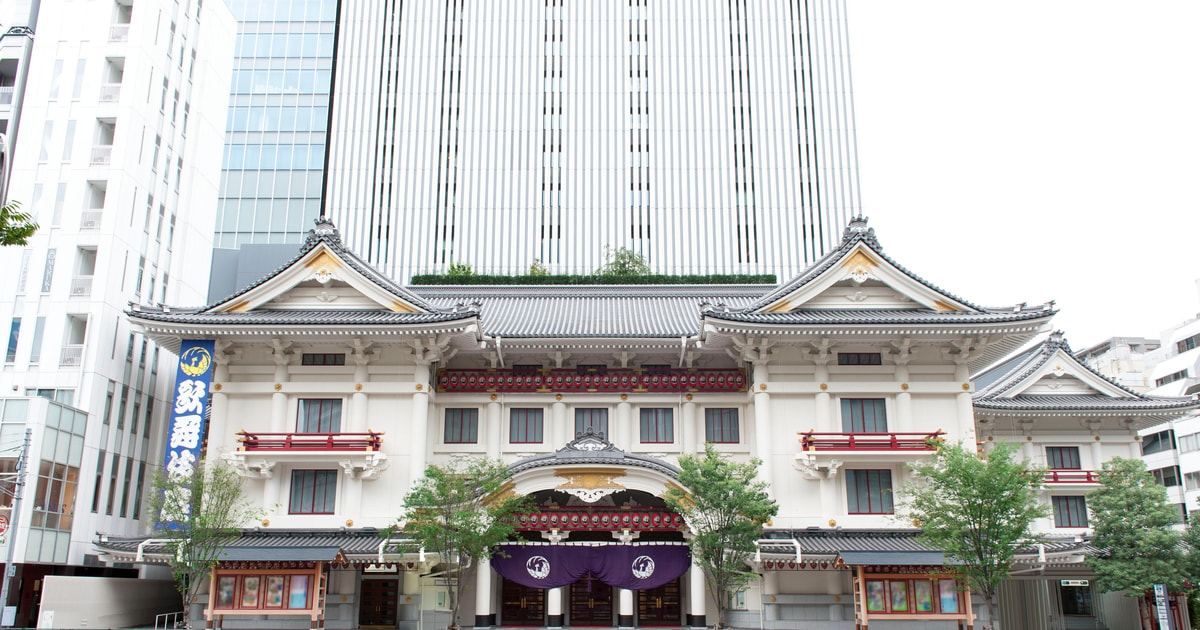
If you’re planning a trip to Tokyo, Kabuki-za is one of the most memorable ways to experience Japanese culture firsthand. GetYourGuide offers English-friendly Kabuki-za tickets and guided experiences, including options with headset translation and pre-show introductions for first-time viewers.
👉 Check Kabuki-za Tickets on GetYourGuide
This section may contain affiliate links. Booking through them costs you nothing extra and helps support this site.







コメント
コメント一覧 (2件)
[…] techniques, sub-types, and the actors who define it today. あわせて読みたい What Is Kumadori? Kabuki Face Makeup Meaning, Types, and Colors Explained Kumadori is kabuki’s bold stage makeup, where color and line reveal a character’s […]
[…] あわせて読みたい What Is Kumadori? Kabuki Face Makeup Meaning, Types, and Colors Explained Kumadori is kabuki’s bold stage makeup, where color and line reveal a character’s nature instantly. Learn the meaning behind each col […]