
The Kabuki Jūhachiban (歌舞伎十八番, “The Eighteen Kabuki Plays”) is a collection of eighteen plays selected in the Edo period as the signature repertoire of the Ichikawa family, kabuki’s Naritaya lineage. Each play carries the family’s distinctive aragoto and wagoto performance traditions — genuinely rewarding for longtime fans and first-time viewers alike.
Who Selected the Kabuki Jūhachiban?
The eighteen plays were selected by the seventh Ichikawa Danjūrō during the Tenpō era (1830–1844), formally establishing them as the Ichikawa family’s signature artistic repertoire.
Which Plays Are Actually Performed Today?
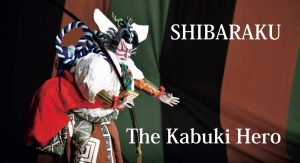
Not all eighteen plays survive in active performance. By far the most frequently staged are Sukeroku, followed by Kanjinchō, and then Shibaraku — all three refined into their present form during the era of the seventh and ninth Ichikawa Danjūrō, essentially functioning as “new works” for their time. Their sheer theatrical polish is exactly why they remain in constant rotation today.
Beyond those three, a handful of other plays see relatively regular performance: Yanone, Uirō-uri, Kenuki, Narukami, and Kagekiyo. Yanone and Uirō-uri, like Sukeroku, belong to the beloved “Soga-mono” tradition, whose familiar story and characters help keep them in circulation. Kenuki and Narukami were originally part of the longer play Raijin Fudō Kitayama Zakura before becoming independent pieces, each carrying a distinctly memorable character.
The Plays Rarely Performed Today
Ten of the eighteen plays are almost never staged today: Fudō, Kan’u, Zōhiki, Nanatsumen, Gedatsu, Uwanari, Jayanagi, Kamahige, Fuwa, and Oshimodoshi.
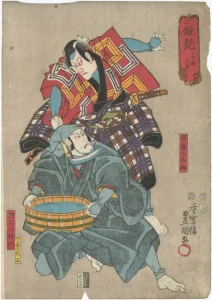
By the time the seventh Danjūrō formally selected the Jūhachiban in the Tenpō era, the details of several of these plays had already been lost to history — for some, all that remained was a single woodblock actor print. Attempts to revive them during the Meiji and Shōwa eras generated real excitement at the time, but with so little original material to work from, playwrights often had to reconstruct them as essentially new creative works. These revivals rarely led to lasting, repeated performance, and most remain one-off curiosities.
A Special Case: Oshimodoshi
Oshimodoshi is rarely staged as a standalone play today — but the role and staging technique itself hasn’t disappeared. In the celebrated dance piece Musume Dōjōji, for example, an oshimodoshi figure appears near the end to subdue the vengeful spirit of the dancer Hanako. In other words, Oshimodoshi rarely exists as its own performance, but survives as a symbolic aragoto figure woven into other plays’ staging.
Complete List of the Eighteen Plays
| Play | Status Today |
| Shibaraku | Frequently performed |
| Kanjinchō | Frequently performed |
| Sukeroku | Frequently performed |
| Yanone | Regularly performed |
| Uirō-uri | Regularly performed |
| Kenuki | Regularly performed |
| Narukami | Regularly performed |
| Kagekiyo | Occasionally performed |
| Fudō | Rarely performed |
| Kan’u | Rarely performed |
| Zōhiki | Rarely performed |
| Nanatsumen | Rarely performed |
| Gedatsu | Rarely performed |
| Uwanari | Rarely performed |
| Jayanagi | Rarely performed |
| Kamahige | Rarely performed (occasional revivals) |
| Fuwa | Rarely performed |
| Oshimodoshi | Survives within other plays’ staging (e.g., Musume Dōjōji) |

Frequently Asked Questions
- Which Kabuki Jūhachiban play is the most popular?
-
Sukeroku is performed most often, followed by Kanjinchō and Shibaraku — all three refined into their current form during the era of the seventh and ninth Ichikawa Danjūrō.
- Who selected the Kabuki Jūhachiban?
-
The seventh Ichikawa Danjūrō selected the eighteen plays during the Tenpō era (1830–1844) as the Ichikawa family’s official signature repertoire.
- Can I still see all eighteen plays performed?
-
No — roughly half of the plays had already lost most of their original content by the time they were selected, and are rarely staged today. Only about eight are performed with any regularity.
Summary
The Kabuki Jūhachiban represents the Ichikawa family’s signature artistic legacy, spanning both bold aragoto and refined wagoto styles. While only about half the collection survives in regular performance, each surviving play offers its own distinct window into what makes kabuki’s most celebrated acting lineage so enduring.
🎭 Want to See Kabuki Live?
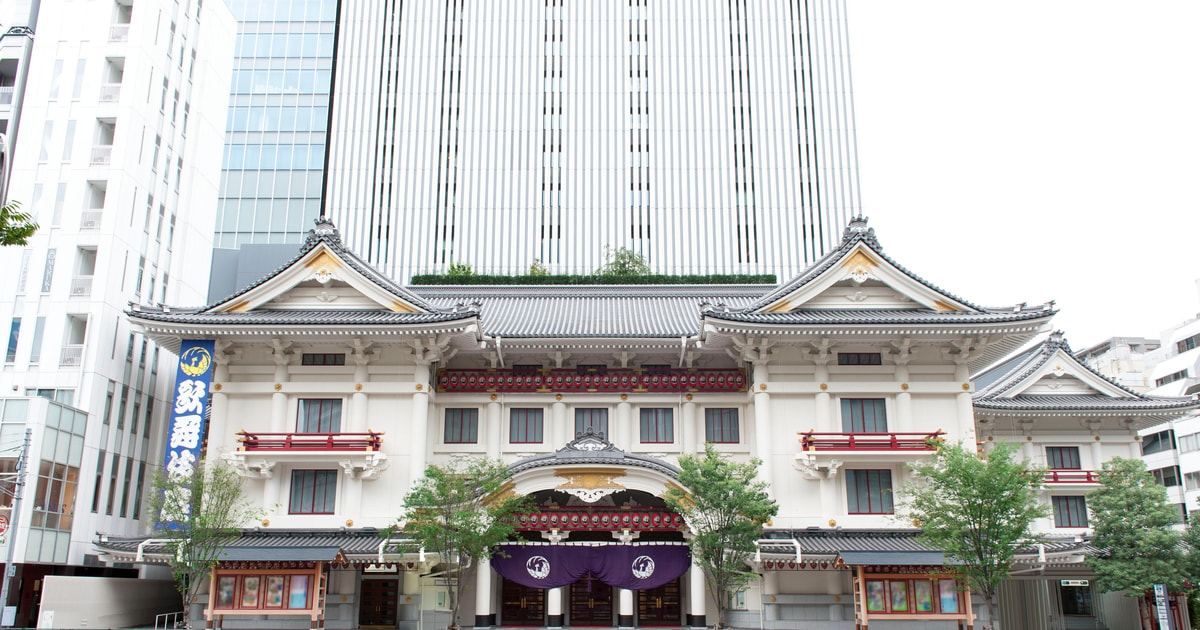
If you’re planning a trip to Tokyo, Kabuki-za is one of the most memorable ways to experience Japanese culture firsthand. GetYourGuide offers English-friendly Kabuki-za tickets and guided experiences, including options with headset translation and pre-show introductions for first-time viewers.
👉 Check Kabuki-za Tickets on GetYourGuide
This section may contain affiliate links. Booking through them costs you nothing extra and helps support this site.






コメント
コメント一覧 (1件)
[…] あわせて読みたい What Is the Kabuki Jūhachiban? The Ichikawa Family’s 18 Signature Plays Explained The Kabuki Juhachiban is the Ichikawa family’s signature repertoire of 18 plays. Here’s which ones are still performed […]