Uirō-uri (“The Medicine Peddler”) is famous in Japan primarily as a tongue-twister exercise used in actor and announcer training — but relatively few people realize it’s actually a kabuki play about a revenge plot. One of the Kabuki Jūhachiban, it’s a signature piece of the Ichikawa acting family, combining a dazzling feat of pure verbal performance with a sudden turn into bold aragoto drama.
What Is Uirō-uri?
Uirō-uri is part of the “Soga-mono” tradition — plays centered on the Soga brothers’ quest to avenge their father — though it’s often performed today as a standalone piece. Its reputation as “the tongue-twister play” undersells what it really is: a fusion of pure verbal artistry and classic aragoto drama.
The version performed today is based on a staging by the twelfth Ichikawa Danjūrō in 1980.
What Is “Uirō”?
“Uirō” here doesn’t refer to the sweet rice-flour confection of the same name — it refers to a real medicinal product historically associated with Odawara. According to tradition, the second Ichikawa Danjūrō once lost his voice, recovered it after taking this medicine, and was so grateful that he wanted to build a play around it. In other words, Uirō-uri grew out of a real historical anecdote about an actual medicine.
Synopsis
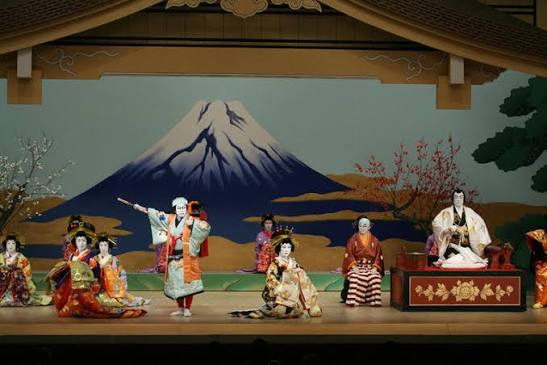
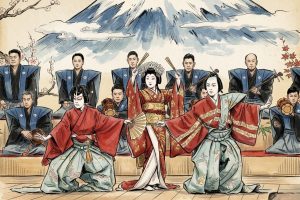
The scene is a banquet held by Kudō Suketsune — the man responsible for the death of the Soga brothers’ father — ahead of Minamoto no Yoritomo’s great hunt at the foot of Mt. Fuji. Suketsune, flanked by retainers including Kobayashi no Asahina and Kajiwara Kagetoki, is entertaining himself with courtesans when a traveling medicine peddler appears, calling out his wares.
Intrigued, Suketsune summons the peddler over. Rather than giving his name directly, the peddler launches into a famously elaborate, dazzling speech about the medicine’s origin and effects — a performance so impressive it draws admiration from everyone present. A comic moment follows when another character tries the medicine himself and attempts (with mixed success) to recite a tongue-twister of his own.
The mood shifts abruptly: the peddler suddenly lunges at Suketsune. His true identity is revealed — he’s Soga Gorō Tokimune, disguised as a medicine seller specifically to get close enough to avenge his father. His older brother, Soga Jūrō Sukenari, rushes in to join him, and the two brothers make their move against their sworn enemy.
But Suketsune is too well protected by his retainers, and the brothers can’t complete their revenge on the spot. As Asahina works to calm the hot-headed Gorō, Suketsune himself, moved by the brothers’ resolve, makes them a promise: once the hunt at Mt. Fuji concludes, he will accept his fate and let them strike him down. He even hands over a map of the hunting grounds. The revenge is deliberately postponed, and the scene ends there — the dazzling wordplay of the opening giving way to real tension by the close.
Part of the Soga Revenge Cycle
Once you know the peddler is secretly Soga Gorō, the entire opening monologue reads differently — not just a virtuoso verbal performance, but a disguise, and a means of getting close to his target. That context turns what looks like pure comic showmanship into something genuinely tense. (Soga Gorō also appears in the related plays Yanone and Sukeroku Yukari no Edo Zakura, making him one of kabuki’s most recurring heroes.)
The Signature Highlight: The Great Monologue
The play’s most famous element by far is its extended opening speech, beginning with the now-iconic line “Sessha oyakata to mōsu wa…” (“As for this humble peddler’s master…”). Far from a simple recitation exercise, it’s written as a piece of theatrical logic: the medicine is said to make the tongue move more smoothly, and the speech itself becomes a live demonstration of that very claim.
The monologue builds through several distinct sections — the medicine’s origin story, its supposed effects, a famous string of tongue-twisters, and a rapid-fire recitation of Tōkaidō post-town names — accelerating in speed and complexity as it goes. Delivering it well demands complete control of articulation, breath, rhythm, and volume, making it one of the most technically demanding set pieces an actor can perform.

Frequently Asked Questions
- Is the medicine peddler’s speech just a tongue-twister exercise?
-
It’s often used that way in actor and announcer training, but within the play itself it’s a dramatic device — a demonstration of the medicine’s claimed effects, and a disguise for the character’s true identity.
- Who is the medicine peddler really?
-
He’s Soga Gorō Tokimune in disguise, using the peddler act to get close enough to Kudō Suketsune, his father’s killer, to attempt revenge.
- Is “uirō” the same as the sweet Japanese confection?
-
No — in this play, it refers to a real historical medicine associated with Odawara, not the rice-flour sweet that shares the same name today.
Summary
Uirō-uri turns a dazzling feat of pure vocal performance into a disguise for one of kabuki’s most recurring revenge heroes, Soga Gorō. Its famous monologue is far more than a tongue-twister — it’s a piece of dramatic misdirection, building to a sudden, tense confrontation that rewards knowing exactly who’s really speaking.

🎭 Want to See Kabuki Live?
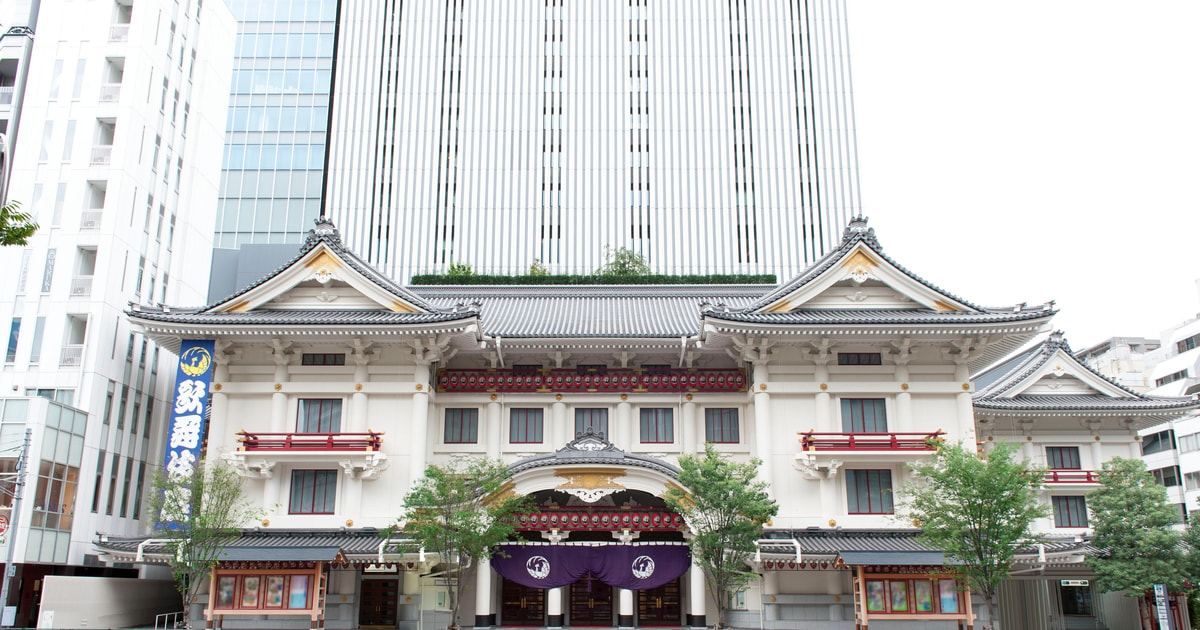
If you’re planning a trip to Tokyo, Kabuki-za is one of the most memorable ways to experience Japanese culture firsthand. GetYourGuide offers English-friendly Kabuki-za tickets and guided experiences, including options with headset translation and pre-show introductions for first-time viewers.
👉 Check Kabuki-za Tickets on GetYourGuide
This section may contain affiliate links. Booking through them costs you nothing extra and helps support this site.
コメント