
Takatsuki is a genuinely funny kabuki dance that premiered in 1933, wrapping a kyōgen-style comic setup around the tap dancing that was fashionable at the time — a distinctly offbeat piece built on brisk rhythm and pure comedy. Its centerpiece is a showstopping “geta tap dance,” performed in tall wooden clogs, making it one of the more unusual and comical entries in the entire kabuki repertoire.
What Is a Takatsuki?
A takatsuki is a footed serving stand traditionally used to hold food or sake cups at a banquet. In this piece, a servant named Jirō Kaja, who has no idea what a takatsuki actually looks like, ends up causing an entire comedy of errors over it. The play also involves takaashi — tall wooden clogs — whose name Jirō Kaja mistakes for the item he’s actually supposed to be buying.
Synopsis
A feudal lord heads out for a cherry-blossom viewing party with his servants, Tarō Kaja and Jirō Kaja. Just as the banquet is about to begin, the lord realizes there’s no takatsuki serving stand for the sake, and orders Jirō Kaja to go buy one.
The trouble is, Jirō Kaja has no idea what a takatsuki is. Along comes a traveling clog merchant selling takaashi — tall wooden geta. Sensing an opportunity, the merchant smooth-talks Jirō Kaja into believing “this is a takatsuki,” and sells him a pair of clogs instead.
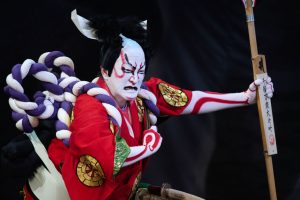
The merchant then proceeds to help himself to the sake Jirō Kaja was carrying, and the two end up thoroughly drunk together. When the lord discovers that his servant has returned with wooden clogs instead of a serving stand — and that every last drop of the sake is gone — he flies into a rage and chases Jirō Kaja around the stage. Still drunk, Jirō Kaja simply keeps dancing away, merrily clattering his new clogs the whole time.
Characters
Jirō Kaja — a servant with an overly trusting nature, easily fooled by the clog merchant. His drunken dance is the piece’s central showcase.
The Clog Merchant (Takaashi-uri) — a silver-tongued traveling salesman who talks Jirō Kaja into the mix-up.
The Lord — master of the household, trying to host a cherry-blossom banquet, who ends up furious after losing both his sake and his serving stand.
Tarō Kaja — another servant in the lord’s household.
Highlights
Tap Dancing in Tall Wooden Clogs
The signature draw of Takatsuki is, without question, its tap dance performed in tall geta. The clattering rhythm of the clogs striking the stage is a genuine spectacle — brisk and lively in a way that breaks entirely from the slow, measured image most people have of traditional Japanese dance, closer in energy to a musical revue number. It’s not simply a novelty either: the combination of precise comic timing and playful staging keeps the audience laughing throughout.
The Back-and-Forth Between Jirō Kaja and the Clog Merchant
Another major charm of the piece is watching Jirō Kaja get thoroughly talked into the mix-up. The contrast between his slightly dim-witted sincerity and the merchant’s fast-talking charm carries real kyōgen-style comic energy.
Kabuki With a Shōwa-Modern Twist
Visually, Takatsuki resembles the dignified matsubame-mono style of plays adapted from Noh — but it’s actually a wholly original work. It grew out of the genuinely bold idea of incorporating the tap dancing fashionable in early Shōwa-era Japan directly into kabuki.
Jirō Kaja was originated by the great actor Onoe Kikugorō VI, who is said to have only performed the role twice himself — yet the piece has been carefully passed down ever since. The late Nakamura Kanzaburō XVIII made it one of his signature roles, and today it remains a defining piece for his successor, Nakamura Kankurō.
Frequently Asked Questions
- What exactly does “takatsuki” mean?
-
It’s a footed serving stand traditionally used at banquets to hold food or sake cups — the very item Jirō Kaja fails to recognize, mistaking it instead for a pair of tall wooden clogs (takaashi).
- Is Takatsuki a classical or a modern kabuki piece?
-
It premiered in 1933, making it a relatively recent original work rather than a centuries-old classic — created specifically to blend traditional kyōgen-style comedy with the tap dancing popular at the time.
- Is this a good piece for kabuki beginners?
-
Yes — its brisk rhythm, physical comedy, and accessible humor make it one of the most immediately enjoyable pieces in the repertoire, with none of the historical or linguistic barriers that can make other classics feel intimidating.
Summary
Takatsuki turns a simple case of mistaken identity into a showcase of pure comic energy — a showstopping clog tap dance, a drunken misunderstanding, kyōgen-style humor, and the brisk charm of early Shōwa-era modernity, all in one compact piece. It’s exactly the kind of bright, funny work that overturns the assumption that kabuki has to be difficult, making it a genuinely excellent choice for first-time viewers.
Related Reading

🎭 Want to See Kabuki Live?
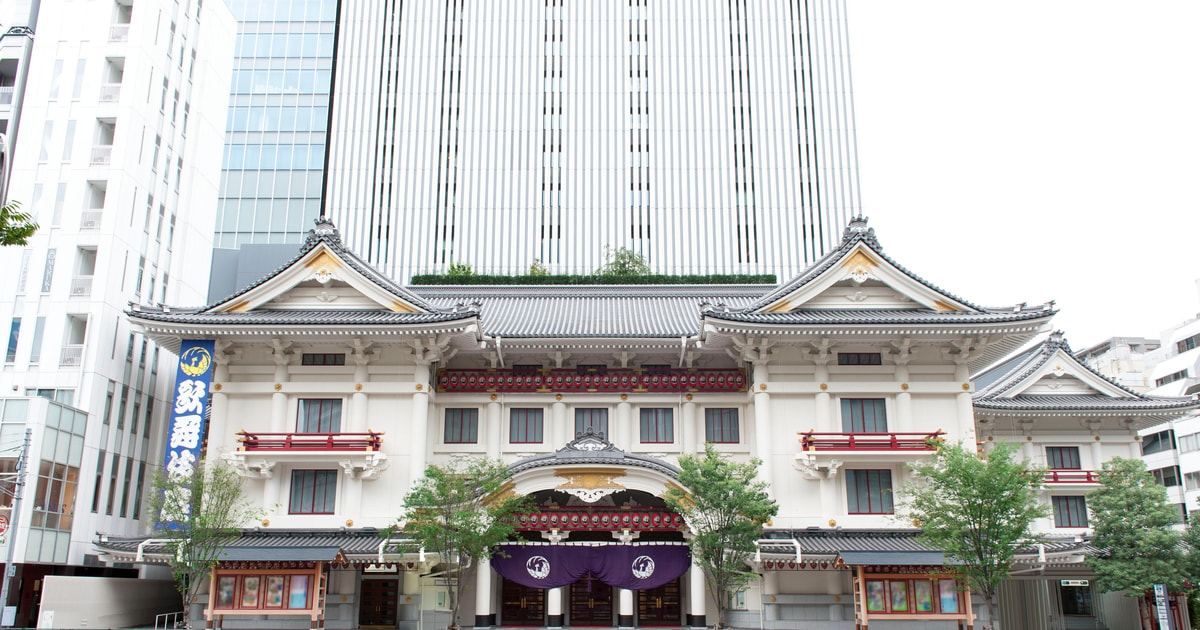
If you’re planning a trip to Tokyo, Kabuki-za is one of the most memorable ways to experience Japanese culture firsthand. GetYourGuide offers English-friendly Kabuki-za tickets and guided experiences, including options with headset translation and pre-show introductions for first-time viewers.
👉 Check Kabuki-za Tickets on GetYourGuide
This section may contain affiliate links. Booking through them costs you nothing extra and helps support this site.




コメント