
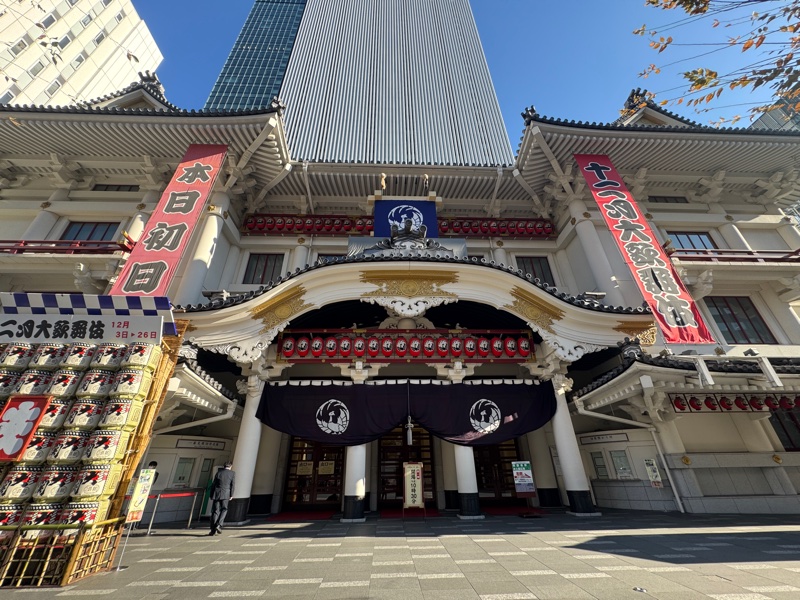
Last updated: July 27, 2026. This page is updated regularly to reflect Kabukiza’s currently confirmed programs — only months with officially announced casts and plays are listed below.
Planning to catch a single act at Kabukiza through the makumi (single-act) ticket system? This guide breaks down exactly what’s playing, act by act, month by month — plus a clear recommendation for which single act to pick if you can only see one.
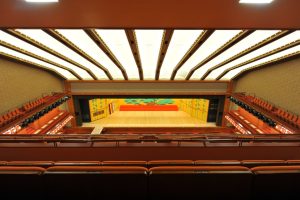
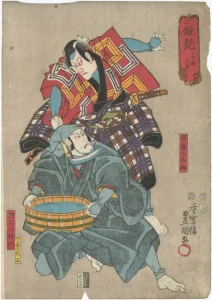
July 2026: July Grand Kabuki (Jul 2–26)
Dark days: July 9 and 17.
If You Can Only See One Act
Two strong picks this month, for makumi visitors. Suehirogari is the shortest, lightest option at just 22 minutes — a comic dance built around a servant tricked into buying the wrong item entirely. If you have more time for a single act, Shunkyō Kagami Jishi, closing out the evening program, is the bigger showstopper: a single performer transforming from a delicate young attendant into a fierce lion spirit.

Day Program — 11:00 AM (ends approx. 3:24 PM)
| Piece | Time | Beginner Level | Notes |
| Suehirogari | 11:00–11:22 (~22 min) | Beginner-Friendly | A comic kyōgen-style dance about a servant tricked into buying the wrong item. |
| Toki Ima ya Kikyō no Hataage (Ba-darai) | 11:47–1:12 (~85 min) | Moderate | Akechi Mitsuhide’s simmering resolve to betray Oda Nobunaga. |
| Ohamagoten Tsunatoyo-kyō | 1:47–3:24 (~97 min) | Moderate | A tense political scene from the Genroku Chūshingura cycle. |

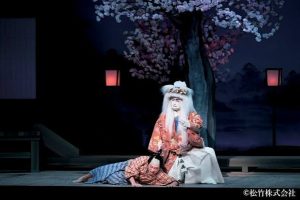
Night Program — 4:15 PM (ends approx. 8:49 PM)
| Piece | Time | Beginner Level | Notes |
| Kamahige (Kabuki Jūhachiban) | 4:15–5:08 (~53 min) | Moderate | The indestructible warrior Kagekiyo survives a trap disguised as a shave. |
| Megumi no Kenka | 5:33–7:19 (~106 min) | Moderate | A real historical clash between Edo firefighters and sumo wrestlers. |
| Shunkyō Kagami Jishi | 7:54–8:49 (~55 min) | Beginner-Friendly | A single performer’s transformation from attendant to lion spirit. |

August 2026: Noryō Kabuki (Aug 2–26)
Dark days: August 10 and 18.
If You Can Only See One Act
This month’s clearest pick for makumi visitors is Rakuda, from Part 2. Its biggest advantage is structural: adapted from a beloved rakugo comedy, it tells a complete story within its own single act, rather than being one scene lifted from a longer work — unlike Kaidan Botan Dōrō (Part 1) and Kijin no Omatsu (Part 2), which are both excerpts from longer, multi-act dramas and can feel like they’re missing context if that’s the only act you catch. The casting is a big part of the appeal too: Nakamura Kankūrō plays Kuroku, a paper-scrap dealer, opposite Matsumoto Kōshirō as the thuggish Teono Hanji, and their comic back-and-forth carries most of the act. Since it’s driven by dialogue rather than dance, an earphone guide is worth renting if you want to catch the nuance of the Edo-period speech.
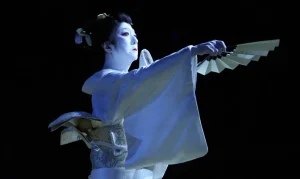
If you’d rather skip dialogue altogether, Part 3’s dance pieces are the safer bet this month — especially Zangetsu, a quiet jiuta-mai solo meditating on the moon and the fleeting nature of life, one of the most accessible ways to experience kabuki without any language barrier at all.

Part 1 — 11:00 AM (ends approx. 2:15 PM)
| Piece | Beginner Level | Notes |
| Kaidan Botan Dōrō (full production) | Beginner-Friendly | A ghost story of doomed love and human greed, based on San’yūtei Enchō’s rakugo classic. |

Part 2 — 3:10 PM (ends approx. 6:00 PM)
| Piece | Beginner Level | Notes |
| Rakuda | Moderate | A comic piece based on rakugo storytelling, following a paper-scrap dealer and a ne’er-do-well forced to “dance” a corpse. |
| Kijin no Omatsu (Momochidori Okitsu Shiranami) | Moderate | The legend of a real female bandit, staged for the first time in 62 years. |

Part 3 — 7:00 PM (ends approx. 8:50 PM)
| Piece | Beginner Level | Notes |
| Bukaku Setsugekka | Beginner-Friendly | A three-part transformation dance moving through cherry blossoms, a pine cricket, and a snowman. |
| Yuki | Beginner-Friendly | A jiuta-mai solo dance expressing a geisha’s aching, unspoken love. |
| Zangetsu | Beginner-Friendly | A jiuta-mai solo dance meditating on the moon and the fleeting nature of life. |
September 2026: Shūzan-sai (Sep 2–26)
If You Can Only See One Act
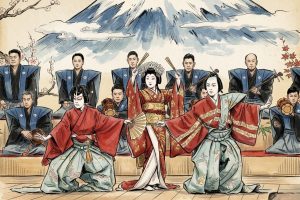
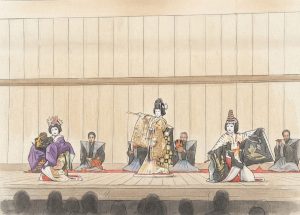
For the day program, Shunchō Musume Nanakusa (featuring Sanja Matsuri) is the pick — a lively, dialogue-light dance built around the legendary founding of Asakusa Shrine, with plenty of visual energy and none of the dense classical dialogue found elsewhere in this program. For the night program, Hinazuru Sanbasō is the strongest single-act choice: a celebratory, ceremonial dance that opens the evening with pure visual pageantry rather than plot to follow.
Day Program — 11:00 AM
| Piece | Beginner Level | Notes |
| Sanja Matsuri / Shunchō Musume Nanakusa | Beginner-Friendly | A dynamic duet dance based on the founding legend of Asakusa Shrine. |
| Hiragana Seisuiki (Ōtsu Yadoya / Sasabiki / Sakaro) | For Connoisseurs | A reworking of the Genpei War epic, including scenes not staged at Kabukiza since 1968. |
Night Program — 4:00 PM
| Piece | Beginner Level | Notes |
| Hinazuru Sanbasō | Beginner-Friendly | A celebratory, ceremonial opening dance. |
| Numazu (from Igagoe Dōchū Sugoroku) | Moderate | A tense scene of divided family loyalty, staged in two different casting patterns across the run. |
| Kyō Ningyō (from Meisaku Ko-gatana) | Moderate | A doll-come-to-life dance drama. |
| Ichijō Ōkura Monogatari (Okuden) | Moderate | A nobleman feigns foolishness to hide his true loyalty to the Minamoto cause. |
How to Get a Makumi Ticket
Makumi (single-act) seats are sold on Kabukiza’s 4th floor, either as reserved tickets (available online the day before each act) or same-day tickets sold first-come, first-served starting at 10:00 AM. Prices typically run roughly ¥500–¥2,000 depending on the act.
Visiting During a Month Not Listed Above?
If your trip falls in a month that isn’t confirmed yet on this page, don’t worry — the general rule of thumb still applies. Dance pieces (buyō) and lighter, movement-driven works are consistently the easiest single acts to enjoy without following dense dialogue, while long classical dramas reward more background knowledge. Check Kabukiza’s official listings or kabuki-bito.jp once the month you’re visiting is announced (typically around the 20th of the preceding month for regular runs, though milestone celebrations are sometimes announced two to three months ahead), and look for similar dance-focused pieces if you want the safest, most accessible pick.
Frequently Asked Questions
- How often is this page updated?
-
Regularly, as new months are officially confirmed by Kabukiza and past months’ runs conclude. Check the “last updated” date at the top of this page before your visit.
- Why isn’t next month’s program listed yet?
-
Kabukiza’s regular monthly programs are typically confirmed around the 20th of the preceding month, though milestone celebrations are sometimes announced further ahead. This page only lists programs that have been officially confirmed, to avoid passing along guesses.
- If I can only watch one act, which type should I choose?
-
Dance pieces (buyō) are generally the safest, most accessible pick for a single act, since they carry their story through movement and music rather than dense dialogue.
- Can I buy a makumi ticket for any act in the program?
-
Generally yes, though availability depends on the specific performance and day. See our full makumi ticket guide for exact purchasing steps.
Summary
This page tracks Kabukiza’s currently confirmed programs specifically for makumi (single-act) visitors — what’s playing, when, and which single act to prioritize if that’s all your schedule allows. Check back before your trip, since the lineup here reflects only officially confirmed months and updates as new programs are announced.
🎭 Want to See Kabuki Live?
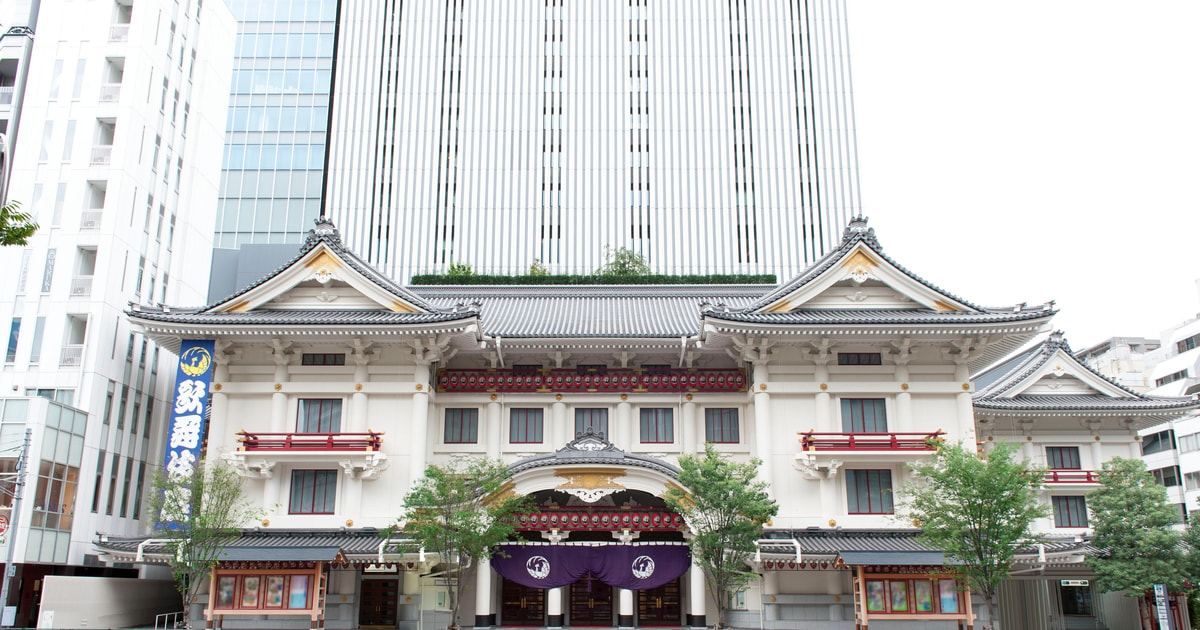
If you’re planning a trip to Tokyo, Kabuki-za is one of the most memorable ways to experience Japanese culture firsthand. GetYourGuide offers English-friendly Kabuki-za tickets and guided experiences, including options with headset translation and pre-show introductions for first-time viewers.
👉 Check Kabuki-za Tickets on GetYourGuide
This section may contain affiliate links. Booking through them costs you nothing extra and helps support this site.




コメント
コメント一覧 (3件)
[…] あわせて読みたい Kabukiza Programs & Makumi Picks: What to Watch, Act by Act A living guide to Kabukiza’s currently confirmed programs, updated regularly — what’s playing each month, act by act, and which single act t […]
[…] techniques, sub-types, and the actors who define it today. あわせて読みたい Kabukiza Programs & Makumi Picks: What to Watch, Act by Act A living guide to Kabukiza’s currently confirmed programs, updated regularly — what’s […]
[…] pictures from Otsu). It depicts the spirit of a wiste… あわせて読みたい Kabukiza Programs & Makumi Picks: What to Watch, Act by Act A living guide to Kabukiza’s currently confirmed programs, updated regularly — what’s […]